
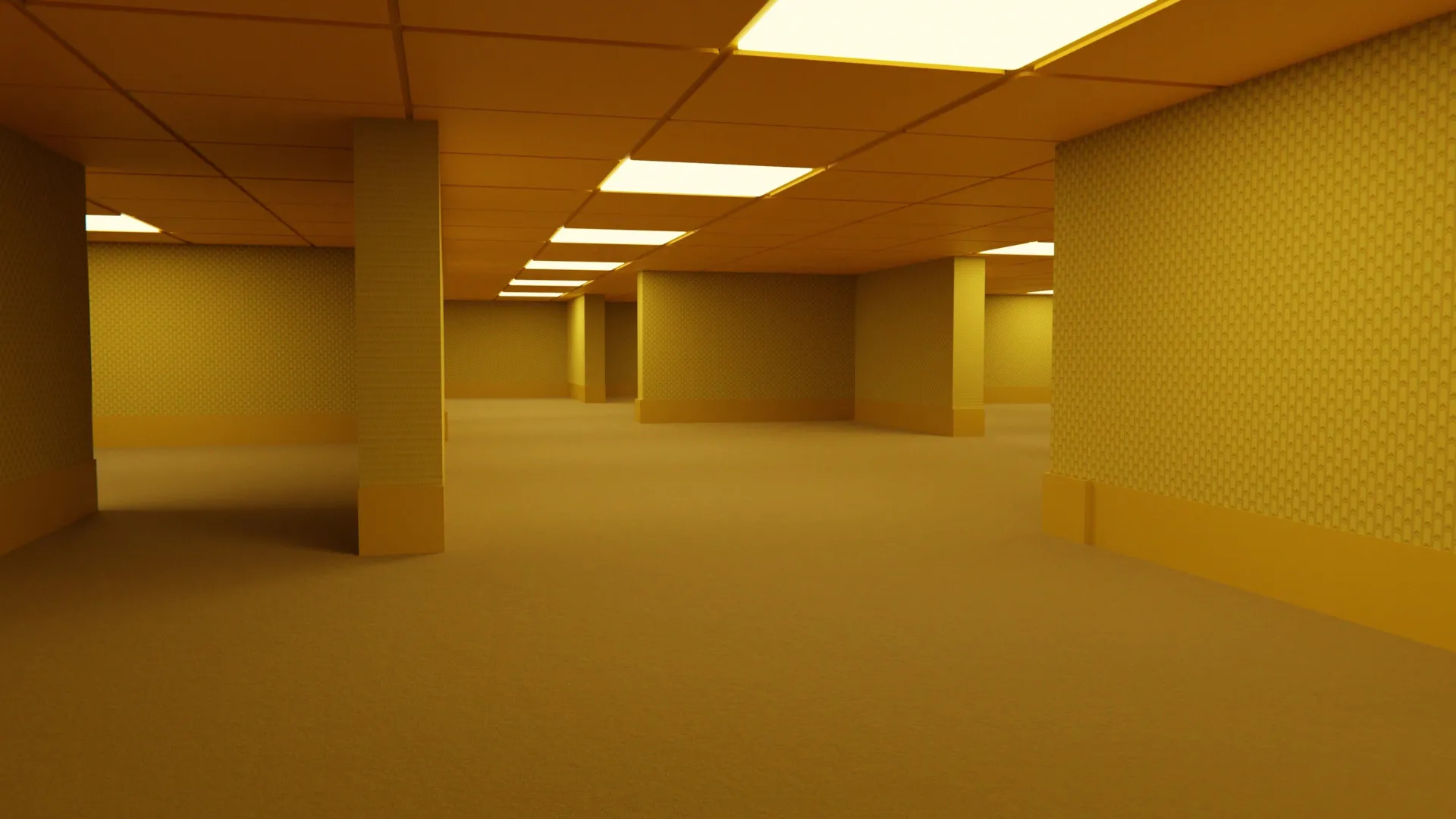
What if you could visit a place that does not exist on any map? A place whispered about online as though it sits just beyond the edges of our known world. A place known quite simply as, the Backrooms. This internet-born fictional setting, envisioned as an infinite, monotonous labyrinth of fluorescent-lit, empty rooms, has transcended its origins as a mere creepypasta to become a complex digital phenomenon, influencing horror narratives, digital tourism, and our very perception of reality.
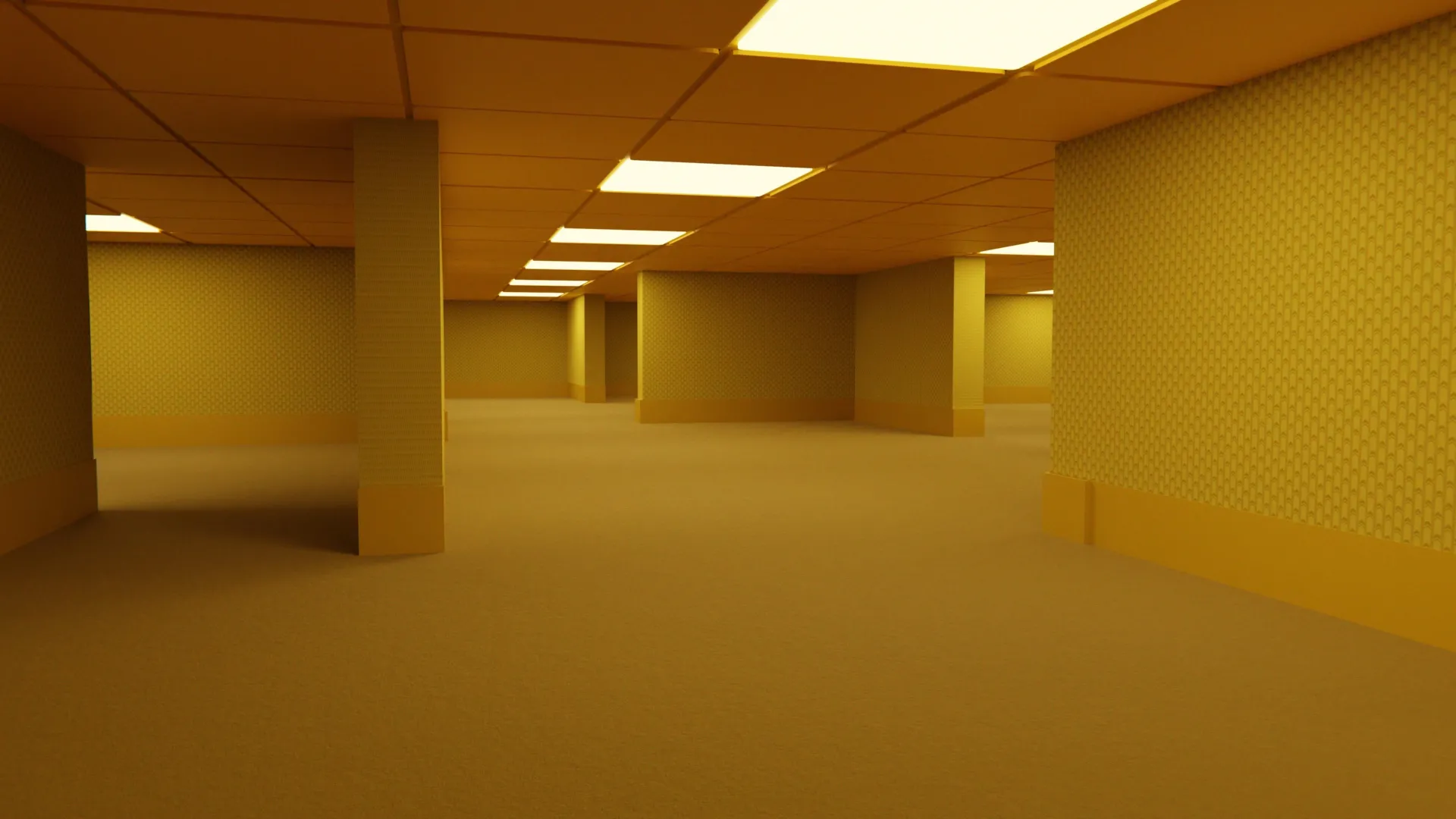
The genesis of the Backrooms can be traced back to a single, anonymously posted image in 2019 on the online bulletin board 4chan. This initial visual, a stark depiction of claustrophobic, yellow-hued rooms with dated carpeting and harsh, buzzing fluorescent lights, evoked a peculiar blend of menace and unsettling familiarity. It was this potent combination that ignited the collective imagination of internet users, sparking widespread speculation and collaborative world-building. The core concept, as it solidified, centered on the terrifying idea of accidentally "noclipping" or slipping out of normal reality and becoming irrevocably trapped within this seemingly endless, featureless expanse, devoid of any clear exit.
The Rapid Ascent of a Digital Legend
From its humble beginnings on 4chan, the Backrooms phenomenon underwent a meteoric rise in popularity, rapidly colonizing major online platforms. Reddit, with its dedicated subreddit r/backrooms boasting hundreds of thousands of members, became a central hub for lore expansion, map creation, and narrative development. TikTok and Instagram followed suit, with the hashtag #backrooms on TikTok accumulating over half a million posts and fan pages like @xbackroom amassing substantial followings. This widespread engagement is not merely passive consumption; users actively contribute to the mythology, crafting fictional diary entries, survival guides, and meticulously detailed maps of imagined levels and entities.
A pivotal moment in the Backrooms’ cultural ascent was the emergence of filmmaker Kane Parsons’ viral "found footage" YouTube series. Parsons transformed the low-resolution static images into immersive, cinematic experiences, effectively establishing the Backrooms as one of social media’s most recognizable and unsettling horror environments. His work demonstrated the potential for high-quality, narrative-driven content within this user-generated universe, drawing critical attention and further solidifying its place in popular culture. The tangible impact of Parsons’ creative vision is underscored by his current involvement in adapting the Backrooms for a feature-length horror thriller produced by A24, a studio known for its critically acclaimed and often unconventional cinematic offerings. This move signals a significant crossover from niche internet subculture to mainstream discourse, placing the Backrooms firmly in the public eye.
Beyond Traditional Creepypasta: A New Form of Horror Engagement
While the Backrooms shares superficial similarities with other internet urban legends or "creepypastas" like Slenderman or the Russian Sleep Experiment, its enduring appeal and cultural significance suggest a deeper underlying shift in audience engagement with horror and trauma. Unlike traditional horror narratives that are passively consumed, the Backrooms fosters an active, participatory experience. As folklore scholar Michael Kinsella describes this phenomenon, it represents a form of "online legend-tripping," where audiences transform from mere spectators into active contributors, collaborators, and co-creators of the narrative and its environment. This democratized approach to storytelling, where anyone can contribute to the expanding lore, is a key differentiator.
The horror of the Backrooms is not derived from jump scares or traditional monsters alone, but from its uncanny evocation of familiar, yet disquieting, spaces. The dated decor, the sterile hotel-like hallways, the ubiquitous ceiling tiles, and the abandoned office aesthetics tap into a shared, often subconscious, recognition of "non-places"—the anonymous, transient spaces of modern life that we inhabit but rarely imbue with personal meaning. The Backrooms imbues these overlooked locales with a palpable sense of dread and abandonment, transforming the mundane into the menacing.
The Allure of the Liminal and the Uncharted
Research into dark tourism reveals a consistent human fascination with sites associated with death, disaster, tragedy, and the uncanny. These can range from former prisons and abandoned industrial sites to locations marked by significant historical trauma. Such places often possess an emotionally, symbolically, or existentially charged atmosphere that draws visitors. The Backrooms, however, offers a unique extension of this logic into a participatory, entirely digital realm. Unlike virtual dark tourism, which allows for "armchair travel" to real-world sites of historical significance, the Backrooms has no grounding in physical reality or a specific historical tragedy. Instead, it provides a collectively imagined space of unease, emptiness, and profound liminality—a state of being in-between, neither here nor there.
The persistence of interest in the Backrooms is intrinsically linked to its lack of a fixed mythology, geographical reality, or definitive narrative history. This ambiguity allows users to project their own interpretations and meanings onto a landscape that, despite its fictional nature, feels uncannily familiar. The sterile, impersonal design of the Backrooms mirrors the "non-places" identified by anthropologist Marc Augé—spaces characterized by transience and a lack of identity, such as airports, highways, and hotel chains. By recontextualizing these familiar yet often overlooked environments, the Backrooms taps into a primal sense of unease associated with alienation and the impersonal nature of modern existence.
A Digital Landscape for Emotional Navigation
The Backrooms operates less as a story to be received and more as a world to be inhabited. Through a proliferation of YouTube videos, video games, virtual reality experiences, and TikTok edits, audiences are increasingly positioned inside the environment itself. This immersive approach blurs the boundaries between traditional storytelling, role-playing, digital tourism, and active online participation. This fusion of experiences is particularly resonant in the current cultural moment, where the internet is evolving beyond a mere conduit for information and communication into a dynamic landscape that individuals emotionally navigate and inhabit.
This phenomenon highlights a significant shift in how we engage with fictional worlds and the very nature of "place" in the digital age. The Backrooms exemplifies a future where collectively imagined digital environments function as meaningful cultural spaces in their own right. These are not simply destinations for passive entertainment but places that individuals can "travel" to, explore, invest in emotionally, and repeatedly revisit, all without ever existing in a physical location. This evolving digital ontology challenges our traditional notions of reality and experience, suggesting that our emotional and psychological landscapes can be as profoundly shaped by virtual worlds as by the physical one.
Implications for Media and Entertainment
The success of the Backrooms phenomenon has significant implications for the future of media and entertainment. It demonstrates the power of decentralized, community-driven content creation and the potential for niche internet subcultures to evolve into mainstream cultural forces. The participatory nature of the Backrooms fosters a deep sense of ownership and investment among its audience, a model that could inform future content development across various platforms.
Furthermore, the Backrooms’ ability to transform mundane spaces into sites of horror and unease offers a new paradigm for the horror genre. It moves beyond conventional narratives to explore the psychological terror inherent in environments that are both familiar and alienating. This focus on atmosphere, liminality, and existential dread provides fertile ground for future creative endeavors, potentially influencing not only digital content but also traditional film, gaming, and even interactive art installations.
The transition of the Backrooms from a niche internet meme to a subject of feature-film adaptation signifies a broader trend: the increasing permeability between online subcultures and mainstream media. As audiences become more sophisticated and engaged, they seek out not just passive entertainment but immersive, participatory experiences. The Backrooms, in its boundless, unmappable expanse, offers precisely that—a testament to the enduring power of collective imagination and the ever-evolving nature of reality in the digital age. The unsettling comfort of the familiar, twisted into a source of profound dread, has found its ultimate expression in the endless, fluorescent-lit corridors of the Backrooms, a place that exists everywhere and nowhere, yet has firmly established itself in the collective consciousness.

0 Comments