
Beautiful airport terminals are more than just feats of architecture; they reaffirm an important reminder ahead of a traveler’s trip: that the journey can be as stunning as the destination. The Prix Versailles, a prestigious series of international architecture awards, recently announced a selection of exceptionally designed airports, highlighting a global trend towards integrating aesthetic excellence with functional necessity. This year’s honorees, including two in the United States, stand out for their thoughtful reflection of local landscapes and cultural identities, creating a warm and distinctive welcome for both visitors and locals alike. These architectural marvels underscore the growing understanding that airports can serve as powerful ambassadors for their cities and nations, setting a tone of sophistication and care from the very first point of arrival.
Prix Versailles: A Beacon for Architectural Excellence
The Prix Versailles, established in 2015, aims to recognize and promote architecture that is more sustainable, more intelligent, and more deeply connected to its cultural context. The awards program is divided into several categories, including new constructions, existing buildings, interior design, and specific sectors like hotels, restaurants, and shopping centers. Airports, as critical hubs of global connectivity and often the first impression of a city, are a particularly significant focus. The judging panel comprises distinguished figures from the fields of architecture, culture, and design, ensuring a rigorous and insightful evaluation process. The awards are not merely about aesthetics; they also consider factors such as environmental impact, social integration, and the building’s ability to foster a sense of community and belonging. This year’s recognition of several airport terminals signifies a maturing appreciation for the role of public architecture in shaping our experiences and perceptions.

Global Design Trends: Nature, Culture, and Urbanity Converge
The award-winning terminals showcase a compelling convergence of design philosophies. Many draw direct inspiration from the natural world, echoing local flora, fauna, or geological formations. Others are deeply rooted in cultural heritage, employing traditional motifs, materials, or architectural styles to create a sense of place. A third significant trend involves urbanistic approaches, where the terminal’s layout and flow are conceived as a miniature city, complete with bustling marketplaces and distinct "neighborhoods" for passengers. This multifaceted approach demonstrates a sophisticated understanding that airports are not just transit points but integral components of the urban and natural fabric.
Terminal 3, Guangzhou Baiyun International Airport, China: A Floral Welcome
Guangzhou, affectionately known as the "City of Flowers," serves as the inspiration for the striking Terminal 3 at Guangzhou Baiyun International Airport. Architects have masterfully woven the essence of "Blossom in Guangzhou" throughout the structure, creating an environment that is both grand and welcoming. The terminal’s design embraces organic, curved forms, expansive terraces, verdant gardens, and soaring atria, all drawing upon natural elements to evoke a sense of blooming beauty.
The material palette further enhances this naturalistic theme. Moving away from the sterile predictability of metal and plastic, Terminal 3 prominently features wood. This deliberate choice imbues the space with an earthy warmth, creating an atmosphere that feels grounded and inviting. The abundance of natural light, filtered through thoughtfully placed apertures and skylights, further amplifies the sense of openness and connection to the outdoors. This biophilic design approach not only enhances the passenger experience by reducing stress and promoting well-being but also demonstrates a commitment to sustainable construction practices, leveraging natural materials and maximizing daylight to reduce energy consumption. The integration of botanical elements is not merely decorative; it actively contributes to the terminal’s air quality and overall ambiance, making it a truly unique gateway to Guangzhou. The scale of the terminal, designed to handle an anticipated increase in passenger traffic as Guangzhou continues its economic expansion, is impressive, yet the thoughtful design ensures it never feels overwhelming.
.jpg)
Terminal 3, Frankfurt Airport, Germany: Urban Planning on a Grand Scale
In contrast to Guangzhou’s natural inspirations, Terminal 3 at Frankfurt Airport embraces an urbanistic design philosophy. The layout of its piers, gates, and lounges is meticulously organized, mirroring the logic and flow of city streets and public squares. This approach aims to create a familiar and intuitive navigation experience for travelers, even within the vastness of a major international airport.
The terminal is not just inspired by urban design; it is practically a metropolis in its own right. Spanning an impressive 1.89 million square feet, it is comparable in size to Frankfurt’s city center. This vast expanse houses not only essential airport facilities but also a substantial marketplace, covering approximately 694,000 square feet. This marketplace is a vibrant hub featuring a diverse array of retail outlets and restaurants, designed to offer passengers a rich and engaging experience beyond mere transit. The architectural firm responsible for this ambitious project has aimed to create a self-contained urban environment, offering a comprehensive range of services and amenities that cater to the needs of modern travelers. The integration of such extensive commercial and social spaces within an airport terminal reflects a forward-thinking approach to airport design, recognizing its potential to be a destination in itself. The sheer scale of Terminal 3 underscores Frankfurt Airport’s commitment to remaining a leading global aviation hub, equipped to handle future growth and evolving passenger expectations.
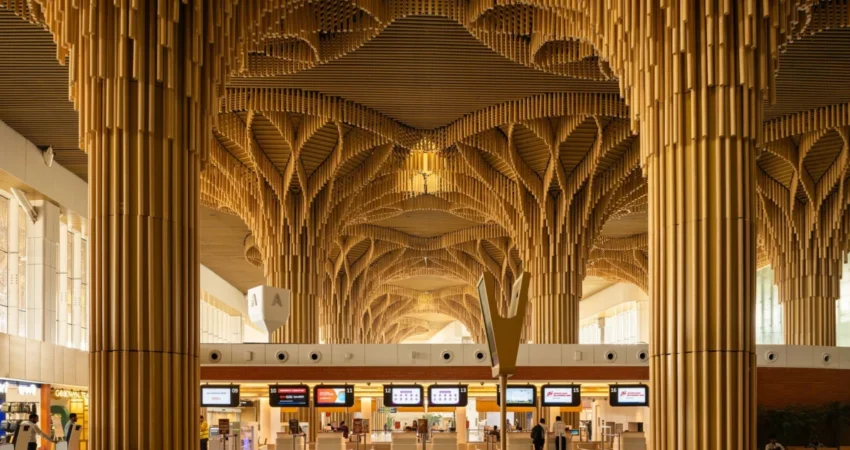
Terminal 2, Lokapriya Gopinath Bordoloi International Airport, Guwahati, India: Echoes of the Bamboo Orchid
The Lokapriya Gopinath Bordoloi International Airport in Guwahati, India, draws its unique architectural identity from the delicate beauty of the bamboo orchid. Architect Nuru Karim found inspiration in this striking houseplant, characterized by its bamboo-like stems and clustered blossoms, to shape the design of Terminal 2. The terminal’s aesthetic successfully mirrors an expansive bamboo forest, creating an immersive and serene environment for travelers.

Within this naturalistic setting, waiting and transit areas are thoughtfully enhanced with displays of indigenous art and local handicrafts. This integration of local culture is a crucial element of the design, offering passengers a glimpse into the rich artistic heritage of the region. The bamboo-like structures and organic forms contribute to a calming atmosphere, while the curated art installations add layers of visual interest and cultural context. The design of Terminal 2 represents a successful fusion of natural inspiration and cultural expression, providing a distinctive and memorable arrival experience for those entering India through Guwahati. The airport’s capacity has been significantly increased with this new terminal, positioning it to better serve the growing tourism and business demands of Northeast India.
Terminal 1, Navi Mumbai International Airport, Navi Mumbai, India: The Lotus Motif
The new terminal at Navi Mumbai International Airport also embraces a profound floral inspiration, centering its design language on the graceful lotus flower. Zaha Hadid Architects have expertly translated this motif into every aspect of the airport’s architecture, from its expansive, petal-like roof structure to the elegantly fluted, flower-like columns that support it.
Adding a dynamic and contemporary layer to the transit areas, interactive digital artworks are strategically placed among these striking columns. These artworks inject unexpected bursts of color and visual engagement, transforming the passenger journey into a more stimulating experience. The integration of such advanced digital art installations alongside architectural elements signifies a forward-looking approach to airport design, one that blends artistic expression with technological innovation. The choice of the lotus, a symbol of purity and enlightenment in many cultures, imbues the terminal with a sense of tranquility and grace. The sheer ambition of Zaha Hadid Architects’ vision for Navi Mumbai International Airport positions it as a landmark development, not only for India but for global airport architecture, promising to redefine the passenger experience upon arrival. The ongoing development of Navi Mumbai itself, envisioned as a smart city, finds a fittingly impressive gateway in this lotus-inspired terminal.

Techo International Airport, Phnom Penh, Cambodia: A Fusion of Heritage and Sustainability
The new Techo International Airport in Phnom Penh, Cambodia, stands as a powerful testament to how architecture can effectively convey a profound sense of regional identity. Designed by the globally acclaimed architectural firm Foster + Partners, the airport’s most defining feature is its sweeping roof structure, which evokes the elegant silhouettes of Cambodia’s historic palaces and temples.
Internally, the ceilings are meticulously crafted to visually echo the intricate patterns of traditional Cambodian wickerwork, appearing as if woven from bamboo and rattan. This sophisticated design element serves a dual purpose: aesthetic appeal and environmental functionality. The translucent nature of the roof structure acts as a natural light filter, optimizing the flow of daylight into the terminal and significantly reducing the reliance on artificial lighting. Furthermore, this innovative roof design contributes to a more comfortable indoor climate by mitigating the intensity of the tropical sun, thereby lessening the need for extensive mechanical cooling and reducing the airport’s overall energy consumption.
Beyond its striking visual design, Techo International Airport is a pioneer in sustainable airport development. Its eco-friendly initiatives are comprehensive, including the implementation of an on-site solar farm to generate clean energy, advanced rainwater harvesting systems to conserve water resources, and the incorporation of vertical gardens that enhance air quality and provide a natural aesthetic. A particularly poignant touch is the planting of the Rumduol tree blossom, Cambodia’s official national flower, throughout the interior spaces, alongside other indigenous plant species. This deliberate integration of national symbols and local flora reinforces the airport’s connection to its cultural and natural environment. The commitment to sustainability and cultural representation at Techo International Airport sets a new benchmark for airport design globally, demonstrating that large-scale infrastructure projects can be both architecturally inspiring and environmentally responsible.

Pittsburgh International Airport, Pittsburgh, USA: An Artificial Forest of Innovation
Rising majestically beyond the cityscape, the roof of the Pittsburgh International Airport is designed to appear as a natural extension of Pennsylvania’s verdant Allegheny Mountains. This ambitious biophilic design, conceived by Gensler and HDR in collaboration with Luis Vidal + Architects, creates the captivating illusion of an artificial forest within the terminal itself.
The structure is supported by an impressive network of 38 tree-like steel columns, which not only provide structural integrity but also contribute to the immersive natural aesthetic. The design’s inspiration is deeply rooted in the wooded landscapes of Western Pennsylvania. Expansive glass façades are a prominent feature, allowing vast amounts of natural daylight to flood the interior spaces, reducing the need for artificial illumination and fostering a sense of openness and connection to the outdoors. Complementing the indoor forest ambiance, four strategically placed outdoor terraces offer passengers opportunities to experience fresh air and natural light while awaiting their flights. This focus on biophilic design aims to enhance passenger well-being by bringing elements of nature into the built environment, a strategy increasingly recognized for its positive impact on traveler stress and overall experience. The new terminal at Pittsburgh International Airport represents a significant investment in modernizing the region’s infrastructure and providing a world-class gateway that reflects its natural surroundings.
Terminal 1, San Diego International Airport, San Diego, USA: A Wave of Natural Light
Terminal 1 at San Diego International Airport, originally constructed in 1967, has long been a vital artery for air travel in one of the United States’ busiest hubs. Recognizing the need for modernization to meet contemporary demands, the terminal recently underwent an extensive renovation and redesign, spearheaded by Gensler. The centerpiece of this transformative project is a remarkable 800-foot curved glass façade.

Developed in close collaboration with the esteemed artist and architect James Carpenter, this expansive glass structure is a triumph of design and engineering. Its primary function is to flood the terminal’s interior spaces with an abundance of natural light, creating a bright, airy, and welcoming atmosphere. This architectural feature not only enhances the aesthetic appeal of the terminal but also contributes to energy efficiency by maximizing daylighting and reducing the reliance on artificial lighting. The curved form of the façade adds a dynamic visual element, drawing the eye and creating a sense of flow. This renovation signifies a commitment to improving passenger experience at San Diego International Airport, transforming a dated facility into a modern, light-filled gateway that better serves the needs of travelers and the city. The sheer scale of the glass installation underscores the ambition of the project to create a visually striking and functionally superior terminal.
Implications and the Future of Airport Design
The award-winning terminals highlighted by the Prix Versailles offer a compelling glimpse into the future of airport design. They demonstrate a clear shift towards creating spaces that are not merely functional but also deeply experiential, culturally resonant, and environmentally conscious. As global travel continues to grow, airports will increasingly be recognized as critical pieces of public architecture, capable of shaping perceptions, fostering connections, and leaving a lasting impression on millions of travelers each year. The trend towards integrating natural elements, celebrating local heritage, and adopting sustainable practices suggests that future airports will strive to be more than just transit points; they will aim to be destinations in themselves, enriching the journey and reflecting the best of their respective locales. The ongoing development of these architectural marvels signals an exciting era where functionality, beauty, and responsibility converge to redefine the very essence of air travel.

0 Comments