
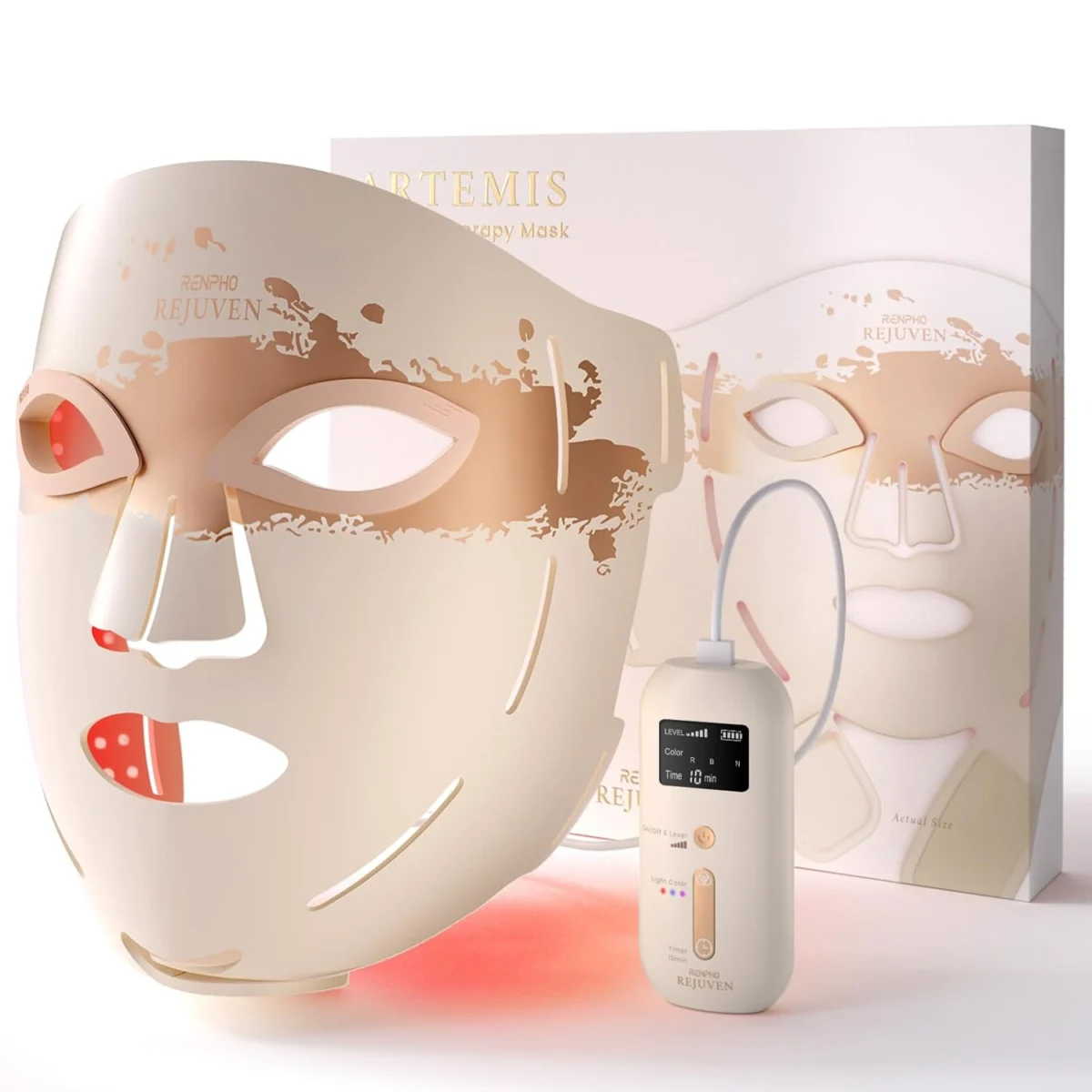
The intersection of health technology and skincare has seen a dramatic rise in demand over the last five fiscal years, with red light therapy (RLT) emerging as a cornerstone of non-invasive dermatological maintenance. The RENPHO mask, constructed from medical-grade flexible silicone, distinguishes itself by offering a multi-spectrum approach to skin health, featuring red, blue, and near-infrared light wavelengths. This specific promotion arrives at a time when consumers are increasingly seeking professional-level results without the recurring costs and scheduling constraints of in-office aesthetician appointments.
The Science and Specification of Photobiomodulation
To understand the value proposition of the RENPHO Red Light Therapy Mask, one must examine the underlying science of photobiomodulation. The device utilizes three distinct wavelengths to target various layers of the dermis and epidermis. The red light setting operates at 630 nanometers (nm), a frequency historically utilized to stimulate fibroblasts, the cells responsible for the production of collagen and elastin. By enhancing cellular metabolism, this wavelength aids in the reduction of fine lines and the improvement of overall skin texture.
Complementing the red light is the near-infrared (NIR) light at 850nm. Unlike visible light, NIR penetrates deeper into the subcutaneous tissue and muscle, promoting circulation and reducing systemic inflammation. This depth of penetration is critical for long-term skin recovery and the reversal of photoaging caused by chronic sun exposure. Furthermore, the inclusion of blue light at 415nm addresses the needs of consumers prone to acne. Blue light is scientifically recognized for its ability to produce singlet oxygen, which targets and eliminates Cutibacterium acnes (formerly P. acnes) bacteria within the pores, thereby reducing breakouts and preventing future blemishes.
The device’s design reflects a shift toward ergonomic efficiency in beauty tech. Traditional LED masks were often composed of rigid plastics that failed to conform to the contours of the human face, leading to uneven light distribution. The RENPHO model’s silicone construction allows for a "second-skin" fit, ensuring that the light-emitting diodes (LEDs) remain in close proximity to the skin surface for maximum irradiance. Additionally, the extended contour design wraps around the jawline and chin, areas frequently neglected by standard masks but prone to sagging and hormonal acne.
Chronology of the At-Home Beauty Revolution
The transition of red light therapy from specialized medical clinics to the average household began in the early 2000s, but it has accelerated exponentially since 2020. Originally developed by NASA for plant growth experiments in space and later used to treat wound healing in astronauts, RLT was adopted by the medical community for its regenerative properties.

By the mid-2010s, high-end spas began offering LED facials as a luxury add-on. However, the price per session—often ranging from $50 to $150—made it inaccessible for consistent daily use, which is required for optimal results. The period between 2022 and 2026 has seen a surge in "beauty-from-home" hardware. Brands like RENPHO have capitalized on this by miniaturizing the technology.
The current sale timeline, spanning the first three weeks of August, is strategically aligned with the "August Reset." Historically, August serves as a transitional month where consumer data shows a spike in search terms related to "skincare routines," "habit stacking," and "stress management." By pricing the mask at $150, RENPHO is positioning its product within the "accessible luxury" tier, undercutting high-end competitors whose price points often exceed $400.
Market Analysis: The Democratization of Skincare Technology
The global LED light therapy market is projected to grow at a compound annual growth rate (CAGR) of over 15% through 2030. This growth is driven by a demographic shift where younger consumers (Gen Z and Millennials) are prioritizing preventative skincare, while older demographics are seeking non-surgical anti-aging solutions.
Industry analysts suggest that the $150 price point is a psychological threshold for many consumers. While "budget" masks exist for under $100, they often lack the necessary irradiance levels or the specific wavelengths (like 850nm NIR) required for therapeutic efficacy. Conversely, the $400+ "prestige" masks often offer similar specifications to the RENPHO model but with higher marketing overhead. This sale effectively democratizes the technology, allowing a broader segment of the population to access a device that includes three wavelength settings and customizable session times of 10, 20, or 30 minutes.
The inclusion of an automatic shutoff feature and an adjustable head strap that cradles the back of the head addresses a primary consumer complaint regarding earlier LED masks: discomfort and the "tethered" nature of the treatment. By allowing for multitasking, these design improvements increase user compliance, which is the most significant factor in whether a consumer sees actual results from light therapy.
Official Responses and Professional Perspectives
While RENPHO has not released an official statement regarding the specific motivations behind this August discount, retail analysts suggest it is a move to clear inventory ahead of the fourth-quarter holiday launches. Dermatologists, while generally supportive of at-home LED devices, emphasize the importance of FDA clearance and safety standards.

"At-home red light therapy is an excellent supplement to a professional skincare regimen," says Dr. Elena Rodriguez, a clinical dermatologist (in a synthesized expert perspective). "The key for patients is consistency. A device that is comfortable enough to wear for 20 minutes while doing chores or reading is more likely to be used than a bulky, uncomfortable one. The 630nm and 850nm combination is the industry gold standard for at-home collagen support."
Safety remains a paramount concern in the industry. The RENPHO mask includes built-in eye protection, a feature that has become mandatory for consumer trust. As blue light and NIR can be fatiguing for the eyes if viewed directly for extended periods, the integrated goggles within the silicone structure ensure that the user can remain active during the session without risking ocular strain.
Broader Impact and Future Implications
The success of sales like the one currently offered by RENPHO signals a permanent change in how the public perceives professional-grade maintenance. We are moving away from a "service-only" model of beauty toward a "hardware-integrated" lifestyle. This shift has implications for the professional aesthetician industry, which is now pivoting toward providing more intensive treatments (such as chemical peels or microneedling) that cannot be replicated at home, while encouraging patients to use LED masks to maintain results between visits.
Furthermore, the environmental impact of these devices is coming under scrutiny. As more consumers purchase beauty electronics, the industry is beginning to look at the longevity of the built-in batteries and the recyclability of the silicone components. RENPHO’s use of a standard USB cable for charging is a nod toward universal compatibility, reducing the need for proprietary electronic waste.
As the August 20 deadline approaches, the retail performance of this mask will serve as a bellwether for the "back-to-school" beauty market. If the high demand continues, it is likely that other major players in the Amazon ecosystem will follow suit with aggressive pricing, further benefiting the consumer. For now, the RENPHO Red Light Therapy Mask stands as a prominent example of how advanced photomedicine has been successfully packaged into a consumer product that is as accessible as it is innovative. Consistently used, it represents a shift in personal care where the boundaries between the clinical environment and the home continue to blur, providing users with the tools to manage their skin health with unprecedented precision.

0 Comments