
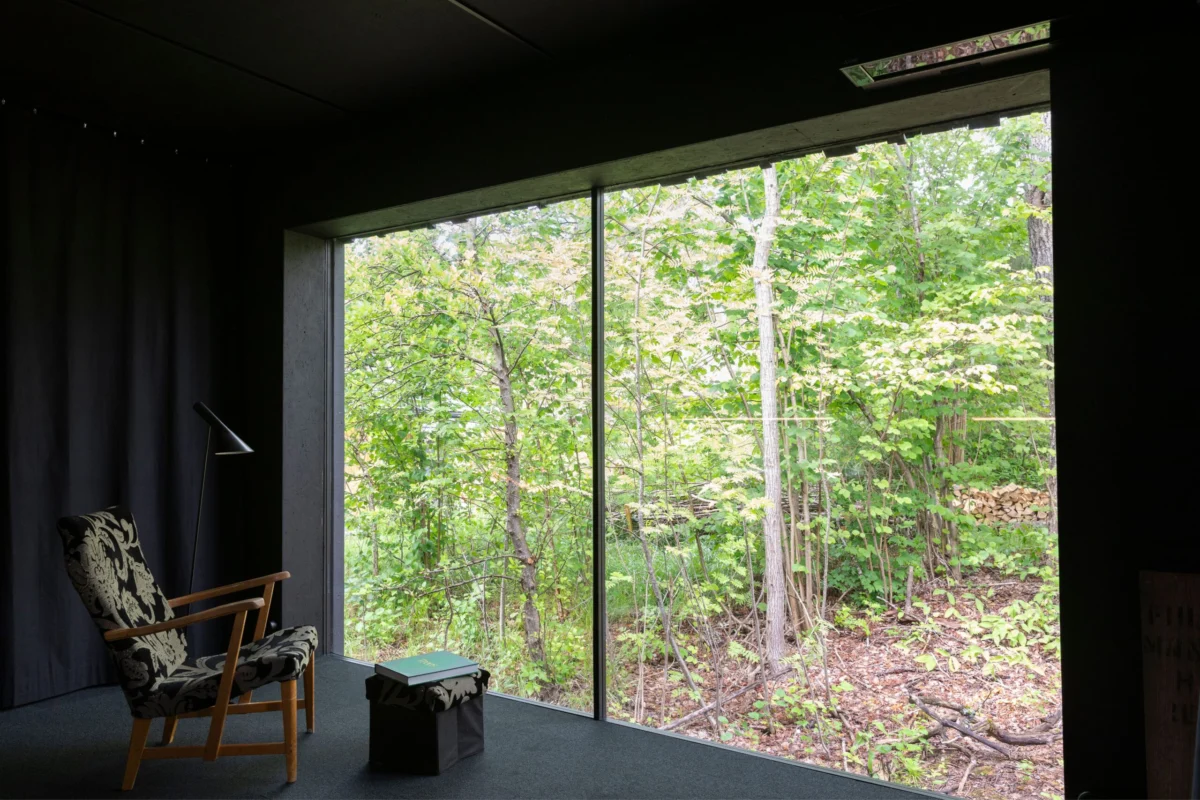
In the serene landscape of Lohja, Finland, approximately 40 miles from the bustling capital of Helsinki, a groundbreaking structure stands as a stark, matte black testament to the future of sustainable living. This 365-square-foot tiny house, aptly named Tiny House Shadow, is not merely a dwelling; it’s an avant-garde architectural statement and a tangible response to the urgent global climate and demographic challenges of our era. Conceived by Matti Kuittinen, a distinguished architect and professor at Aalto University, the design embodies a radical vision for future construction: a dwelling that is not only mobile and modular but also predominantly constructed from recycled materials, setting a new precedent for resource-efficient and environmentally conscious building.

The imperative for such innovative solutions is starkly underscored by Kuittinen himself. "We need to reduce emissions from the building sector by 80-90%, and build almost 2 billion new homes by the end of the century," he warns, citing projected statistics on population growth and escalating greenhouse gas emissions. These formidable figures, he argues, are fundamentally incompatible with current construction practices. "This is why we need to consider radically different housing and construction solutions," Kuittinen emphasizes. His Tiny House Shadow is the culmination of years of dedicated research into these critical issues, brought to life through a collaboration with leading Scandinavian construction companies: Aulis Lundell, Vesivek, and SSAB. Together, they have engineered this idealized sustainable structure, pushing the boundaries of what is considered possible in modern architecture.
The architectural philosophy behind Tiny House Shadow draws inspiration from Jun’ichirō Tanizaki’s seminal work, "In Praise of Shadows." This literary ode to darkness and simplicity imbues the house with a dual meaning: "shadow" not only evokes a sense of quietude and understated elegance but also signifies the structure’s inherent impermanence and mobility. The entire dwelling is designed to be dismantled and relocated, reflecting a paradigm shift away from static, resource-intensive construction. Crucially, Tiny House Shadow is the first of its kind to incorporate a specialized decarbonated steel in its facade. This revolutionary material, officially known as SSAB Zero® steel, is a testament to the advancements in sustainable metal production, being virtually free of fossil carbon emissions. The meticulous material selection extends throughout the house, with 56% of its entire build comprising recycled materials. This commitment to circularity results in an astonishing 85% reduction in resource utilization compared to a conventional house, thereby shrinking its ecological footprint by a significant 43%.

The Materiality of Sustainability: Beyond Conventional Limits
The facade of Tiny House Shadow is clad in SSAB Zero® steel, a material that represents a significant leap forward in the decarbonization of the steel industry. This innovative steel is produced using a process that minimizes or eliminates the use of fossil fuels, offering a near-zero emission alternative for construction. Kuittinen highlights the transformative potential of this material: "This new steel manufacturing process will make a significant contribution to reducing emissions," he states. "Steel is also an excellent material for a building designed to be moved and entirely prefabricated, as it offers both lightness and durability." This combination of environmental responsibility and practical performance makes SSAB Zero® steel an ideal choice for a forward-thinking construction project.
The commitment to sustainability permeates every aspect of Tiny House Shadow’s construction. The interior is a testament to the innovative use of recycled and repurposed materials. The floors are crafted from recycled plastic, transforming waste into a functional and aesthetically pleasing surface. Old tires have been ingeniously repurposed for ceiling insulation, demonstrating a creative approach to waste management. Insulation made from recycled glassware further enhances the building’s thermal performance and environmental credentials. Even the windows have been salvaged from old buildings, giving them a new lease on life and reducing the demand for virgin materials. This holistic approach to material selection not only minimizes environmental impact but also imbues the house with a unique character and a compelling story of reuse and regeneration.

Minimalism as a Global Philosophy: Rethinking Residential Needs
The philosophy of minimalism is deeply embedded within the design and ethos of Tiny House Shadow. Living in a smaller, less energy-intensive home, both in its design and daily consumption, inherently promotes a more sustainable lifestyle. For residents of Tiny House Shadow, the carbon footprint is reduced by an estimated 53% compared to living in a conventional house. This reduction is a direct consequence of the minimized material usage, energy efficiency, and the promotion of a lifestyle that prioritizes needs over wants.
Kuittinen articulates this perspective: "Living in a tiny house doesn’t necessarily mean giving up comfort," he explained to Architect Magazine. "It’s more about rethinking what we really need to live well – and how we can still build without destroying the planet." The design of Tiny House Shadow exemplifies this by focusing on hyper-specific architecture that caters to everyday functions and essential needs. The absence of non-essential features, such as a dishwasher, is a deliberate choice that aligns with the minimalist principle of intentionality and resource conservation. This approach challenges the conventional notion of homeownership, which often equates space and possessions with quality of life, and instead champions a more mindful and sustainable way of living.

A Modular Interior: Adaptability and Compact Living
The interior of Tiny House Shadow is a masterclass in adaptable and efficient spatial design. Despite its compact size, the house is designed to maximize functionality and comfort through the strategic use of movable partitions and ultra-compact rooms. Sliding doors and other ingenious concealment mechanisms allow residents to transform the living space according to their needs. The mini-kitchen, for instance, features open shelving, encouraging an organized and clutter-free environment. The bedroom area draws inspiration from the highly efficient design of Japanese capsule hotels, offering a cozy and sartorially pleasing sleeping pod.
Furthermore, in a nod to its Finnish origins, the house includes a compact, 22-square-foot wood-fired sauna, providing a space for relaxation and detoxification. This inclusion highlights how even in a tiny dwelling, essential elements of a particular culture and lifestyle can be incorporated without compromising the overall sustainability goals. The modularity of the interior means that the house can be reconfigured to suit different living arrangements or evolving needs, further enhancing its longevity and adaptability. This flexibility is a key feature of modular construction, allowing for customization and adaptation over time.
.jpg)
The Broader Impact: A Prototype for Future Housing
Tiny House Shadow has gained significant traction, regularly exhibited as a prototype at construction fairs and serving as a compelling demonstration of low-emission, resource-efficient single-family housing for the modern age. As part of a larger Tiny Homes research project, Kuittinen’s creation is not just a singular architectural achievement but a potential blueprint for future housing solutions. The project’s success underscores the growing demand for sustainable and adaptable living spaces that can address the dual pressures of climate change and increasing urbanization.
The collaboration with SSAB, a leading global supplier of high-strength steel, is particularly noteworthy. SSAB’s commitment to developing fossil-free steel production aligns perfectly with the aspirations of Tiny House Shadow. This partnership exemplifies how established industries can pivot towards more sustainable practices, driving innovation and influencing the wider construction sector. The implications of this project extend beyond individual homes; they suggest a pathway towards a more circular economy in construction, where materials are reused, emissions are minimized, and resource consumption is drastically reduced.

The journey of Tiny House Shadow from concept to reality represents a significant step in the evolution of sustainable architecture. It challenges conventional building practices, redefines notions of comfort and living, and offers a compelling vision for a future where human habitation exists in greater harmony with the planet. As global populations continue to grow and the urgency of climate action intensifies, innovative solutions like Tiny House Shadow will become increasingly vital in shaping a more resilient and sustainable built environment for generations to come. The project’s success is a testament to the power of visionary design, collaborative innovation, and a deep commitment to environmental stewardship.

0 Comments