
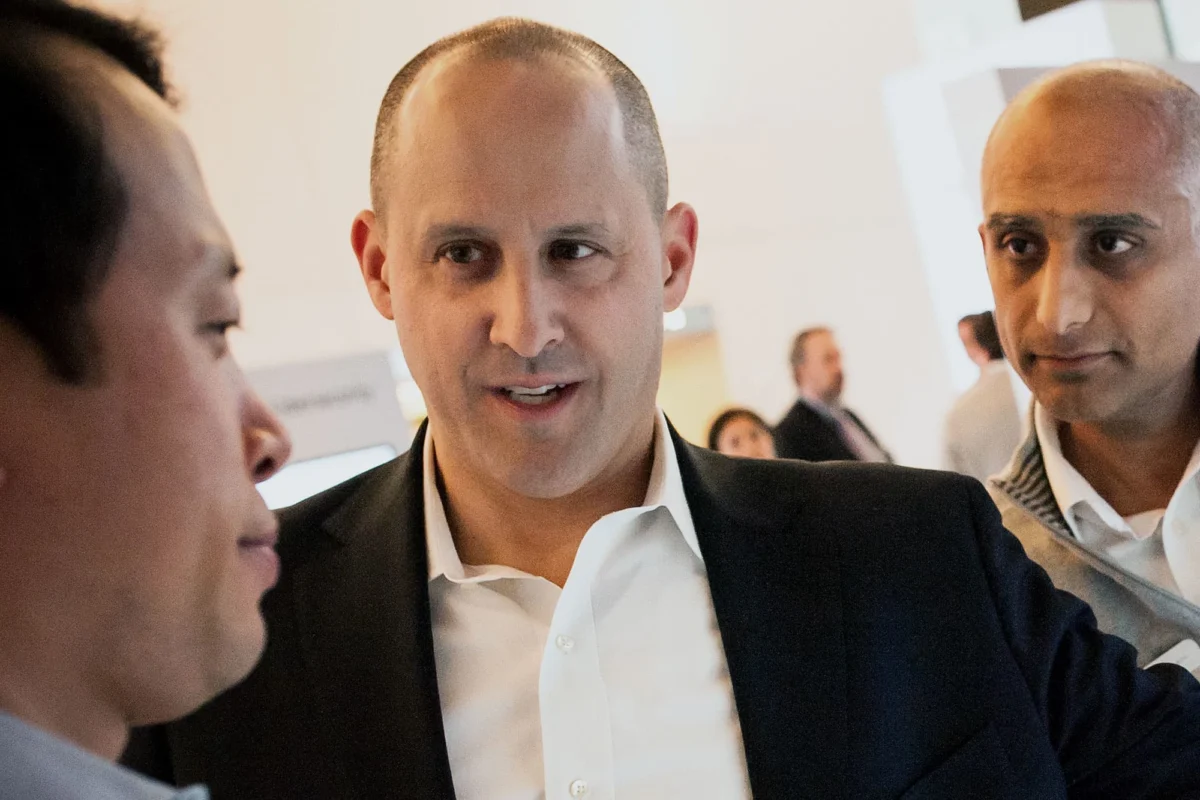
The Social Security Administration (SSA) is poised for a significant strategic infusion of private sector expertise with the announcement that Matt Zames, a distinguished former chief operating officer of JPMorgan Chase and president of Cerberus Capital Management, will join the Trump administration as an unpaid advisor to the agency. His appointment, confirmed by sources with knowledge of the move who requested anonymity due to the private nature of the discussions, marks a critical step in efforts to overhaul the agency’s deeply entrenched technological infrastructure and address its looming financial challenges. Zames is slated to commence his advisory role on Monday at the SSA headquarters in Baltimore, Maryland, where preparations for his arrival, including the installation of an office placard, are already underway.
The move reunites Zames with his former JPMorgan colleague, Frank Bisignano, who assumed the role of Social Security Commissioner last year. Bisignano, a veteran of large-scale operational transformations, is reportedly keen to leverage Zames’s extensive background in technology implementation, cost reduction, and crisis management to navigate the formidable obstacles facing one of America’s most vital federal institutions. The SSA, responsible for administering retirement, disability, and survivors’ benefits to millions of Americans, currently grapples with systems often decades out of date and faces the daunting prospect of its primary trust fund being unable to meet its obligations in less than a decade.
A New Chapter for Social Security: The Mandate for Modernization
Commissioner Bisignano’s tenure has been characterized by an explicit focus on enhancing the SSA’s operational efficiency and technological capabilities. Upon his appointment, he inherited an agency struggling with legacy IT systems that are not only costly to maintain but also hinder the seamless delivery of services to beneficiaries. The introduction of an executive with Zames’s caliber and direct experience in managing complex technological overhauls within a global financial giant like JPMorgan Chase signals a serious commitment from the administration to tackle these structural issues head-on.
The challenges at the SSA extend beyond mere technological upgrades; they involve a fundamental rethinking of how the agency operates, interacts with the public, and manages its vast data repositories. The ambition is to modernize these systems not just to improve internal processes but, crucially, to enhance the user experience for millions of retirees, individuals with disabilities, and their families who rely on timely and accurate benefit disbursements. This transformation is not merely about implementing new software; it requires a cultural shift within the agency, a streamlined approach to data management, and a robust cybersecurity framework to protect sensitive personal information. Zames’s track record suggests he possesses the strategic vision and practical experience to guide such an intricate transformation.
Matt Zames: A Career Forged in Finance and Crisis Management
Matt Zames’s professional journey is characterized by a rapid ascent through the ranks of the financial world, punctuated by high-stakes challenges and significant achievements in operational leadership. His career began in the high-pressure environment of hedge funds, where he honed his skills in risk assessment and market dynamics. This foundation proved instrumental as he transitioned to larger institutional roles.
Early Years and Ascent at JPMorgan Chase: Zames joined JPMorgan Chase in 2004, initially working in the investment bank. His talent for understanding complex financial systems and his methodical approach to problem-solving quickly caught the attention of senior leadership, including CEO Jamie Dimon. He rose steadily, taking on increasingly critical roles within the organization, including head of JPMorgan’s global fixed income and credit businesses. It was during this period that he began to establish his reputation as a formidable executive capable of navigating turbulent markets and complex organizational structures.
The Shadow of the London Whale: A pivotal moment in Zames’s career, and indeed in JPMorgan’s recent history, was the "London Whale" trading scandal in 2012. This episode saw the bank incur over $6 billion in trading losses due to a series of ill-conceived synthetic credit derivative trades executed by its Chief Investment Office (CIO) in London. The incident sent shockwaves through the financial world, leading to intense regulatory scrutiny, significant fines, and a major reputational blow for JPMorgan. Zames was instrumental in the cleanup effort, playing a crucial role in unwinding the complex positions, assessing the damage, and implementing new risk controls to prevent future occurrences. His decisive actions and leadership during this crisis not only helped stabilize the bank but also cemented his reputation as a trusted troubleshooter and a highly capable operational leader within the financial industry. This experience in crisis management and large-scale remediation is particularly relevant to the challenges awaiting him at the SSA.
Steering JPMorgan’s Operations: Following his critical role in the London Whale aftermath, Zames was promoted to Chief Operating Officer (COO) of JPMorgan Chase in 2013, a position he held for approximately five years. As COO, he was responsible for overseeing the bank’s vast operational infrastructure, including its technology, cybersecurity, and global support functions. During his tenure, he spearheaded numerous technology modernization initiatives, driving efficiency and implementing cost-cutting measures across the sprawling organization. He was widely recognized for his strategic acumen in leveraging technology to streamline processes and enhance the bank’s competitive edge. Such was his influence and perceived capability that he was frequently cited by analysts and industry observers as a potential successor to Jamie Dimon, a testament to his standing within one of the world’s largest and most influential financial institutions.
Post-JPMorgan Ventures: Cerberus and Beyond: Zames departed JPMorgan in 2017, a move that surprised many in the industry given his trajectory. The following year, he embarked on a new chapter, joining Cerberus Capital Management, a prominent private equity firm, as its president. At Cerberus, Zames continued to apply his expertise in technology and operational efficiency, particularly in overseeing the firm’s tech investments and playing a key role in turning around its significant stake in Deutsche Bank. His work at Cerberus further broadened his experience in restructuring and value creation within complex, often distressed, corporate environments. After his departure from Cerberus in 2021, Zames established his own advisory and restructuring firm, continuing to provide strategic guidance to various organizations.
Prior Government Touchpoints: Zames is not entirely new to the intersection of finance and government. He has previously served on key advisory groups for the U.S. Treasury and the Federal Reserve, contributing his insights on debt markets and financial stability. These prior engagements demonstrate a familiarity with federal policy-making processes and the unique dynamics of government agencies, providing a valuable foundation for his current advisory role at the SSA.
The Social Security Administration’s Dual Crisis
The agency Zames is joining faces an unprecedented confluence of operational and financial pressures, making his advisory role particularly critical.
Technological Antiquity: The SSA’s technological infrastructure is widely regarded as one of the most outdated within the federal government. Many of its core systems rely on programming languages and hardware architectures developed in the 1960s and 1970s, such as COBOL. While remarkably robust for their time, these legacy systems are prohibitively expensive to maintain, difficult to integrate with modern applications, and pose significant cybersecurity risks. The challenges include:
- High Maintenance Costs: A disproportionate amount of the SSA’s IT budget is consumed by maintaining these old systems, leaving little for innovation.
- Talent Drain: Attracting and retaining IT professionals skilled in archaic programming languages is increasingly difficult, creating a knowledge gap.
- Limited Agility: The inability to quickly adapt to new legislative mandates or improve user interfaces results in slower service delivery and a frustrating experience for beneficiaries.
- Cybersecurity Vulnerabilities: Older systems can be more susceptible to modern cyber threats, necessitating constant vigilance and costly patching.
The goal of modernization is to transition towards cloud-based solutions, more agile development methodologies, and user-centric digital platforms that can provide efficient, secure, and accessible services to all Americans. This mirrors the kind of large-scale digital transformation projects Zames managed at JPMorgan.
The Looming Financial Cliff: Beyond its technological woes, the SSA confronts a severe long-term financial challenge. According to the latest annual report from the Social Security and Medicare Boards of Trustees, the Old-Age and Survivors Insurance (OASI) Trust Fund, which pays retirement and survivors benefits, is projected to be able to pay 100 percent of scheduled benefits until 2033. At that point, if Congress does not act, the fund will be able to pay only about 79 percent of scheduled benefits. This means that millions of Americans currently receiving or soon to receive retirement benefits could face significant cuts to their monthly payments. The Disability Insurance (DI) Trust Fund is projected to remain solvent throughout the 75-year projection period. However, the combined OASI and DI funds are projected to be able to pay 100 percent of scheduled benefits until 2033, and 83 percent thereafter.
The solvency issues are primarily driven by demographic shifts:
- Aging Population: The large Baby Boomer generation is moving into retirement, increasing the number of beneficiaries.
- Declining Birth Rates: Fewer workers are entering the workforce to contribute payroll taxes that fund the benefits of current retirees.
- Increased Life Expectancy: People are living longer, drawing benefits for extended periods.
Addressing this "looming financial cliff" requires a combination of potential solutions, including adjustments to the retirement age, changes to the benefit formula, or increases in payroll taxes. These are politically sensitive decisions that have historically proven difficult for Congress to tackle. While Zames’s direct role is in modernization, his experience in financial restructuring and navigating complex economic landscapes could indirectly inform discussions or strategies aimed at enhancing the agency’s overall efficiency, which could contribute to its long-term stability.
The Unpaid Advisor: Structure and Implications
Zames’s role as an unpaid advisor falls under the designation of a "Special Government Employee" (SGE). This classification allows individuals with specialized expertise from the private sector to lend their skills to federal agencies for a limited period without becoming full-time federal employees. SGEs are typically subject to different ethics rules compared to full-time employees, particularly regarding conflicts of interest, although strict guidelines still apply. The allowance for an SGE to hold their position for up to 130 days, which can be spread over a longer period if the work is not full-time, provides flexibility. This structure enables the administration to tap into high-level talent without the complexities of a permanent appointment or the financial burden of a full federal salary for an executive of Zames’s standing.
The implications of such an appointment are multifaceted:
- Leveraging Expertise: It allows the SSA to benefit from Zames’s proven track record in large-scale organizational transformation, technology implementation, and cost efficiency, skills that are often in short supply within government.
- Signaling Intent: The appointment of a high-profile executive like Zames signals a serious intent from the administration to prioritize the modernization of the SSA and potentially other federal agencies.
- Potential Challenges: Despite the advantages, SGE roles can face scrutiny. Concerns might arise regarding potential conflicts of interest, even with strict ethical guidelines, given Zames’s extensive background in finance and private equity. There is also the inherent challenge of translating private sector best practices into the often-slower, more bureaucratic environment of a federal agency, constrained by specific mandates and political considerations.
Reactions and Expert Perspectives
While no official statements have been released beyond the initial confirmation of the appointment, informed reactions can be anticipated from various stakeholders.
From Administration Officials (Inferred): Administration officials are likely to frame Zames’s appointment as a testament to their commitment to bringing top-tier private sector talent to government. They would emphasize the critical need for innovation and efficiency at the SSA, highlighting Zames’s unique qualifications in technology, operational streamlining, and crisis management. The narrative would focus on the potential for this strategic infusion of expertise to dramatically improve service delivery for millions of Americans.
From Policy Analysts and Watchdog Groups (Inferred): Policy analysts and government watchdog groups are likely to offer a more nuanced perspective. While acknowledging the value of private sector expertise, they would caution that the challenges at the SSA are not solely technological or operational; they are deeply intertwined with political will and legislative action, especially concerning the trust fund’s solvency. Questions might be raised about the scope of Zames’s authority as an unpaid advisor and the potential for his recommendations to be fully implemented within the federal bureaucracy. Concerns about transparency and potential conflicts of interest, even in an unpaid role, are also common points of scrutiny for SGEs.
From Beneficiary Advocacy Groups (Inferred): Advocacy groups representing current and future Social Security beneficiaries would likely express cautious optimism. They would welcome any initiative aimed at improving the efficiency and reliability of benefit delivery, such as faster processing times or easier access to information. However, their primary concern would remain the long-term solvency of the trust fund and ensuring that any modernization efforts do not compromise the integrity or the level of benefits that millions of Americans rely upon. They would likely emphasize that technological improvements, while important, must go hand-in-hand with legislative solutions to secure the financial future of Social Security.
Looking Ahead: The Road to Reform
Matt Zames’s arrival at the Social Security Administration marks a significant moment for an agency at a critical crossroads. His mandate, primarily focused on modernization, could catalyze much-needed operational improvements, potentially leading to a more efficient, responsive, and secure system for beneficiaries. However, the success of his advisory role will be measured not just by the technological upgrades implemented, but by the tangible impact on service delivery and, implicitly, by how well these operational efficiencies contribute to the broader stability of the agency.
The challenges are immense, deeply rooted in decades of underinvestment in technology and complex demographic shifts. While Zames’s expertise offers a beacon of hope for technological transformation, the ultimate solutions for the SSA’s financial solvency lie within the legislative domain, requiring bipartisan consensus and courageous political decisions. His appointment serves as a potent reminder of the urgency facing Social Security, highlighting the administration’s intent to bring fresh perspectives and robust leadership to tackle one of the nation’s most enduring and vital federal programs. The coming months will reveal the extent to which private sector acumen can effectively navigate the intricate landscape of federal governance and steer the SSA towards a more resilient and modern future.

0 Comments