
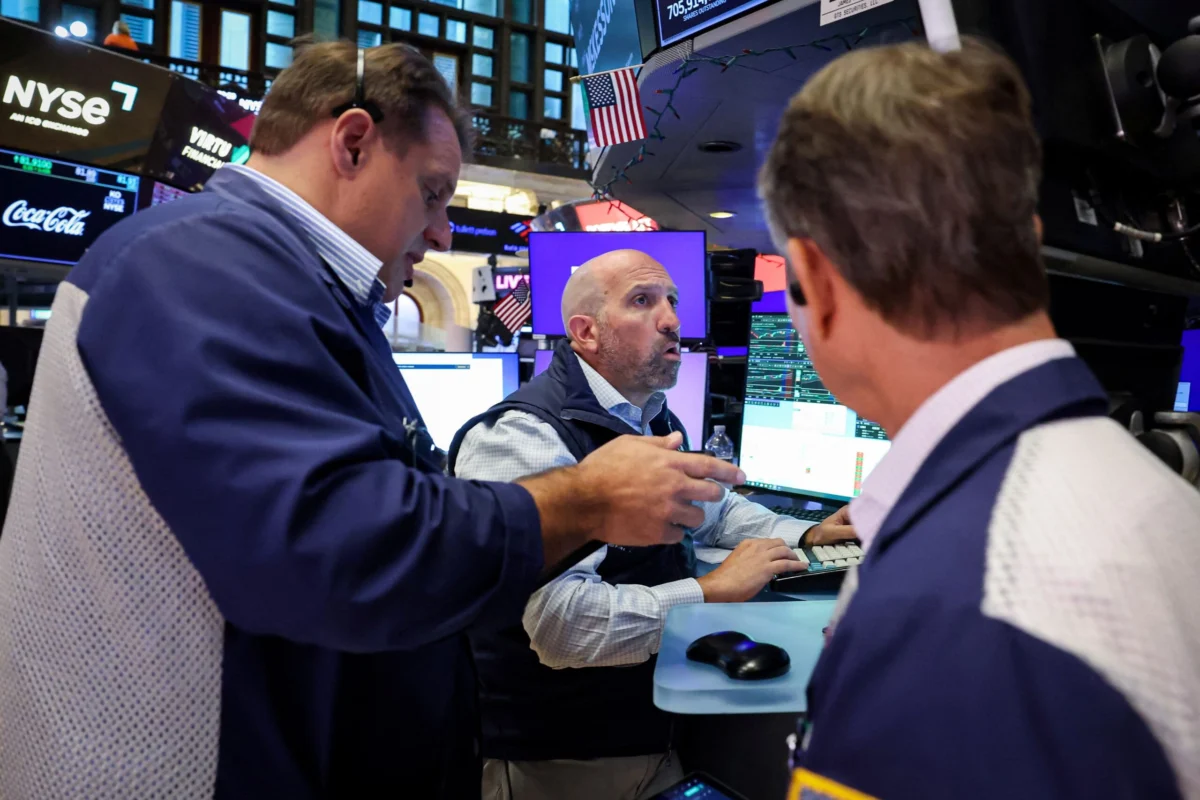
Major U.S. stock indexes experienced a significant downturn on Thursday, July 25, 2026, as investors abruptly began to factor in the severe economic ramifications of a re-escalated and potentially prolonged conflict in the Middle East. This sudden shift marked a departure from weeks of relative market resilience, where equities had largely managed to shrug off mounting geopolitical tensions despite a consistent increase in oil prices and Treasury yields. The S&P 500, a key barometer for U.S. economic health, was poised for its most substantial single-day decline in a month, reflecting a palpable increase in investor anxiety.
The Catalyst: Tanker Attacks and Soaring Commodities
The turning point arrived with alarming reports of attacks against oil tankers off the coast of Saudi Arabia. These incidents immediately sent shockwaves through global commodity markets. Brent Crude futures, the international benchmark, surged dramatically, breaching the critical psychological threshold of $100 per barrel for the first time in months. Simultaneously, the 10-year U.S. Treasury yield, a crucial indicator for borrowing costs and economic outlook, broke through 4.7%, reaching its highest level since January 2025. Western Texas Intermediate (WTI) Crude futures mirrored this upward trajectory, jumping 6% to $92 per barrel, marking a more than 28% increase from lows below $70 per barrel observed earlier in July.
"These problems became too big to ignore," remarked Steve Sosnick, chief strategist at Interactive Brokers, articulating the market’s sudden awakening. "It’s too hard to ignore $100 oil. It’s too hard to ignore 10-year rates that are above 4.70%. It’s too hard for the stock market to ignore 30-year rates that are solidly above 5%." His comments underscored a widespread sentiment that the geopolitical risks, previously compartmentalized by investors, had now spilled over into core economic indicators, demanding immediate attention and repricing.
The market’s previous composure had been remarkable given the backdrop. For twelve consecutive nights leading up to Thursday, the U.S. military had conducted retaliatory strikes against targets in Iran, a clear sign of persistent hostilities. Despite these actions, which had steadily pushed oil prices and Treasury yields higher, domestic equities had largely remained flat, signaling a collective bet by investors that the conflict would not escalate beyond manageable parameters. This prevailing optimism, however, evaporated in the face of direct attacks on commercial shipping, which carry far greater implications for global supply chains and energy security.
A History of Volatility: Echoes of March 2026
This recent market upheaval draws stark parallels to the initial onset of the U.S.-Iran conflict in March 2026. At that time, global financial markets reacted with pronounced alarm. The S&P 500 experienced a significant decline, falling more than 7.5% at its lowest point. The primary driver then, as now, was a dramatic surge in oil prices, which spiked nearly 70% in the immediate aftermath of the initial hostilities. This period was characterized by widespread investor anxiety regarding "stagflation" – a debilitating economic scenario combining high inflation with stagnant economic growth. Analysts and economists voiced serious concerns that soaring energy prices would reignite inflationary pressures across the board, while elevated costs at the gas pump would inevitably weigh heavily on consumer spending, throttling economic activity.
The memories of the 1970s energy crises, which ushered in prolonged periods of stagflation, were fresh in the minds of many market participants. The fear was that the U.S. economy, despite its apparent resilience, might not be immune to such a potent combination of external shocks and domestic vulnerabilities. Companies across various sectors began to re-evaluate their supply chain strategies and input costs, bracing for a potentially extended period of higher operating expenses.
The Brief Interlude of Optimism: De-escalation and AI Hopes
Following the initial shock of March, markets found a surprising footing and staged a ferocious rebound through April and May. This recovery was fueled by a confluence of factors. A series of de-escalation announcements between the U.S. and Iran, culminating in talks in Switzerland and discussions around a "roadmap" and "deconfliction" measures, provided a glimmer of hope that a diplomatic resolution might be achievable. These efforts, though fragile, suggested a potential "off-ramp" from an all-out war.
Crucially, this period also coincided with a reignited faith in the artificial intelligence (AI) trade. Technology stocks, particularly those linked to AI development and infrastructure, surged, pulling the broader market along. Investors, perhaps seeking refuge from geopolitical uncertainties, poured capital into growth sectors perceived as having long-term transformative potential. This enthusiasm for AI provided a powerful counter-narrative to the geopolitical gloom, allowing the S&P 500 to recover much of its earlier losses, even as hostilities continued intermittently in the region.
The "Trump Off-Ramp" Thesis
A significant underlying factor contributing to the market’s earlier resilience was a prevalent belief that President Donald Trump would ultimately find a diplomatic "off-ramp" to end the conflict. This thesis posited that the economic and political consequences of a prolonged war, particularly in an election year, would be too severe for the administration to tolerate. Investors bet that pragmatic considerations would eventually lead to a de-escalation or even a formal peace deal.
JPMorgan equity strategists, in a note earlier in July, encapsulated this sentiment: "We have consistently argued since 2nd half of March to use the equity weakness brought on by the Iran conflict to buy into, as the off-ramp and the eventual deal were likely, in our view." They advised clients to "keep using any dips on the back of adverse geopolitical headlines in order to add," suggesting that such downturns presented buying opportunities based on the expectation of eventual resolution. This perspective largely underpinned the market’s ability to "brush off" ongoing U.S. strikes and the persistent, albeit lower-level, hostilities.

However, the events of Thursday severely tested this "off-ramp" theory. The direct attacks on tankers in a vital shipping lane suggested a dangerous escalation that might be harder to control or de-escalate through diplomatic channels alone. The geopolitical risk premium, which had seemingly been discounted, was now being aggressively priced back into assets.
Renewed Fears: Inflation, Consumer Spending, and Fed Policy
The resurgence of the conflict has prompted a critical reassessment among financial analysts. Sameer Samana, head of global equities and real assets at Wells Fargo Investment Institute, now believes that traders must revisit the economic fears that gripped markets in March. He emphasized the dual threat of higher inflation and the potentially crippling impact that sustained high gas prices could have on consumer spending.
"Investors should be worried about both higher inflation and the impact higher gas prices may have on consumers," Samana stated, adding that the reignited conflict provides a compelling reason to prepare for a larger drawdown in equities. His warning signals a shift from the previous "buy the dip" mentality to a more cautious, risk-averse stance.
Beyond direct energy costs, the market’s reaction also points to a tightening borrowing environment for companies. The dramatic spike in Treasury yields reflects increased perceived risk and a higher cost of capital. Steve Sosnick of Interactive Brokers also highlighted this aspect, noting that the bond market’s reaction, with 10-year rates above 4.70% and 30-year rates solidly above 5%, directly impacts corporate financing.
This tightening financial environment has immediate implications for monetary policy. According to CME’s FedWatch tool, the chances for a rate hike by the Federal Reserve at its next meeting, scheduled for the following week, surged to almost 38%. Furthermore, the odds for a hike at the central bank’s September meeting jumped to more than 80%. Just a week prior, these probabilities stood at approximately 12% and 53%, respectively. This drastic repricing of Fed expectations underscores how quickly geopolitical events can alter the calculus for central bank policymakers, potentially forcing them to prioritize inflation control over growth concerns. Higher rates, in turn, can further dampen economic activity and increase the burden on highly leveraged companies and consumers.
Divergent Long-Term Views and the "Breaking Point"
Despite the immediate market turmoil, some analysts maintain a more sanguine long-term outlook, echoing the sentiment from March that the U.S. economy might be more robust than perceived in handling energy shocks. Michael Tanney, CEO at investment advisory firm Pereon Wealth, is among those who believe that the current spike, while significant, might be more impactful for headlines than for the fundamental health of client portfolios in the short term.
"In the short term, the elevated spike is more meaningful to the headlines than client portfolios," Tanney observed. However, he also articulated a crucial "breaking point" for his assessment: "If we have a sustained price above $120, that’s the breaking point where you’ll see serious trickle-down effects." This threshold suggests that while the current $100 per barrel price is concerning, a prolonged period above $120 could trigger more profound and systemic economic damage, including widespread consumer belt-tightening and significant corporate profit margin compression.
The U.S. economy, having navigated several energy price fluctuations in recent years, has indeed shown some degree of resilience. Advances in domestic energy production, particularly shale oil and gas, have somewhat insulated the nation from global supply shocks compared to decades past. However, a major disruption to global shipping lanes, such as those through the Strait of Hormuz, or a widespread curtailment of global oil supply, could easily overwhelm these domestic buffers.
Broader Economic and Geopolitical Implications
The renewed escalation in the Middle East carries far-reaching implications beyond financial markets. Geopolitically, it signals a dangerous turn, increasing the risk of miscalculation and broader regional conflict. For the global economy, sustained high energy prices could derail efforts to curb inflation, impede post-pandemic recovery, and exacerbate cost-of-living crises in many countries. Supply chain disruptions, already a persistent concern, could worsen, affecting manufacturing, retail, and transportation sectors worldwide.
Policymakers globally will face immense pressure to address both the immediate economic fallout and the underlying geopolitical tensions. Energy security will likely become an even more pressing national priority for many nations, potentially leading to strategic adjustments in energy policy and international relations. The intricate dance between geopolitical events, commodity markets, and monetary policy will continue to dominate financial discourse as the world grapples with this evolving crisis.
As the situation develops, investors and policymakers alike will be closely watching for any signs of de-escalation, further attacks, or shifts in the diplomatic landscape. The S&P 500, having shed approximately 2% since the consecutive evening strikes by the U.S. began on July 12, remains vulnerable to further volatility, underscoring the delicate balance between geopolitical stability and economic prosperity.
— CNBC’s Deena Zaidi, Tanaya Macheel, and Ananya Chetia contributed reporting.

0 Comments