
The United Kingdom’s aviation network remains in a state of significant recovery as major airports continue to grapple with the aftermath of a catastrophic technical failure within the National Air Traffic Services (NATS) flight processing system. Although the primary technical glitch, which emerged on Tuesday, September 8, has been officially resolved, the ripple effects of the outage are expected to persist well into Wednesday and potentially the remainder of the week. Airlines and airport operators are currently engaged in a massive logistical effort to clear backlogged flights and reposition aircraft and crew members who were displaced by the grounding of more than a thousand flights.
The disruption began on Tuesday morning when NATS, the provider of air traffic control services in the United Kingdom, encountered what it described as a "technical issue" affecting its ability to automatically process flight plans. This failure forced controllers to switch to manual input methods, a process that is significantly slower and requires a drastic reduction in the volume of traffic permitted in UK airspace to ensure safety. By the time the system was restored on Tuesday evening, the damage to the day’s schedule was irreversible, leading to the cancellation of approximately 1,300 flights to and from UK airports, according to data provided by FlightRadar24.
A Chronology of the System Failure
The timeline of the crisis highlights the speed with which a single technical vulnerability can paralyze modern infrastructure. On Tuesday morning, September 8, flight controllers first noticed irregularities in the automated processing of flight data. By midday, NATS had officially acknowledged a system-wide failure, prompting a "ground stop" for many departing flights and severe restrictions on arrivals. This immediate bottleneck created a cascading effect across the UK’s busiest hubs, including London Heathrow, Gatwick, Manchester, and Stansted.
As the afternoon progressed, the backlog grew exponentially. Passengers already on the tarmac found themselves waiting for hours before being returned to terminals, while those in departure lounges faced a sea of "canceled" or "delayed" notifications on flight boards. NATS engineers worked throughout the day to identify and rectify the fault, eventually announcing a resolution in the early evening. However, because the UK’s aviation system operates at near-maximum capacity, there was no immediate way to absorb the hundreds of thousands of passengers whose travel plans had been upended.
By Wednesday morning, September 9, the focus shifted from technical repair to operational recovery. FlightRadar24 reported that at least 177 flights scheduled for Wednesday had been canceled in the early hours of the morning, with Heathrow accounting for the vast majority of these disruptions. The primary challenge on Wednesday was not the air traffic system itself, but the fact that aircraft and crews were "out of position"—meaning they were at the wrong airports to fulfill their scheduled Wednesday morning departures.
Technical Context and the NATS Response
The National Air Traffic Services has faced intense scrutiny following the outage. Martin Rolfe, the Chief Executive of NATS, issued a public apology for the disruption, acknowledging the immense stress caused to travelers. In a statement to the BBC, Rolfe confirmed that a full and transparent investigation would be conducted to determine the root cause of the failure. He noted that while the primary issue was resolved on Tuesday, the recovery process is inherently complex due to the interconnected nature of global aviation.
Initial reports suggest the failure occurred within the flight planning system, which handles the digital "scripts" that tell controllers where a plane is coming from, where it is going, and what route it intends to take. When this system fails, controllers cannot see these details automatically on their screens, necessitating manual coordination. NATS stated that resolving the issue took "longer than hoped" because of the complexity of the data synchronization required to ensure that no errors were introduced into the live environment. An official statement on the NATS website emphasized that this was a "very complex recovery" and that the impact on the aviation network would take time to fully subside.
Impact on Major UK Hubs and European Connectivity
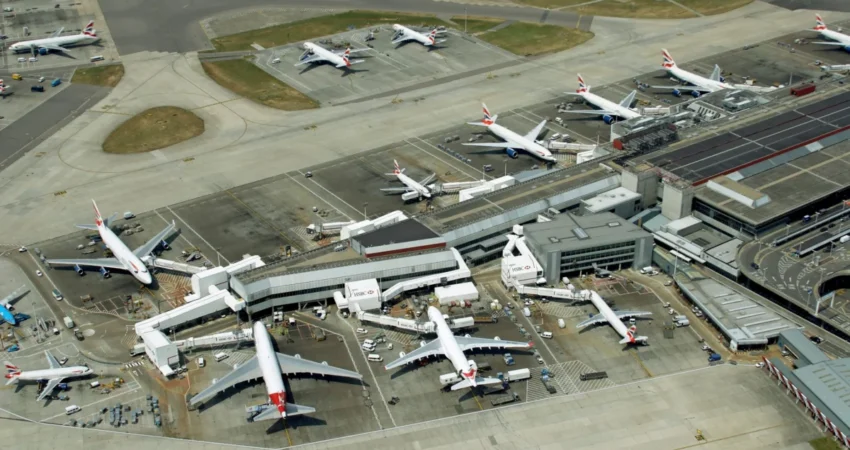
London Heathrow, the UK’s busiest airport and a vital global transit hub, bore the brunt of the disruption. On Tuesday, arrivals were suspended for a significant portion of the day to manage the backlog of aircraft already on the ground. On Wednesday, the airport warned that while flights were operating, passengers should not travel to the airport unless their flight was confirmed. The airport’s management noted that the repositioning of crew and aircraft remains the primary hurdle for returning to a normal schedule.
Other major airports reported similar difficulties:
- London Gatwick: As the world’s busiest single-runway airport, Gatwick had little margin for error. The outage led to significant cancellations for short-haul carriers like EasyJet and Vueling.
- Manchester Airport: Serving as the primary hub for Northern England, Manchester saw dozens of cancellations, affecting both domestic routes and long-haul flights to the United States and the Middle East.
- London Stansted: A major base for Ryanair, Stansted saw thousands of passengers stranded as the low-cost carrier struggled to manage its high-frequency schedule amidst the ATC restrictions.
The disruption was not confined to British soil. Because the UK serves as a gateway for many transatlantic routes and a central pillar of European airspace, airports in Dublin, Paris, Amsterdam, and Frankfurt also reported delays. Flights that were scheduled to overfly UK airspace were diverted or held on the ground, leading to knock-on delays across the continent.
Supporting Data and Economic Implications
The scale of the disruption is reflected in the data. With over 1,300 flights canceled on Tuesday and nearly 200 on Wednesday, it is estimated that upwards of 250,000 passengers have had their travel plans directly impacted. For the airlines, the financial toll is substantial. Industry analysts suggest that the combined costs of lost revenue, passenger care (including hotels and meals), and the logistical expense of repositioning aircraft could run into the tens of millions of pounds.
This incident also highlights the fragility of the "just-in-time" model utilized by modern airlines. Most carriers operate with very tight turnarounds to maximize aircraft utilization. When a system-wide failure like the NATS outage occurs, there is no "slack" in the system to recover quickly. This leads to the multi-day disruption currently being witnessed, where a failure on a Tuesday continues to cancel flights on a Wednesday or Thursday.
Passenger Rights and Compensation Frameworks
For the thousands of travelers currently stranded or delayed, the question of compensation is paramount. The UK Civil Aviation Authority (CAA) provides a clear framework for passenger rights, though the specific cause of this delay complicates the process of cash payouts.
Under UK law (specifically the UK261 regulations, which mirror the original EU261 rules), passengers are entitled to assistance if their flight is delayed or canceled. This includes:
- Food and Drink: Vouchers are typically provided after a delay of two hours for short flights or longer for mid-to-long-haul journeys.
- Accommodation: If a delay stretches overnight, airlines are legally required to provide hotel accommodation and transport between the airport and the hotel.
- Communication: Provisions for making phone calls or sending emails.
Regarding monetary compensation, the situation is more nuanced. Airlines are required to pay between £220 ($300) and £520 ($700) per person if a flight is delayed by more than three hours, provided the delay was within the airline’s control. However, air traffic control failures are generally classified as "extraordinary circumstances"—events that an airline could not have avoided even if all reasonable measures had been taken. Consequently, while airlines must provide "duty of care" (food and hotels), they are often exempt from paying additional cash compensation for ATC-related issues.
If a flight is canceled entirely, the airline must offer the passenger a choice between a full refund or being re-routed on the next available flight to their destination, even if that flight is with a rival carrier.
Broader Implications for Aviation Infrastructure
The NATS failure has reignited a debate regarding the resilience of the UK’s national infrastructure. Coming at a time when the aviation industry is still recovering its full operational strength post-pandemic, this incident raises questions about whether current systems are robust enough to handle the increasing volume of air traffic.
Industry groups and political figures have called for an independent review of NATS’s technical systems. The concern is that a single point of failure within a flight processing system should not be able to ground the entire nation’s aviation sector. Analysis suggests that as air traffic control moves toward more digital and automated systems, the cybersecurity and technical redundancy of these platforms must be prioritized to prevent similar occurrences in the future.
Furthermore, the post-Brexit regulatory landscape adds a layer of complexity for travelers. While UK261 provides robust protections for flights departing from the UK or arriving on a UK carrier, passengers flying between EU countries and the UK on EU-based airlines must navigate a slightly different set of legal precedents. The CAA has advised all affected passengers to keep meticulous records of their expenses, including receipts for food, transport, and lodging, to facilitate the claims process once the immediate crisis has passed.
As of Wednesday afternoon, NATS continues to monitor the stability of its systems. While the technical fault has not recurred, the logistical "hangover" remains the primary challenge. Travelers are urged to remain patient and maintain close contact with their airlines, as the process of returning the UK’s complex aviation machinery to its normal state will likely continue through the end of the week.

0 Comments