
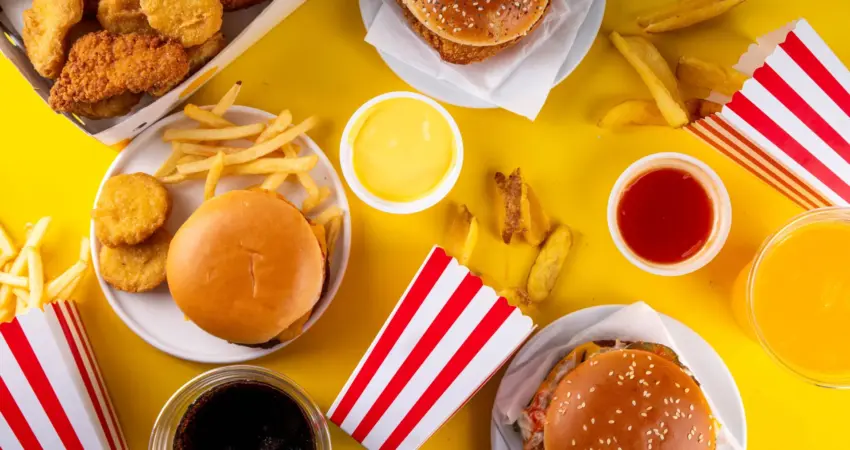
A groundbreaking, large-scale study involving over 460,000 Americans is prompting a re-evaluation of the widely held assumptions about the direct link between ultra-processed foods (UPFs) and colorectal cancer (CRC). Contrary to a simplistic, blanket condemnation of UPFs, new research suggests that the relationship is far more complex, with some categories of these foods potentially associated with a lower incidence of CRC, while others remain linked to an increased risk. This nuanced finding, published on October 15 in the open-access journal PLOS Medicine, challenges the notion that all ultra-processed foods exert a uniformly negative impact on health.
The extensive research, spearheaded by Erikka Loftfield of the National Cancer Institute (NCI), analyzed the dietary habits and health outcomes of a substantial cohort over nearly two decades. The findings underscore that the health implications of ultra-processed foods are likely dictated by their specific ingredients and nutritional profiles rather than their processing level alone. This is a critical distinction, given that UPFs constitute a significant portion of the American diet, accounting for more than half of the daily calorie intake for many adults.
The Rise of Scrutiny on Ultra-Processed Foods
Ultra-processed foods have been under increasing scientific and public health scrutiny due to their potential associations with a range of chronic diseases. This category, however, is remarkably broad, encompassing a vast array of products from breakfast cereals and packaged snacks to ready-to-eat meals and certain dairy products. This inherent diversity has made it challenging for researchers to generalize their health effects.
For instance, previous studies have indicated that certain UPFs, such as those made from whole grains or fortified with dairy, might be associated with a reduced risk of colorectal cancer. Conversely, processed meats, a well-established category of UPFs, have been consistently linked to a higher incidence of CRC. These divergent findings have fueled a crucial debate: is the degree of processing the most pertinent factor, or should the focus shift to the actual composition of these foods?
A Longitudinal Investigation: Tracking Cancer Risk Across a Generation
To address this complex question, researchers embarked on a comprehensive analysis of health and dietary data from the NIH-AARP Diet and Health Study. This ambitious endeavor involved 461,682 participants, aged between 50 and 71 years at the commencement of the study in 1995 and 1996. The participants provided detailed self-reported dietary information through questionnaires, allowing researchers to estimate their baseline intake of various food categories, including ultra-processed foods.
The cohort was then meticulously tracked until 2018, a period spanning approximately 18.8 years on average. This extensive follow-up period enabled the research team to observe the long-term development of colorectal cancer within this large population and to investigate potential correlations with their initial dietary patterns.
The initial analysis revealed a surprising outcome: there was no statistically significant overall association between the total quantity of ultra-processed foods consumed and the incidence of colorectal cancer. In simpler terms, individuals who reported eating more UPFs did not, as a collective group, develop colorectal cancer at higher rates than those who consumed less. This finding directly challenges the more alarmist narratives that often paint all UPFs with the same brush of being inherently detrimental to cancer prevention.
Unpacking the Nuances: Differentiating UPF Impacts
However, the study’s strength lies in its granular examination of individual food categories within the UPF classification. When researchers delved deeper, a much more intricate picture emerged, highlighting significant variations in health associations.
Beneficial UPFs: Whole Grains, Dairy, and Fiber
Intriguingly, the study found that higher consumption of ultra-processed sources of whole grains, fiber, dairy products, and calcium was actually associated with a lower incidence of colorectal cancer. This suggests that even when these nutrient-rich components are found in processed forms, they may still confer protective benefits. For example, fortified whole-grain cereals or enhanced dairy beverages, while processed, could contribute positively to gut health and cancer prevention.
Harmful UPFs: Processed Meats Remain a Concern
In stark contrast, meat derived from ultra-processed sources exhibited the opposite pattern. Greater intake of these products was demonstrably linked to a higher incidence of colorectal cancer. This finding aligns with decades of established research and public health advisories that recommend limiting the consumption of processed meats like bacon, sausages, and deli meats due to their carcinogenic properties, primarily attributed to compounds formed during processing and cooking.
The Impact of Substitution
Further enriching the study’s insights, the researchers explored the potential benefits of substituting UPFs with less processed alternatives. Their analysis indicated that replacing just 10% of a person’s ultra-processed food intake by weight with minimally processed foods was associated with a 2% reduction in colorectal cancer incidence. While seemingly modest, this finding underscores the principle that dietary quality, even within the context of UPF consumption, can make a difference. It suggests that a dietary shift towards less processed options, even partially, can yield tangible health benefits.
These results collectively emphasize that the nutritional characteristics and specific biological effects of individual foods are likely more crucial indicators of health outcomes than a broad categorization of "ultra-processed." Foods that fall under the same umbrella term can possess vastly different associations with cancer risk, highlighting the limitations of simplistic dietary classifications.
Critical Limitations and Considerations
Despite the study’s impressive scale and extended follow-up period, the researchers are quick to acknowledge several important limitations that temper the universality of their conclusions. These caveats are crucial for a balanced interpretation of the findings.
Demographic Representation
A primary limitation is the demographic makeup of the study participants. The vast majority were older, white Americans. Consequently, the findings may not accurately reflect the dietary patterns and subsequent cancer risks of younger adults, or individuals from more racially and ethnically diverse populations. These groups may have different dietary habits, genetic predispositions, and environmental exposures that could influence their relationship with ultra-processed foods and colorectal cancer.
Dietary Data Collection Challenges
Another significant constraint pertains to the methodology of dietary data collection. Participants reported their eating habits only once, at the inception of the study. This cross-sectional dietary assessment means that researchers could not account for the considerable changes that individuals’ diets typically undergo over several decades. Dietary habits evolve due to various factors, including changing lifestyles, economic circumstances, health conditions, and the introduction of new food products.
Furthermore, the availability and variety of ultra-processed foods have expanded exponentially since the mid-1990s. This proliferation means that the initial dietary assessments likely underestimated participants’ actual consumption of these foods throughout the study period. The dynamic nature of the food environment and individual diets presents a considerable challenge to long-term nutritional epidemiology.
Observational Nature of the Study
Crucially, this research is observational. This means it can identify associations and correlations between dietary patterns and health outcomes, but it cannot definitively establish cause and effect. While the study provides strong evidence for links, it cannot prove that specific ultra-processed foods directly cause or prevent colorectal cancer. Other unmeasured lifestyle factors, genetic predispositions, or environmental influences could be playing a role.
Implications for Dietary Guidance and Public Health
The findings from this extensive study offer valuable insights for navigating the complex landscape of ultra-processed foods and their impact on health. Rather than advocating for a complete avoidance of all UPFs, which may be impractical and overlook beneficial components, the research supports a more nuanced approach focused on the nutritional content and specific health associations of individual foods.
The results largely align with existing dietary recommendations aimed at colorectal cancer prevention. These guidelines consistently encourage the consumption of whole grains, fiber-rich foods, dairy products, and calcium-rich foods, while simultaneously advising a reduction in processed meats. This study provides further empirical support for these established recommendations by dissecting the UPF category.
Erikka Loftfield, the lead researcher, commented on the study’s implications: "In this large population of older US adults, we did not observe an association between total ultra-processed food (UPF) intake and colorectal cancer incidence; however, when we looked at food groups, like whole grains, dairy, and meat, by UPF or non-UPF source, we found that associations were in line with current dietary guidance for colorectal cancer prevention such that higher whole grain and dairy but lower meat intakes were associated with lower colorectal cancer incidence."
This statement highlights the critical takeaway: the "ultra-processed" label may not be the most informative descriptor when it comes to cancer risk. The specific types of foods individuals consume appear to be a more significant determinant of their colorectal cancer risk than the simple fact of whether those foods have undergone extensive processing.
Future Directions and Broader Impact
The study’s findings prompt further research into the specific mechanisms by which different UPFs influence cancer development. Investigating the role of additives, processing techniques, and nutrient fortification within various UPF categories could yield even more precise dietary guidance.
Moreover, future studies should strive for greater demographic diversity and incorporate more dynamic methods of dietary assessment, such as repeated dietary surveys or the use of dietary biomarkers, to capture the evolving nature of food consumption over time.
The broader impact of this research lies in its potential to refine public health messaging. Instead of promoting an often overwhelming and potentially misleading "avoid all UPFs" directive, future communications can focus on empowering consumers to make informed choices by understanding the nutritional value and specific health associations of the foods they eat. This nuanced approach, supported by robust scientific evidence, is crucial for fostering sustainable and effective dietary habits that contribute to long-term health and cancer prevention.
The research was supported by the Intramural Research Program of the National Cancer Institute, National Institutes of Health. Authors affiliated with the National Cancer Institute’s Intramural Research Program have disclosed their roles as employees or former employees. The funding organization confirmed its non-involvement in the study’s design, data collection, analysis, publication decisions, or manuscript preparation, ensuring the scientific integrity of the research.

0 Comments