
The echoes of a devastating plague, once a dire warning in ancient Jordan, are being brought to light with unprecedented clarity by a dedicated team of researchers. Far from being a mere footnote in history, the so-called Plague of Justinian, believed to be the first recorded outbreak of bubonic plague in the Mediterranean, left an indelible mark on society, shaping demographics, urban life, and historical trajectories for centuries. Now, an interdisciplinary cohort from the University of South Florida (USF) is meticulously reconstructing the human narrative of this ancient crisis, moving beyond the identification of pathogens to reveal the lived experiences of those who endured its relentless march. Their latest findings, published in the esteemed Journal of Archaeological Science, delve into the bioarchaeological signatures left behind in the ancient city of Jerash, Jordan, offering a profound glimpse into a pandemic that claimed millions of lives across the Byzantine Empire between 541 and 750 CE.
Led by Professor Rays H. Y. Jiang from USF’s College of Public Health, the research team’s ongoing series of papers is systematically dismantling the veil of mystery surrounding this pivotal historical event. While earlier studies in the series focused on the identification of Yersinia pestis, the bacterium responsible for the plague, this new work pivots towards a more human-centric approach. "We wanted to move beyond identifying the pathogen and focus on the people it affected, who they were, how they lived, and what pandemic death looked like inside a real city," Professor Jiang articulated. This fundamental shift in perspective aims to transform our understanding of pandemics from abstract historical occurrences into tangible, lived human health events, deeply embedded within the social and environmental fabric of the time.
A Glimpse into the Abyss: The Jerash Mass Grave
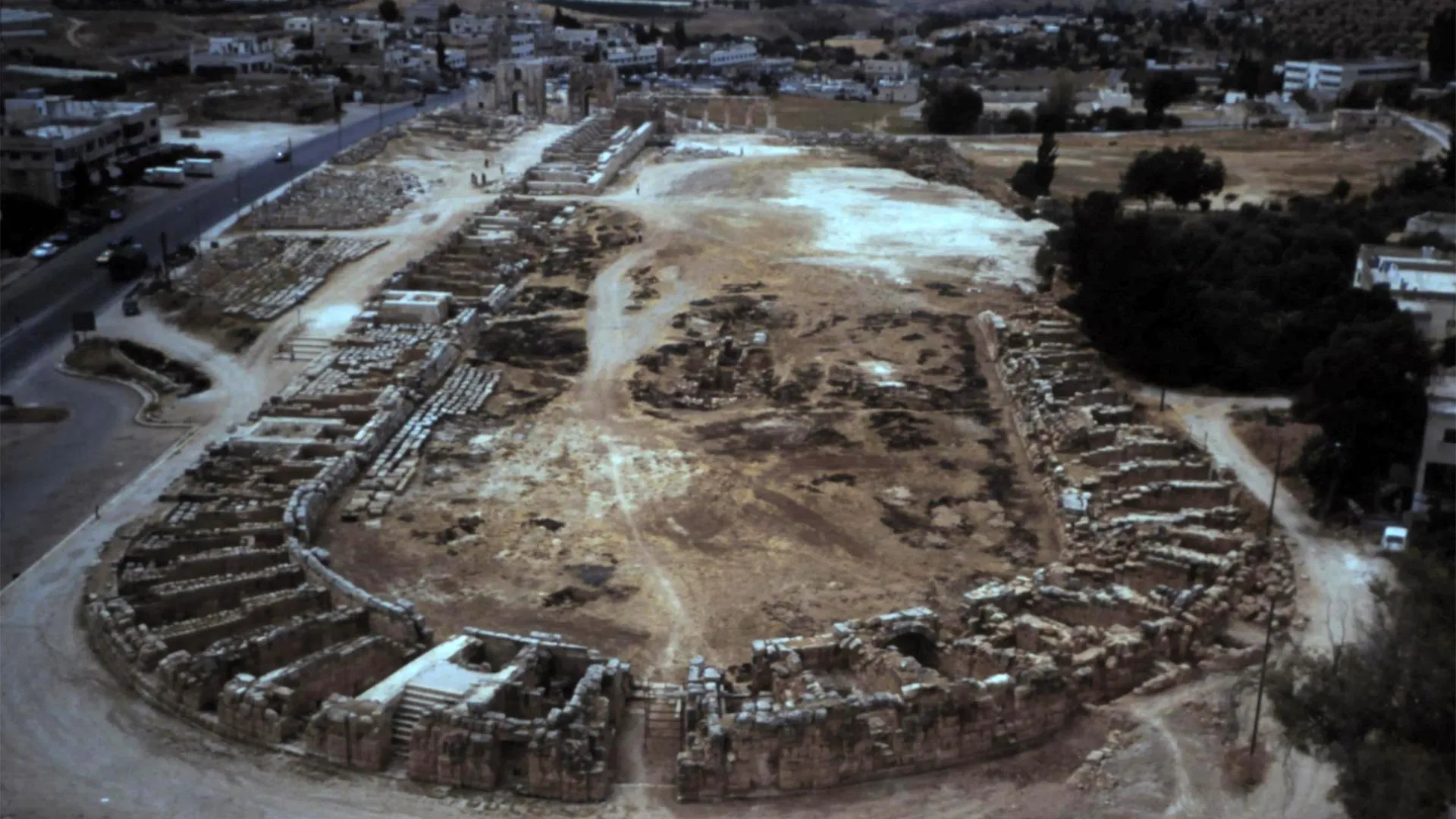
The heart of this groundbreaking research lies in the excavation and analysis of a mass grave in Jerash, a meticulously preserved Roman-Byzantine city in present-day Jordan. At the zenith of the Plague of Justinian, a period marked by widespread and devastating mortality, individuals from diverse and often socially disconnected communities found themselves united in their final resting place. This particular site, an abandoned public area where large numbers of bodies were rapidly interred atop pottery debris, has emerged as the first confirmed plague-related mass grave in history, validated by both rigorous archaeological evidence and cutting-edge genetic testing.
The implications of this discovery are immense. Unlike traditional burial grounds that develop organically over extended periods, the Jerash site represents a singular, catastrophic event. Hundreds of individuals were laid to rest within a compressed timeframe, a stark testament to the overwhelming death toll and the desperate measures taken by the surviving population. This finding fundamentally reshapes our understanding of the First Pandemic, providing irrefutable evidence of large-scale mortality and offering unprecedented insights into the intricate web of life, movement, and vulnerability within ancient urban environments. The speed and scale of the burial underscore the profound societal disruption caused by the plague, pushing urban infrastructure and social order to their breaking points.
The research team, a robust interdisciplinary collaboration, brought together expertise from USF’s Genomics, Global Health Infectious Disease Research Center, and departments spanning anthropology, molecular medicine, and history. Their work was further bolstered by the invaluable contributions of archaeologist Karen Hendrix from Sydney University in Australia and the sophisticated DNA analysis capabilities of a laboratory at Florida Atlantic University. This synergistic approach was crucial in piecing together the complex narrative of the plague’s impact. While previous research had successfully identified the plague organism, the Jerash site has now transformed that genetic signal into a deeply human story. "The earlier stories identified the plague organism," Professor Jiang explained. "The Jerash site turns that genetic signal into a human story about who died and how a city experienced crisis."
Unraveling Mobility and Hidden Connections
One of the most enduring questions surrounding ancient pandemics has been the interplay between population mobility and community structures. Historical accounts often suggest widespread travel and intermingling across regions, yet archaeological evidence from burial sites frequently points to localized, insular communities. The Jerash findings offer a compelling resolution to this apparent dichotomy, demonstrating that these patterns are not mutually exclusive but can, in fact, coexist.
The research suggests that while migration and movement within the wider Byzantine world typically occurred at a slow, generational pace, integrating seamlessly into the fabric of daily life and thus remaining difficult to detect in standard burial grounds, a catastrophic event like the Plague of Justinian could dramatically alter this dynamic. During periods of extreme crisis, individuals from more mobile backgrounds, those who might have been dispersed across the region under normal circumstances, were often brought together in a single, consolidated burial site. This consolidation made their previously "hidden connections" visible to modern researchers, revealing the intricate social networks that existed beneath the surface of seemingly localized communities.
The evidence unearthed in Jerash points towards the individuals buried there belonging to a mobile population that was an integral part of the broader urban community. While their daily lives might have been spread across a wider geographical area, the overwhelming force of the plague united them in this singular, somber interment during a moment of profound crisis. This insight challenges simplistic models of ancient societies and highlights the dynamic nature of human interaction, particularly under duress. The study effectively illustrates how a pandemic can act as a powerful centrifuge, concentrating disparate populations and revealing the underlying patterns of their connectivity.
The Enduring Legacy: Lessons from a Long-Gone Pandemic
The implications of this research extend far beyond the ancient city of Jerash and the historical period of the Plague of Justinian. By meticulously linking biological evidence derived from the human remains to their specific archaeological context, Professor Jiang and his team are providing an unparalleled understanding of how disease impacts real people within their complex social and environmental landscapes. "By linking biological evidence from the bodies to the archaeological setting, we can see how disease affected real people within their social and environmental context," Professor Jiang emphasized. "This helps us understand pandemics in history as lived human health events, not just outbreaks recorded in text."
This research is instrumental in shifting the scientific paradigm for understanding pandemics. The focus is broadening to encompass not just the origins and transmission routes of pathogens but also their profound influence on daily life, social structures, and the vulnerability of populations. The factors that played a significant role in the spread and impact of the Plague of Justinian – dense urban populations, extensive travel networks, and environmental changes – remain remarkably relevant in contemporary public health discourse. The ancient world, in its struggle against disease, mirrors many of the challenges faced by societies today.
Professor Jiang’s concluding remarks underscore the timeless relevance of their findings: "Pandemics aren’t just biological events, they’re social events, and this study shows how disease intersects with daily life, movement, and vulnerability," he stated. "Because pandemics reveal who is vulnerable and why, those patterns still shape how disease affects societies today." This sentiment highlights the critical importance of historical perspective in navigating current and future public health crises. By understanding the vulnerabilities exposed by past pandemics, societies can develop more effective strategies for mitigating the impact of future outbreaks, fostering resilience, and promoting equitable health outcomes.
Context and Chronology of the Plague of Justinian
To fully appreciate the significance of the Jerash findings, it is crucial to understand the broader context and timeline of the Plague of Justinian. This devastating pandemic, which swept across the Byzantine Empire and beyond, is estimated to have begun in 541 CE, likely originating in Egypt before spreading rapidly through trade routes. It is believed to have recurred in waves for over two centuries, finally subsiding around 750 CE.
The plague’s impact was cataclysmic. Contemporary accounts, most notably from the historian Procopius, describe scenes of unimaginable horror, with cities decimated and populations decimated. Estimates of the death toll vary widely, but it is generally accepted that tens of millions perished across the Mediterranean world, Europe, and parts of Asia. This mortality rate significantly weakened the Byzantine Empire, impacting its military capacity, economic stability, and territorial integrity. Some historians argue that the plague played a crucial role in the eventual decline of the empire and facilitated the Arab conquests of the 7th century.
The identification of Yersinia pestis as the causative agent of the Plague of Justinian has been a long-standing goal of researchers. Early genetic studies of ancient DNA provided strong evidence for the bacterium’s presence, but concrete archaeological proof of mass burial sites specifically linked to the plague remained elusive until the Jerash discovery. The city of Jerash itself was a thriving urban center during the Byzantine period, a testament to the Roman legacy of urban planning and infrastructure. Its abandonment and subsequent rediscovery by archaeologists have made it a vital site for understanding ancient life and its vulnerabilities.
Supporting Data and Broader Implications
While the article focuses on qualitative insights derived from the Jerash site, the underlying research involves sophisticated quantitative analysis. The bioarchaeological study likely involves detailed osteological analysis of the skeletal remains, examining indicators of disease, nutritional status, and age at death. Radiocarbon dating of the skeletal material and associated artifacts would have been crucial in establishing the precise timeframe of the burial event. Furthermore, the genetic analysis would have focused on extracting and sequencing DNA from the remains to confirm the presence of Yersinia pestis and potentially identify specific strains of the bacterium.
The broader implications of this research are manifold. For historians, it provides a more nuanced and empirically grounded understanding of a pivotal period in human history, moving beyond textual interpretations to incorporate tangible evidence of the plague’s human toll. For public health professionals, it offers valuable case studies in pandemic preparedness and response, highlighting the interconnectedness of biological, social, and environmental factors in disease outbreaks. The insights gained from studying how ancient urban populations coped with mass mortality, social disruption, and resource scarcity can inform contemporary strategies for disaster management and public health resilience.
The study’s emphasis on vulnerability is particularly pertinent. Pandemics, by their nature, disproportionately affect certain segments of the population, often those who are already marginalized or disadvantaged. Understanding the historical patterns of vulnerability – whether due to socioeconomic status, occupation, or geographic location – can help societies identify and address contemporary inequities that exacerbate the impact of disease. The Jerash findings serve as a powerful reminder that pandemics are not merely medical emergencies but profound social and political events that expose and often amplify existing societal fault lines.
Official Responses and Academic Discourse
While specific "official responses" from contemporary authorities during the Plague of Justinian are largely lost to history or documented in a way that makes direct comparison difficult, the academic discourse surrounding this research reflects a growing consensus on the importance of interdisciplinary approaches to understanding historical pandemics. The publication of multiple papers in peer-reviewed journals, the collaboration between diverse institutions, and the consistent engagement of Professor Jiang in articulating the project’s goals all point to a robust and collaborative academic effort.
The reactions from related parties, while not explicitly detailed in the provided text, can be inferred from the collaborative nature of the research. The involvement of universities across continents and various specialized departments suggests a shared commitment to unraveling the mysteries of this ancient plague. The scientific community’s engagement with this research is likely to be one of critical evaluation, further investigation, and integration into existing bodies of knowledge on epidemiology, archaeology, and history. The findings from Jerash are poised to stimulate new avenues of research, encouraging further excavations and analyses of similar sites across the former Byzantine Empire and beyond.
In conclusion, the work undertaken by Professor Jiang and his team at the University of South Florida represents a significant leap forward in our comprehension of the Plague of Justinian. By meticulously excavating and analyzing the human remains from the confirmed mass grave in Jerash, Jordan, they have transformed an abstract historical event into a tangible, deeply human story. This research not only illuminates the devastating scale of mortality but also reveals the intricate social dynamics, patterns of mobility, and profound vulnerabilities that characterized life during this ancient pandemic. As we continue to grapple with the realities of global health crises, the lessons learned from this ancient plague, unearthed from the sands of Jordan, resonate with an urgent and timeless relevance.

0 Comments