
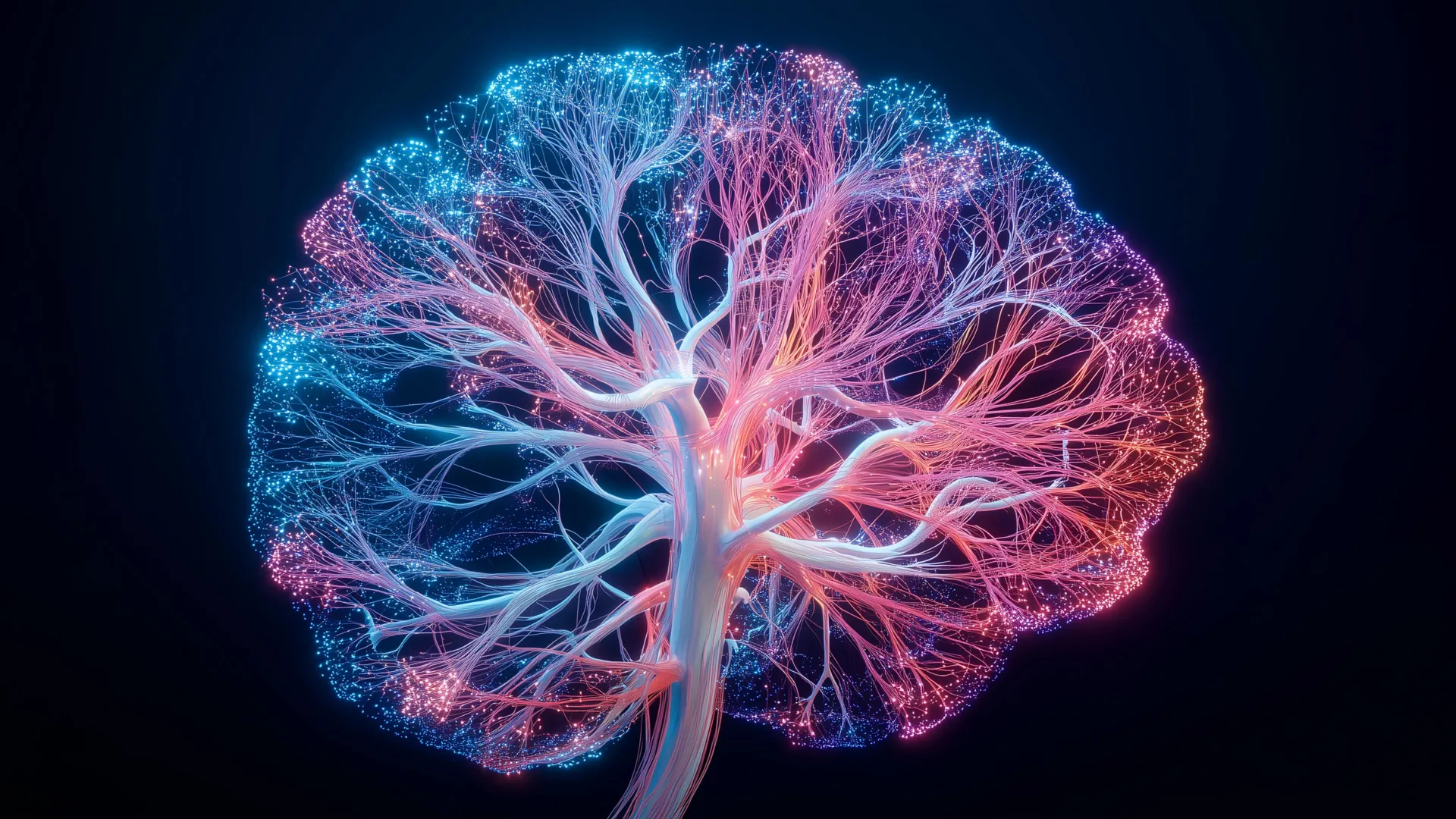
Scientists at the University of Illinois Urbana-Champaign have uncovered compelling evidence that could fundamentally alter our understanding of both biological and artificial intelligence. Their groundbreaking research suggests that the intricate process of decision-making within the brain initiates far earlier than previously theorized, potentially offering a revolutionary paradigm for the development of more capable and significantly more energy-efficient artificial intelligence systems. This discovery challenges long-held assumptions about neural information processing and opens new avenues for emulating the remarkable efficiency of biological computation.
Reimagining Neural Architecture: A Departure from Hierarchical Models
For decades, a dominant model in neuroscience and artificial intelligence posited a strictly hierarchical flow of information within the brain. In this widely accepted view, sensory input travels sequentially upwards through a series of increasingly complex neural regions, culminating in the frontal cortex, where higher-level cognitive functions, including decision-making, are believed to reside. This model has heavily influenced the design of many contemporary AI systems, most notably convolutional neural networks, which are structured to mimic this one-way processing.
However, the research team, led by Yurii Vlasov, a professor of electrical and computer engineering at The Grainger College of Engineering, has presented findings that cast doubt on the completeness of this traditional framework. Their work, published in the prestigious journal Proceedings of the National Academy of Science (PNAS), points to an unexpected and crucial role for early sensory brain regions in the decision-making process. This suggests a more dynamic and interconnected architecture, where information is not merely transmitted upwards but is also subject to complex feedback mechanisms.
The Biological Blueprint: Lessons from Evolutionary Intelligence
The human brain, with its estimated 86 billion neurons and trillions of synaptic connections, remains one of science’s grandest mysteries. The National Academy of Engineering identified reverse-engineering the brain as one of the 14 grand challenges for engineering in the 21st century in 2008, underscoring the profound complexity and the potential benefits of understanding its inner workings.
Vlasov and his colleagues are increasingly advocating for a shift in perspective, moving towards a model inspired by "natural intelligence" – the product of hundreds of millions of years of evolutionary refinement. This evolutionary perspective highlights the brain’s ability to perform astonishingly complex tasks with a fraction of the energy consumed by even the most advanced artificial systems. The current disparity in energy efficiency is stark: while a human brain operates on approximately 20 watts, a sophisticated AI model can consume megawatts of power. Understanding the architectural principles that enable this biological efficiency is therefore a critical goal for future AI development.
"We want to learn from a billion years of evolution," Vlasov stated in a university press release. "How is that biological intelligence organized architecturally? Can we learn from the architectural side of the brain and emulate that to make AI more effective, less power hungry, and more intelligent than it currently is? In the level of decision-making, that’s where current AI is lacking."
Empirical Evidence: Early Sensory Regions Engage in Decision-Making
To rigorously investigate their hypothesis, the research team designed an experiment focused on the brain’s initial stages of sensory perception. They employed advanced neural recording techniques to monitor the brain activity of mice as the animals navigated a virtual reality corridor and made perceptual choices. The virtual environment was carefully constructed to necessitate specific sensory interpretations and subsequent behavioral responses.
The key finding emerged from the analysis of neural activity in the primary somatosensory cortex (S1). S1 is considered one of the brain’s earliest sensory processing areas, traditionally thought to be primarily responsible for relaying raw sensory data to higher cortical regions. However, the University of Illinois researchers observed significant "decision-related activity" within S1 itself. This suggests that rather than passively receiving and transmitting information, S1 is actively participating in the evaluative and selective processes that underpin decision-making.
Crucially, the study revealed that S1’s activity was not solely driven by incoming sensory signals. Instead, it appeared to be modulated by signals originating from higher brain regions through feedback loops. This "top-down" regulation implies a continuous dialogue between different levels of the neural hierarchy, rather than a unidirectional flow. Decisions, therefore, are not a singular event occurring at a specific high-level processing center, but rather an emergent property of dynamic communication across multiple brain areas.
Implications for Artificial Intelligence: Towards More Efficient and Capable AI
The implications of these findings for the field of artificial intelligence are profound. Current AI systems often struggle with the energy demands required for complex tasks. By uncovering evidence of early and distributed decision-making in the brain, researchers gain valuable insights that could inform the design of novel AI architectures.
Instead of replicating the limitations of a simple hierarchical model, future AI could potentially be designed to incorporate feedback loops and distributed processing, mirroring the brain’s more efficient and robust architecture. This could lead to AI systems that are not only more intelligent and adaptable but also dramatically more energy-efficient, making them suitable for a wider range of applications, including edge computing, robotics, and mobile devices where power constraints are critical.
"The neural code of the brain is still mostly an unknown language," Vlasov commented, highlighting the ongoing challenges in fully deciphering neural processes. "But this systems-level understanding can be viewed as a potential impact on how more efficient artificial neural networks can be built – how the next generation of AI can be thought through. Maybe with these analogies that we learn from real brains, we can improve AI further."
Bridging the Gap: Future Research Directions and Technological Advancements
While the University of Illinois study provides a compelling new perspective, the researchers are quick to emphasize that it does not offer a direct blueprint for building better AI. Instead, it provides a critical conceptual shift, offering new insights into the fundamental organizational principles of biological decision-making that can inspire future AI architectures.
The team’s immediate next steps involve delving deeper into the temporal dynamics of these brain signals. Understanding the precise timing and coordination of neural activity within these feedback loops is essential for a comprehensive grasp of how decisions are formed and shaped. This will likely involve the development of novel neurotechnologies capable of measuring neural activity with unprecedented precision and at a finer temporal resolution.
"By looking at the fast temporal dynamics of neural activity, maybe we can understand better how these feedback loops are engaged in making decisions," Vlasov explained. "Maybe that’s the approach that potentially uncovers these currently unknown mechanisms – how these feedback loops are organized dynamically and how they form and shape different levels of processing. Maybe that can be implemented in new architectures for AI."
The research represents a significant step forward in the ongoing quest to understand the brain and leverage its principles to advance artificial intelligence. By challenging established paradigms and focusing on the evolutionary wisdom embedded in biological intelligence, scientists at the University of Illinois Urbana-Champaign are paving the way for a future where AI is not only more powerful but also more sustainable and biologically inspired. The journey to fully reverse-engineer the brain and translate its secrets into practical AI applications is long, but this latest discovery marks a pivotal moment, offering a clearer vision of the path ahead.

0 Comments