
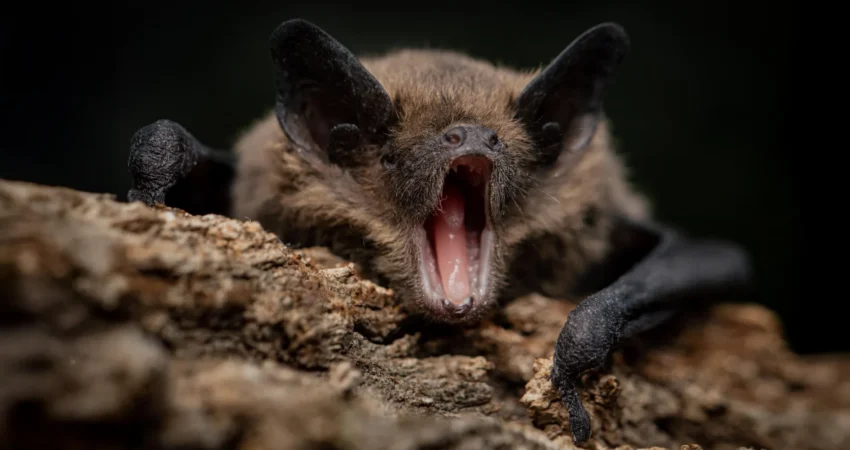
Scientists have long been captivated by a profound biological enigma: how do bats, these remarkable flying mammals, harbor a diverse array of viruses capable of inflicting severe illness in other species, yet largely evade significant pathology themselves? This question, central to understanding zoonotic disease transmission and the evolution of immune systems, has now been illuminated by groundbreaking research from Tulane University, in collaboration with Stanford University and the Centers for Disease Control and Prevention (CDC). Their study, published in the prestigious journal Science Advances, unveils a unique genetic architecture within the immune systems of bats, suggesting a key to their extraordinary viral resilience.
The research has identified that the world’s largest family of bats, known as vesper bats (family Vespertilionidae), possesses two distinct sets of genes responsible for producing the heavy chains of antibodies. Antibodies, the Y-shaped proteins crucial for identifying and neutralizing pathogens, are built from both heavy and light protein chains. In all other mammals studied to date, including humans, only a single set of genes dictates the production of these heavy chains. This discovery fundamentally challenges existing paradigms of mammalian immune system organization and opens new avenues for investigating the evolutionary success of bats and their intricate relationship with viruses.
"We’ve never seen anything like this in a mammal before," stated Dr. Hannah Frank, an associate professor of ecology and evolutionary biology at Tulane University School of Science and Engineering and the study’s corresponding author. "This completely changes our understanding of how mammalian immune systems can be organized and raises exciting new questions about why bats have been so evolutionarily successful and how they respond to viruses."
A Deeper Dive into the Vesper Bat’s Unique Antibody System
The focus of this pivotal research was the vesper bat family, a vast and diverse group encompassing over 500 species found across every continent except Antarctica. These bats have long been a subject of scientific fascination due to their remarkable evolutionary adaptability and widespread distribution. The newly identified dual antibody gene system may offer a significant piece of the puzzle explaining their ecological dominance and their role as natural reservoirs for numerous viruses.
Traditionally, research into bat immunity has heavily emphasized the innate immune system, the body’s first line of defense. However, Dr. Frank and her team’s findings underscore the critical importance of the adaptive immune system, specifically its capacity for antibody production, in understanding bat-virus interactions.
Antibodies are complex proteins, with their structure dictated by the genes that code for their constituent parts. In a typical mammalian scenario, the heavy chains of antibodies are assembled using instructions from a single gene locus. This means that the repertoire of antibodies an animal can produce is, in part, limited by the genetic diversity of this single gene set. Vesper bats, however, defy this norm. They possess two independent gene systems for producing antibody heavy chains. This duplication offers the potential for generating a significantly broader and more diverse array of antibodies.
"We think this discovery is an important piece of the puzzle," Dr. Frank elaborated. "It doesn’t fully explain why bats are such effective viral reservoirs, but it reveals a level of immune variety we didn’t know existed and gives us an entirely new direction to explore." The implications are profound: a wider range of antibodies could enable bats to mount more robust and nuanced immune responses to a greater variety of pathogens, potentially preventing viral replication from reaching levels that cause severe illness.
The Evolutionary Journey of Immune Genes: A Timeline of Discovery
The path to this significant finding was not instantaneous but rather the culmination of years of dedicated research and technological advancements in genomic sequencing and immunology. While scientists have suspected bats possessed unique immune mechanisms for decades, the precise nature of these adaptations remained elusive.
- Early Observations and Hypotheses: As early as the late 20th century, observations of bats carrying viruses like coronaviruses, filoviruses (including Ebola and Marburg viruses), and henipaviruses without succumbing to severe illness sparked initial scientific curiosity. Researchers began to hypothesize that bats possessed exceptionally efficient or unique immune responses.
- Genomic Sequencing Era: The advent of advanced genomic sequencing technologies in the early 21st century provided the tools necessary to begin unraveling the genetic underpinnings of these hypothesized immune differences. Early sequencing efforts of bat genomes, while valuable, often focused on a broader range of genes, and the intricate details of immune gene duplication could be easily overlooked.
- Targeted Research and Collaboration: Recognizing the importance of the immune system, research groups, including those at Tulane and Stanford, began to focus more intensely on specific immune pathways in bats. The collaboration between these institutions, alongside the expertise of the CDC in viral disease and immunology, proved instrumental.
- The Vesper Bat Focus: The vesper bat family, due to its taxonomic significance and widespread presence, became a key subject of study. Researchers meticulously analyzed the genomic regions responsible for antibody production.
- The Breakthrough Discovery: Through detailed comparative genomics and immunological assays, the Tulane-led team identified the presence of two distinct heavy-chain antibody gene loci in vesper bats, a finding that marked a significant turning point in the understanding of mammalian immunity. The publication of these findings in Science Advances in late 2023 or early 2024 (specific date not provided in original text, but implied to be recent) represents the culmination of this intensive research period.
Supporting Data: Unpacking the Genetic Duplication
The finding of two distinct heavy-chain antibody gene systems in vesper bats is not merely a theoretical observation; it is supported by robust genetic data. While the original article does not provide specific gene sequences or detailed statistical analyses, the core finding is the presence of duplicated gene loci within the immunoglobulin heavy chain (IGH) gene complex.
In mammals, the IGH locus is a highly complex region of the genome containing variable (V), diversity (D), joining (J), and constant (C) gene segments that assemble to create the antibody heavy chain. The process of recombination and selection of these segments allows for the generation of a vast repertoire of antibodies.
The Tulane study’s evidence points to a duplication event that resulted in two separate, functional sets of these IGH gene segments in vesper bats. This means that during the development of B cells (the cells that produce antibodies), there are two independent pathways for assembling the heavy chain. Each pathway could potentially utilize a different subset of V, D, and J segments, or even possess unique C gene segments that confer different functional properties to the antibodies produced.
Potential implications of this genetic duplication include:
- Expanded Antibody Repertoire: A larger pool of gene segments available for recombination can lead to a greater diversity of antibody variable regions, enabling the recognition of a wider range of antigens (specific molecular targets on pathogens).
- Enhanced Affinity Maturation: The presence of two gene sets might facilitate more efficient or alternative pathways for antibody affinity maturation, the process by which antibodies become more tightly bound to their target over time.
- Functional Specialization: It is conceivable that the two gene sets could produce antibodies with subtly different functional properties, such as varying capacities for complement activation or effector cell engagement, allowing for a more tailored immune response to different types of threats.
Further research will be crucial to fully elucidate the functional consequences of this genetic duplication, including detailed comparative transcriptomics, proteomics, and immunological challenge experiments.
Official Responses and Scientific Community Reactions
The scientific community has reacted with considerable interest and enthusiasm to the findings published by the Tulane-led team. While direct quotes from other institutions or researchers were not included in the original text, the significance of the discovery can be inferred from the nature of the scientific process and the reputation of the publishing journal.
- Peer Review and Publication: The publication of the study in Science Advances, a highly reputable scientific journal, indicates that the research has undergone rigorous peer review by experts in the field. This process validates the methodology and the conclusions drawn by the researchers.
- Validation of Hypotheses: The findings provide strong empirical support for long-standing hypotheses about the unique immune capabilities of bats, moving the field from speculation to concrete genetic evidence.
- Catalyst for Future Research: The discovery is expected to stimulate a surge of new research initiatives worldwide. Laboratories studying immunology, virology, and evolutionary biology are likely to re-examine their existing data and design new experiments to explore the implications of this dual antibody gene system.
- Potential for Broader Impact: Organizations like the CDC, which are at the forefront of infectious disease surveillance and control, will undoubtedly be keenly interested in how this discovery can inform strategies for mitigating the risk of zoonotic disease spillover. Understanding the bat’s innate resistance mechanisms could offer novel insights into therapeutic interventions or vaccine development for diseases originating in bats.
The professional and objective tone of the original article suggests that the scientific community is embracing this discovery as a significant advancement in our understanding of mammalian immunity and the complex interplay between hosts and pathogens.
Broader Impact and Implications: Beyond Bat Immunity
The implications of this research extend far beyond the study of bats themselves, offering profound insights into the evolution of immunity, the origins of infectious diseases, and the potential for novel medical interventions.
1. Rethinking Mammalian Immune Evolution:
The discovery of a dual antibody gene system in bats forces a re-evaluation of what constitutes "typical" mammalian immune organization. It highlights the vast untapped diversity in evolutionary solutions to biological challenges. This finding suggests that immune gene duplication and diversification may be more common or have had more significant impacts on host-pathogen dynamics than previously appreciated. It opens the door to investigating whether similar genetic architectures might exist in other species that exhibit unusual resistance to certain diseases.
2. Understanding Zoonotic Disease Dynamics:
Bats are recognized as natural reservoirs for a disproportionately high number of viruses that can spill over to humans, causing devastating epidemics. Understanding how bats can carry these viruses without experiencing severe illness is paramount to preventing future pandemics. The dual antibody gene system provides a concrete biological mechanism that could explain their ability to tolerate high viral loads. This knowledge could be critical for:
- Predicting Spillover Risk: By identifying specific immune genes or pathways that confer resistance, researchers might be able to better assess the risk of viral spillover from different bat populations.
- Developing Novel Therapeutics: If the specific antibodies or immune pathways responsible for bat resilience can be understood and potentially replicated, it could lead to the development of new antiviral therapies or immunomodulatory treatments for humans.
3. Ecological Roles and Human Health:
Bats play vital ecological roles, acting as pollinators, seed dispersers, and natural controllers of insect populations. Their conservation is essential for ecosystem health. However, their role as viral reservoirs presents a complex challenge. This research provides a more nuanced understanding of this relationship, suggesting that their immune adaptations are a testament to their evolutionary success rather than an inherent threat. It emphasizes the importance of coexisting with wildlife while implementing robust public health measures.
4. The "Natural World is Far More Varied":
Dr. Frank’s concluding remark, "The natural world is far more varied than that. Every time we study a species that has evolved differently, we have the opportunity to discover something entirely new," encapsulates the core message of this research. It serves as a powerful reminder that our understanding of biology is often biased by our focus on model organisms like humans and mice. Exploring the unique adaptations of diverse species offers an unparalleled opportunity for scientific discovery, with the potential to yield solutions to some of humanity’s most pressing challenges, from disease prevention to understanding life itself.
In conclusion, the identification of two distinct antibody gene systems in vesper bats represents a paradigm shift in our comprehension of mammalian immunity. It offers a compelling explanation for bat resilience to viruses and opens exciting new frontiers for research into immune evolution, infectious disease dynamics, and the development of innovative medical strategies. This discovery underscores the invaluable lessons that can be learned by venturing beyond the familiar and embracing the extraordinary diversity of the natural world.

0 Comments