
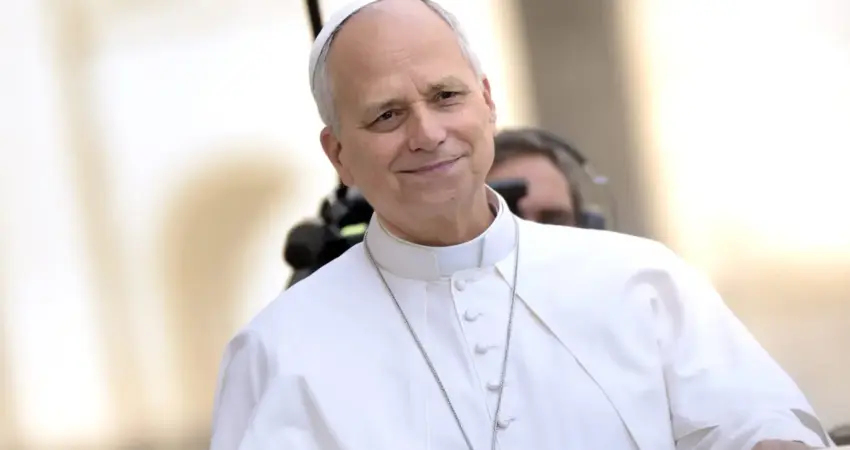
The Holy See Press Office has officially confirmed that Pope Leo XIV has been diagnosed with lung adenocarcinoma following a scheduled surgical procedure at Rome’s Gemelli Hospital. The 71-year-old pontiff, who has led the Roman Catholic Church since his election in May 2025, underwent the operation on Tuesday, October 13, 2026, during which surgeons removed the lower lobe of his right lung. While the diagnosis marks a significant health challenge for the Holy Father, Vatican officials and medical professionals have expressed a degree of optimism regarding the "successful" nature of the intervention and the lack of immediate post-operative complications.
The surgery, which lasted approximately 90 minutes within a three-hour window in the operating suite, was prompted by the discovery of a localized nodule during a routine medical examination. According to Matteo Bruni, the Director of the Holy See Press Office, the Pope awoke normally from the anesthesia and was transferred to a private suite on the hospital’s 10th floor—a wing historically reserved for papal care—to begin a period of observation and recovery.
A Detailed Chronology of the Diagnosis and Procedure
The timeline of Pope Leo XIV’s health concerns became public just days before the surgery. During his traditional Sunday Angelus blessing in St. Peter’s Square on October 11, the Pope spoke candidly to the gathered pilgrims about his upcoming hospitalization. He described the discovery of a "very early-stage and well-localized" nodule, noting that his medical team had recommended surgical intervention as a preemptive and curative measure. This announcement was notable for its transparency, as the Vatican has historically been more guarded regarding the personal health of the Supreme Pontiff.
The surgery on Tuesday morning was performed by a specialized thoracic team at the Policlinico A. Gemelli, the same institution that has treated numerous popes, most notably St. John Paul II and Pope Francis. The procedure involved a lobectomy, specifically the removal of the right lower lobe, where the nodule was situated. During the operation, an immediate histological examination—often referred to as a "frozen section" analysis—confirmed the presence of adenocarcinoma.
Following the procedure, the Vatican released a statement confirming that the Pope’s respiratory and circulatory parameters were stable. By Tuesday evening, the Holy Father was reportedly alert and had even shared a brief moment of prayer with his close aides. All official audiences and papal activities have been suspended through Tuesday, October 20, as the Pope begins a recovery period expected to last at least seven days within the hospital.
Medical Understanding of Lung Adenocarcinoma
The diagnosis of lung adenocarcinoma has brought significant attention to this specific form of the disease. According to the Lung Cancer Foundation of America, adenocarcinoma is a subtype of non-small cell lung cancer (NSCLC). It is uniquely characterized by its prevalence among non-smokers and its tendency to develop in the outer regions of the lungs, specifically within the mucus-producing cells of the epithelial tissue.
For a man of 71, the diagnosis of lung cancer is a serious development, yet medical experts point to several factors that may favor the Pope’s recovery. Adenocarcinoma often grows more slowly than other types of lung cancer, such as small cell carcinoma. When detected in its "early-stage and well-localized" form—as the Vatican claims was the case for Pope Leo—the five-year survival rate is significantly higher than for more advanced cases.
The decision to perform a lobectomy suggests that the medical team believed the cancer was contained within a single lobe of the lung. By removing the entire lobe, surgeons aim to ensure that all malignant cells are excised, reducing the risk of local recurrence. However, the definitive prognosis remains contingent on the final pathology reports, particularly the examination of the surrounding lymph nodes.
Expert Analysis: Staging and Future Treatment
While the initial reports are encouraging, oncology experts emphasize that the next few days are critical for determining the long-term treatment plan. Dr. Stephen Liu, a prominent lung cancer specialist at Georgetown University’s Lombardi Comprehensive Cancer Center, noted in an interview with the Associated Press that the diagnosis is only the first step.
"While we know the diagnosis, we now need to know the stage," Dr. Liu explained. "We need to know how big the tumor was, whether the margins are clear, and, most importantly, if the lymph nodes show any signs of cancer. Is it just one nodule, or was there microscopic spread? Those answers will dictate whether the surgery was a standalone cure or if the Pope will require adjuvant therapies such as chemotherapy, immunotherapy, or targeted radiation."

The Vatican has not yet released the results of the lymph node biopsies. If the cancer is classified as Stage I, the surgical removal of the lobe might be sufficient. If it is found to have reached the lymph nodes (Stage II or III), a more aggressive post-operative regimen will likely be necessary. Given the Pope’s age and the physical demands of the papacy, the introduction of chemotherapy would necessitate a significant adjustment to his schedule for the foreseeable future.
Historical Context: The "Third Vatican" at Gemelli
The Gemelli Hospital has earned the nickname "Vatican III" (after the Apostolic Palace and Castel Gandolfo) due to its frequent role in caring for the leaders of the Catholic Church. This current hospitalization marks the first for Pope Leo XIV since his election in May 2025. His predecessor, Pope Francis, also underwent several procedures at the facility, including intestinal surgery and a laparotomy.
The choice of Gemelli reflects the deep-rooted relationship between the Holy See and the Catholic University of the Sacred Heart, which operates the hospital. The 10th-floor suite used by the Pope is equipped with a small chapel, a study, and specialized medical monitoring equipment, allowing the pontiff to continue a limited amount of work and prayer while in recovery.
The transparency surrounding Pope Leo’s condition has been viewed by many Vatican observers as a continuation of a modernizing trend within the Church. By announcing the surgery himself and allowing the Press Office to release specific medical terms like "adenocarcinoma," the Pope is seen as demystifying the office and sharing his human vulnerability with the faithful.
Global Reactions and the Impact on Church Governance
The news of the diagnosis has prompted a global wave of support and prayer. From the United States Conference of Catholic Bishops to leaders in the Orthodox and Anglican churches, messages of solidarity have poured into the Vatican. Italian Prime Minister Giorgia Meloni and other world leaders have also sent official communiqués wishing the Pope a "speedy and full recovery."
Within the Vatican, the machinery of the Holy See continues to function. Under the current Apostolic Constitution, the daily administration of the Church is handled by the Secretariat of State, led by the Cardinal Secretary of State. Unlike a secular government, there is no "Vice-Pope." If the Pope is temporarily incapacitated, the ordinary business of the Roman Curia continues, but major decisions—such as the appointment of bishops or the signing of encyclicals—are generally paused until the pontiff is able to resume his duties.
The suspension of audiences through October 20 includes several high-profile meetings with diplomatic envoys and religious leaders. If the Pope’s recovery extends beyond the anticipated week, the Vatican may need to delegate more ceremonial roles to the Cardinal Vicar of Rome or other high-ranking prelates.
Implications for a Young Papacy
At 71, Pope Leo XIV is considered a relatively young pontiff in the modern era. For comparison, Pope Benedict XVI was elected at 78 and Pope Francis at 76. Leo’s election in 2025 was seen by many as a move toward a longer, more stable papacy that could bridge the gap between the traditionalist and progressive wings of the Church.
This health crisis, occurring just over a year into his reign, raises questions about the future trajectory of his papacy. If the recovery is swift, the experience of illness may become a central theme in his teaching, much as it did for his predecessors. If the treatment becomes prolonged, it may force the Vatican to reconsider the pace of the Pope’s international travel and heavy liturgical schedule.
For now, the focus remains on the immediate post-operative period. The Vatican’s medical bulletins will be closely watched by the world’s 1.3 billion Catholics for any indication of the cancer’s stage. The successful removal of the tumor is a significant milestone, but the path to a full recovery will depend on the final pathology and the Pope’s resilience in the face of a challenging diagnosis. The upcoming week will be instrumental in determining whether Pope Leo XIV can return to his full duties or if the Church must prepare for a period of transition and modified governance.

0 Comments