
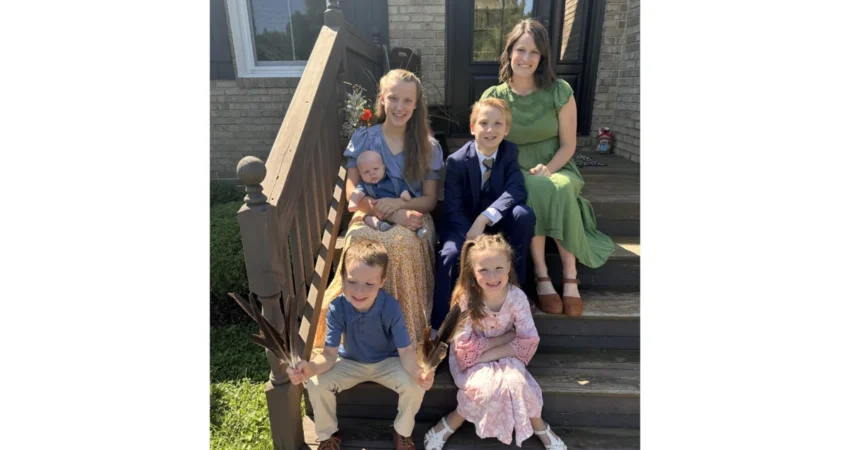
A Virginia court has convicted Karyann Parkinson, a mother of five and a law clerk, of contributing to the delinquency of a minor following an incident in which she permitted her five-year-old son to walk alone within their gated community. The case has ignited a national debate regarding the boundaries of parental discretion, the "free-range parenting" movement, and the application of recently enacted "Reasonable Childhood Independence" laws. Parkinson, who was eight months pregnant at the time of the incident, received a six-month suspended jail sentence and has been placed on a state child abuse and neglect registry for a period of seven years.
The legal proceedings, which concluded last week, stem from an afternoon in June when Parkinson allowed her son, Sam, to walk approximately half a mile to a neighborhood pond to collect goose feathers. Despite the defense’s argument that the mother’s decision was a calculated exercise in fostering childhood independence, the presiding judge found her actions rose to the level of a criminal offense. Parkinson’s legal team has already signaled its intent to appeal the conviction, with a new trial expected to commence in February.
Chronology of the Incident
The events leading to the criminal charge began on June 5, 2026. According to court testimony and Parkinson’s public statements, she and her son Sam had earlier completed a bicycle ride through their gated residential community. During the ride, they passed a pond where Sam noticed goose feathers. Upon returning home, the five-year-old asked his mother if he could walk back to the pond to retrieve them.
Parkinson, who holds a degree in family science and has professional experience as a behavioral specialist, assessed the situation. She noted that the route was within a gated community, Sam would be passing the homes of several family friends, and the environment was overseen by private security. Determining that her son was capable and independent, she granted him permission.
The situation escalated when a private security guard encountered the child walking alone. The guard stopped the boy and questioned him regarding the absence of adult supervision. According to Parkinson, the guard informed the five-year-old that his mother had "done a bad thing" by letting him out alone and claimed that "bad people" in the neighborhood might want to harm him. The guard reportedly asked the child to enter his vehicle so he could be driven home; Sam, adhering to safety protocols regarding strangers, refused the ride and instead walked back to his residence with the guard following him.
Upon Sam’s return, Parkinson described him as visibly distressed and "wide-eyed." When she confronted the security guard and requested clarification on which homeowners’ association (HOA) rules prohibited a child from walking alone, the guard summoned local law enforcement. When police arrived, Parkinson declined to allow them to interview her son privately to gauge his maturity or competence, asserting her parental right to make that determination. This refusal prompted the officers to contact Child Protective Services (CPS).
Legal Proceedings and Sentencing
While Parkinson initially believed the matter had been resolved following the departure of the authorities on June 5, the legal consequences manifested nearly two weeks later. On June 18, just seven days before her projected due date for her fifth child, police arrived at her home with a warrant. Two days thereafter, she received formal notification of a CPS investigation.

During the subsequent trial, the prosecution argued that leaving a five-year-old unsupervised in a public or semi-public space constituted a failure of parental duty. The defense, however, invoked Virginia’s "Reasonable Childhood Independence Law." This statute, which was passed unanimously by the Virginia General Assembly, was designed to protect parents from neglect charges if they allow their children to participate in independent activities—such as walking to school, playing outside, or staying home briefly—provided the child is not placed in "obvious, serious danger."
In a decision that has stunned legal observers and parenting advocates, the judge disregarded the protections of the independence law, finding Parkinson guilty of contributing to the delinquency of a minor. The "delinquency" charge is traditionally applied in cases involving teenagers engaged in criminal or illicit behavior, making its application to a five-year-old collecting feathers particularly unusual.
The six-month jail sentence was suspended, meaning Parkinson will not serve time behind bars unless she violates the terms of her probation. However, the most significant penalty is her inclusion on the child abuse and neglect registry. This designation carries long-term professional and personal ramifications, likely barring her from volunteering at her children’s schools or participating in various community activities for the next seven years.
Professional Background and Expert Reaction
The conviction is particularly striking given Parkinson’s professional pedigree. She graduated from Brigham Young University in 2012 with a degree in family science and subsequently worked as a family life educator. Her resume includes three years as a live-in behavioral specialist at a residential treatment center, where she and her husband, a marriage and family therapist, managed the care of 35 adolescent girls.
Lenore Skenazy, president of the non-profit organization Let Grow and a leading figure in the free-range parenting movement, has been a vocal critic of the verdict. Skenazy, who first reported the case in Reason magazine, argues that the state’s intervention undermines parental rights and harms childhood development.
"Even if you don’t want to send your child outside at age five… that decision should be up to you, not the state, so long as you are not putting your child in obvious, serious danger," Skenazy wrote. She further contended that a "quiet walk to pick up feathers" does not constitute a crisis and that criminalizing such behavior does nothing to enhance child safety.
Security expert Jay Rogers, writing for the Daily Signal, echoed these sentiments, noting that a gated community with paid security is one of the safest possible environments for a child to practice independence. Rogers criticized the court for applying a law meant for "wayward teenagers" to a young child engaged in a mundane activity.
Broader Implications and the National Context
The Parkinson case is the latest in a series of high-profile incidents where parents have faced legal scrutiny for granting their children autonomy. In 2014, Maryland mother Danielle Meitiv made national headlines when she was investigated for letting her children, aged 10 and 6, walk home alone from a park. While charges in that case were eventually dropped, it sparked a national conversation that led several states to adopt "Reasonable Childhood Independence" legislation.

Since 2018, thirteen states—including Utah, Texas, and Virginia—have passed laws aimed at narrowing the definition of "neglect" to exclude supervised or reasonable independent activities. These laws were prompted by concerns that overzealous CPS investigations were traumatizing families and preventing children from developing necessary life skills.
The Virginia law in question was ironically sponsored by former State Senator Jill Vogel, a lawyer for whom Parkinson had worked during her time in law school. The failure of the court to apply this specific legislative protection in Parkinson’s case raises questions about judicial interpretation and whether the "culture of fear" surrounding modern parenting is overriding statutory reforms.
Societal and Psychological Impact
Beyond the legal debate, the incident highlights a shift in societal norms. Data from the late 20th century suggests that children in previous generations enjoyed significantly more freedom to roam their neighborhoods. However, despite declining rates of violent crime against children over the last several decades, parental anxiety and state surveillance of parenting choices have increased.
Psychologists often point out that "over-parenting" or "helicopter parenting" can lead to increased anxiety and decreased resilience in children. Parkinson noted that before the encounter with the security guard, her son was "happy and confident to go explore." Following the incident, she described him as stressed and fearful, internalizing the message that the world is inherently dangerous and that his mother’s trust was a "bad thing."
The conviction also raises professional concerns for Parkinson. As a law clerk and an aspiring attorney, a criminal conviction and placement on a child abuse registry could severely hamper her career prospects and her ability to practice law in the future.
Conclusion and Next Steps
The Parkinson family is currently preparing for an appeal trial scheduled for February. The outcome of this case could set a vital precedent for how Virginia’s Reasonable Childhood Independence Law is applied in the future. If the conviction stands, it may signal that the statute offers less protection than its proponents intended, potentially chilling the efforts of other parents to grant their children independence.
Parkinson maintains that her decision was not a political statement but a personal one based on her knowledge of her child’s capabilities. "We need to get together and say that our children deserve a childhood with some independence," she stated. As the legal battle continues, the case remains a flashpoint for the ongoing struggle between state-mandated safety standards and the fundamental right of parents to raise their children according to their own judgment.

0 Comments