
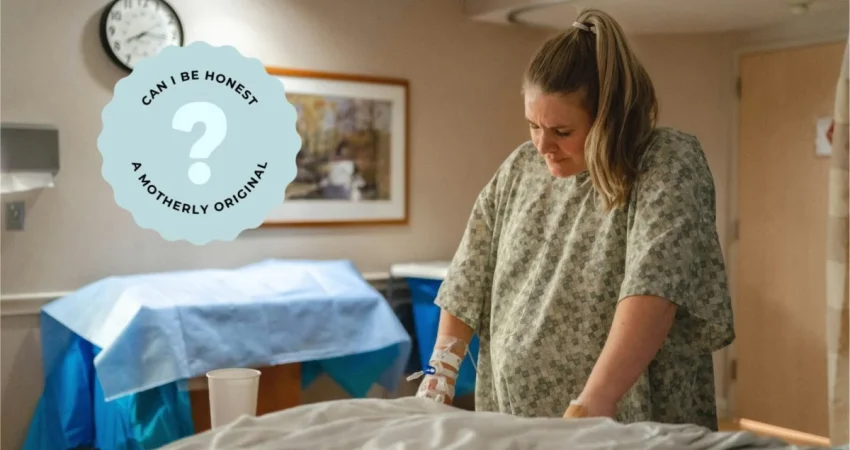
Petrarca’s journey began innocuously enough, at 20 weeks pregnant, when a friend vividly described the excruciating back pain she endured during her own labor. While Petrarca consciously tried to dismiss the details, hoping for a different fate, her friend’s raw description of "back pain" would later resonate with chilling accuracy. This anecdotal warning proved to be a harbinger of her own intense experience, revealing that common perceptions of labor often fail to encompass its diverse and sometimes brutal realities.

Understanding Back Labor: A Medical Overview
Back labor, clinically described as intense pain predominantly felt in the lower back during contractions, is a distinct variant of labor pain. Dr. Brandye Wilson-Manigat, a board-certified OB-GYN, explains that this pain is primarily attributed to the baby’s position, specifically when the fetal skull (occiput) rests against the mother’s sacrum, tailbone, and surrounding tissues. This posterior presentation, often referred to as "sunny-side up," causes increased pressure with each uterine contraction, making the pain far more pronounced in the back than in the abdomen.

While not all posterior presentations result in back labor, studies suggest that anywhere from 15% to 30% of women experience some degree of back labor. The pain is highly subjective but frequently described as significantly more intense and harder to manage than typical abdominal contractions. Some mothers report a constant, dull ache, while others experience sharp, piercing pain that intensifies dramatically with each contraction, often radiating across the lower back, hips, and even down the legs. This sustained pressure, unlike the wave-like nature of typical contractions, can be particularly exhausting and psychologically taxing.

Marisa Petrarca’s Unforeseen Ordeal
For Marisa Petrarca, the reality of back labor struck in week 37 of her pregnancy. She awoke from a nightmare, only to discover the severe back pain was terrifyingly real and unrelenting. Convinced she was in labor, and experiencing the very back labor her friend had described, she sought medical attention. At the hospital, the intensity of her pain was so profound that she struggles to recall or articulate it fully, a common sentiment among women who undergo such severe experiences. Her query to a nurse about back labor was met with a kind, but simple, "It could be!" – a response that, while medically accurate in its uncertainty, offered little clarity or comfort amidst her escalating agony.

Discharged to rest, the pain initially subsided, only to return with renewed ferocity the following night. Accompanied by vomiting, the intensified pain drove her and her husband back to the hospital, a frantic journey marked by Petrarca writhing in the backseat and eliciting worried glances from onlookers. This time, a new complication arose: the baby’s heart rate became a concern. Despite the alarming readings on the monitor indicating contractions, Petrarca felt no traditional abdominal tightening. Her entire focus remained on the relentless, all-consuming back pain that operated on its own schedule, detached from the rhythmic pattern she had expected from labor. This profound disconnect between the medical indicators of contractions and her personal pain perception left her utterly disoriented. When the time came to push, she realized she had never truly felt a uterine contraction, only the overwhelming pressure and agony in her back. The experience left her with a lingering question: had the back pain been the contractions all along? And why had she been so utterly unprepared for it?

The Scientific Underpinnings of Back Labor
The exact reasons why some women experience intense back labor while others do not are complex and not always fully understood, even by medical professionals. Dr. Wilson-Manigat highlights fetal positioning as a primary factor, specifically the occiput posterior (OP) position. In this presentation, the baby’s head enters the pelvis with the back of the head (occiput) facing the mother’s spine, rather than her abdomen (occiput anterior, OA), which is the more common and generally easier position for birth. The hard part of the baby’s skull then presses directly against the sacrum and sacral nerves, leading to intense back pain during contractions.

Beyond fetal position, other factors contribute to the likelihood and severity of back labor. These include the mother’s individual pelvic shape and size, which can influence how easily the baby can rotate. A baby that is larger for its gestational age or certain conditions that prevent the baby from rotating into an anterior position can also contribute. In some cases, back pain during labor can occur even without a confirmed posterior position, suggesting that other anatomical or physiological elements might be at play. However, it is crucial to understand that back labor is not a "separate type of labor" but rather a "different way of experiencing the same one," as Dr. Wilson-Manigat clarifies. This distinction is vital for both medical understanding and patient education.

Impact on Labor Progression and Maternal Well-being
Back labor can significantly influence the course of childbirth. Women experiencing intense back pain often find it harder to cope, leading to increased requests for pain management, particularly epidurals. While an epidural can provide effective relief, the severity of back labor pain before it can be administered can be immense. Furthermore, a posterior presentation, which often underlies back labor, can lead to a longer first stage of labor as the baby struggles to rotate. This prolonged labor can increase the risk of interventions such as vacuum or forceps delivery, or even a C-section, if the baby fails to rotate or descend effectively.

The psychological toll on mothers is also considerable. The unexpected nature and intensity of back labor can lead to feelings of helplessness, fear, and a loss of control, particularly if they were not adequately prepared for such a possibility. Petrarca’s inability to identify "contractions" apart from her back pain speaks to this profound confusion, making it difficult to actively participate in the labor process or even understand what her body was doing. This lack of clarity can be distressing and can sometimes contribute to negative birth experiences or even postpartum anxiety.

Strategies for Management and Relief
While back labor can be challenging, various strategies can help manage the pain and potentially encourage fetal rotation. Non-pharmacological methods often focus on relieving pressure on the sacrum:

- Counter-pressure: A support person applying firm, continuous pressure to the lower back during contractions can be incredibly effective. This can be done with hands, a tennis ball, or a rebozo (a traditional Mexican shawl).
- Position Changes: Encouraging movement and specific positions can help the baby rotate. Examples include hands-and-knees, leaning forward over a birthing ball or bed, walking, and lunging. These positions use gravity and pelvic mobility to create more space for the baby to turn.
- Hydrotherapy: Warm showers or baths can provide significant relief from back pain, offering buoyancy and soothing warmth.
- Massage: Gentle massage of the lower back and hips between contractions can help relax muscles and alleviate tension.
For more intense pain, pharmacological interventions are often considered. An epidural is highly effective in blocking back labor pain, as it numbs the nerves in the lower back and pelvis. In some cases, healthcare providers might attempt a manual rotation of the baby’s head during labor, though this is a specialized procedure. The goal of these interventions, whether physical or medical, is to either alleviate the pain directly or encourage the baby to move into a more favorable position for birth.

Bridging the Childbirth Education Gap
The personal accounts of women like Marisa Petrarca highlight a significant gap in conventional childbirth education. While many programs cover general labor pain, specific, detailed discussions about back labor are often less prominent. Dr. Wilson-Manigat notes that this might be because it’s less common than typical labor and often gets "folded into the broader conversation around labor pain." However, this approach leaves many expectant mothers ill-equipped for a potentially severe and disorienting experience.

Comprehensive childbirth education should proactively address variations like back labor, providing future parents with a full spectrum of potential labor experiences. This includes explaining the physiological mechanisms, identifying symptoms, and outlining various coping strategies and medical interventions. Empowering women with this knowledge can reduce fear, foster a sense of control, and enable them to advocate for their needs during labor. Doulas, who provide continuous physical and emotional support during childbirth, often play a crucial role in helping women identify and cope with back labor, offering hands-on techniques and emotional reassurance. The absence of this upfront information can contribute to feelings of isolation and confusion, as Petrarca experienced when she sought definitive answers in the midst of her pain.

Broader Implications and Advocacy for Informed Birth
The implications of this informational gap extend beyond individual discomfort. An unexpected and difficult birth experience can have lasting psychological effects, impacting a mother’s confidence and even contributing to postpartum mood disorders. By making comprehensive information about all types of labor pain, including back labor, more accessible, healthcare providers and childbirth educators can foster more informed consent and realistic expectations.

It is imperative for expectant parents to engage in open dialogue with their obstetricians, midwives, and doulas about the full range of labor possibilities. Asking specific questions about back labor, its causes, and management techniques can ensure they receive tailored advice and feel better prepared. The narrative of Marisa Petrarca serves as a powerful call to action: while back labor may be "uncommon enough to catch you off guard," it is "common enough that it deserves a mention." Recognizing and discussing these variations in childbirth experiences is not about instilling fear, but about empowering women with knowledge and ensuring they receive the most supportive and understanding care possible. Despite the pain and confusion, Petrarca’s ultimate message resonates universally: the journey, no matter how arduous, culminates in the profound joy of meeting one’s child, a reward that ultimately makes it all worthwhile.

0 Comments