
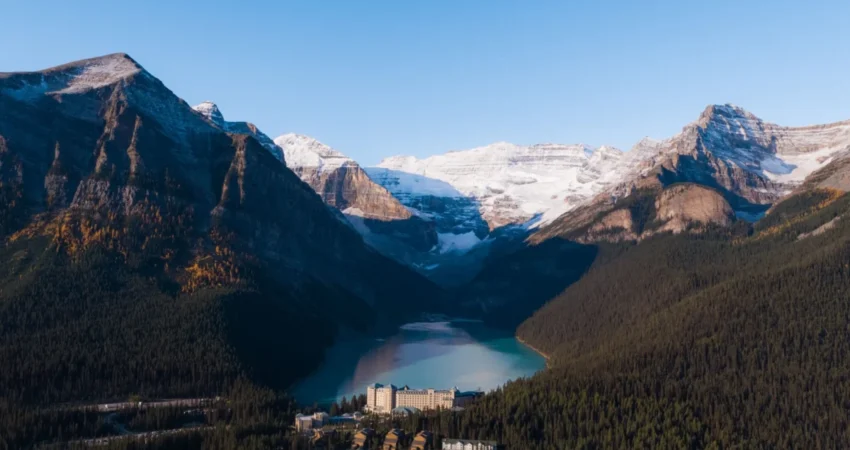
Banff National Park, established in 1885 as Canada’s first national park, remains a cornerstone of the global tourism industry and a primary driver for the economy of Alberta. Spanning 6,641 square kilometres (2,564 square miles) of mountainous terrain, the park is part of the UNESCO Canadian Rocky Mountain Parks World Heritage Site. It attracts more than four million visitors annually, drawn by its turquoise glacial lakes, high-altitude peaks, and diverse wildlife, including grizzly bears, elk, and bighorn sheep. The hospitality infrastructure within and surrounding the park has evolved from rustic 19th-century outposts into a sophisticated network of luxury chateaus, boutique lodges, and modern vacation rentals. Choosing a base of operations in this region requires balancing proximity to iconic landmarks like Lake Louise with the logistical realities of seasonal crowds and transportation regulations.
The Evolution of the Canadian Pacific Railway Hotels
The history of luxury lodging in Banff is inextricably linked to the Canadian Pacific Railway (CPR). In the late 1880s, CPR Vice-President William Cornelius Van Horne famously stated, "If we can’t export the scenery, we’ll import the tourists." This philosophy led to the construction of grand "railway hotels" designed to mimic European baronial castles, positioning the Canadian Rockies as a premier destination for the international elite. Today, these properties, managed primarily under the Fairmont brand, serve as both functional hotels and National Historic Sites.
The Fairmont Banff Springs, often referred to as the "Castle of the Rockies," opened in 1888. This 768-room Scottish Baronial fortress is located near the confluence of the Bow and Spray Rivers. Its architectural significance is matched by its amenities, which include the 40,000-square-foot Fairmont Spa and the world-renowned Stanley Thompson-designed golf course. Data from regional tourism boards indicates that the Fairmont properties remain the highest-grossing hospitality assets in the province, reflecting a sustained demand for heritage-based luxury.
Further north, the Fairmont Chateau Lake Louise sits on the eastern shore of its namesake lake. Originally a humble log cabin built in 1890, the current structure is a five-star resort featuring 539 rooms. The property has recently expanded its wellness offerings with the Basin Glacial Waters bathhouse, a thermal facility that utilizes sensory science to provide hydrotherapy treatments. The hotel’s location provides immediate access to the Victoria Glacier and the Big Beehive hiking trail, though its popularity necessitates strict traffic management and advanced reservations for non-guests seeking to visit the lakeshore.
Luxury and Culinary Excellence in Lake Louise Village
While the chateaus offer scale and history, the Lake Louise Village area hosts smaller, highly specialized properties that cater to oenophiles and culinary enthusiasts. The Post Hotel & Spa, a member of the Relais & Châteaux association, represents a fusion of Swiss hospitality and Rocky Mountain aesthetics. Originally constructed in 1942, the hotel was extensively renovated by Swiss brothers André and George Schwarz.
The Post Hotel is distinguished by its culinary program, which includes an award-winning wine cellar housing over 27,000 bottles and 2,300 labels. This collection has consistently earned the Wine Spectator Grand Award since 2002. In 2024, the property was awarded a Michelin One Key, a distinction reserved for hotels that provide a unique stay with a strong sense of local character. Logistically, the Post Hotel provides a strategic advantage for winter sports enthusiasts, located just five minutes from the Lake Louise Ski Resort, one of the largest ski areas in North America with 4,200 skiable acres.
For those seeking maximum seclusion on the water’s edge, Moraine Lake Lodge offers an intimate alternative. Located in the Valley of the Ten Peaks, the 33-room lodge provides a rare opportunity to stay on the shores of Moraine Lake. Due to extreme seasonal congestion, Parks Canada closed Moraine Lake Road to private vehicles in 2023. Guests of the lodge are among the few permitted to access the area via private transport, bypassing the mandatory shuttle systems required for the general public. This exclusivity has increased the lodge’s value as a high-demand asset for sunrise photography and alpine hiking.
Modernization and Transformation on Sulphur Mountain
The Rimrock Resort Hotel, situated on the slopes of Sulphur Mountain, represents the latest phase of large-scale hospitality investment in Banff. In 2023, the property was acquired by Oxford Properties with Accor as the manager, triggering a multi-million-dollar renovation slated for completion in 2026. The redesign focuses on "elevated mountain luxury," featuring 320 rooms with panoramic views of the Bow Valley and Mount Rundle.
The Rimrock’s repositioning includes the introduction of the Bathhouse, a thermal bathing experience that aligns with the growing global trend of wellness tourism. The resort is located 700 feet above the town of Banff, providing a temperature and atmospheric shift from the valley floor. Its proximity to the Banff Upper Hot Springs and the Banff Gondola allows guests to access high-altitude dining at Sky Bistro with minimal transit time.
The Strategic Rise of Canmore and Vacation Rentals
In the last decade, the town of Canmore, located just 10 minutes east of the Banff National Park gates, has emerged as a primary competitor to Banff’s internal lodging market. Unlike the town of Banff, which is subject to strict Parks Canada "need to reside" bylaws and development caps, Canmore offers more flexibility for residential and commercial expansion. This has led to a surge in high-end vacation rentals and condominiums.
Properties such as the airy alpine condos and multi-bedroom townhouses in downtown Canmore cater to a different demographic: the "work-from-mountain" professional and multi-generational families. These rentals often feature full kitchens, multiple en suite bathrooms, and rooftop hot tubs with views of the Three Sisters mountain range. Data from short-term rental platforms shows that Canmore’s occupancy rates often rival Banff’s during the peak summer and winter seasons, offering a more "local" atmosphere with comparable access to the park’s trailheads and ski runs.
Logistics and Seasonal Chronology for Travelers
A successful visit to the Banff region is heavily dependent on understanding the seasonal chronology and transportation infrastructure.
- Summer (June – August): Peak tourist season. Temperatures range from 15°C to 25°C. This period offers full access to all alpine trails and lake activities but requires booking accommodations 6 to 12 months in advance.
- Fall (September – October): Known for "Larch Madness," when the subalpine larch trees turn a vibrant gold. This is a critical window for photographers and hikers. The weather remains stable, though night-time temperatures can drop below freezing.
- Winter (November – April): The region transforms into a world-class ski destination. The "Big 3" ski resorts—Banff Sunshine, Lake Louise, and Mt. Norquay—offer one of the longest ski seasons in North America.
- Spring (May): A shoulder season characterized by melting snow and the awakening of wildlife. While some higher-elevation trails remain closed due to avalanche risk, valley-bottom activities begin to resume.
Transportation remains the most significant logistical challenge. Parks Canada has implemented a robust shuttle system (Roam Public Transit) to mitigate the environmental impact of private vehicles. Travelers are increasingly encouraged to use these services to access the Lake Louise and Moraine Lake corridors, as parking lots are frequently at capacity by 6:00 AM during the summer months.
Environmental and Economic Implications
The ongoing development of luxury lodging in Banff National Park is a subject of continuous debate among conservationists, government officials, and tourism operators. The 1988 amendments to the National Parks Act designated "ecological integrity" as the first priority in park management. Consequently, any expansion of properties like the Fairmont or the Rimrock must undergo rigorous environmental assessments to ensure that increased human footprint does not disrupt wildlife corridors or water quality.
Economically, the shift toward "elevated luxury" and wellness-focused tourism reflects Alberta’s strategy to attract high-spending international travelers. This demographic contributes significantly to the provincial GDP, supporting thousands of jobs in the Bow Valley. However, the high cost of lodging has led to concerns regarding the accessibility of the park for the average citizen. The rise of Canmore as a secondary hub serves as a partial solution, providing a broader range of price points and accommodation styles.
In conclusion, the hospitality landscape in and around Banff National Park is a sophisticated blend of 19th-century history and 21st-century luxury. Whether staying in a historic railway castle, a boutique culinary retreat, or a modern mountain condo, visitors are part of a century-old tradition of Rocky Mountain exploration. As the park moves toward more sustainable tourism models, the role of these lodging providers will continue to evolve, balancing the demand for "incredible views" with the imperative of preserving one of the world’s most pristine natural environments.

0 Comments