
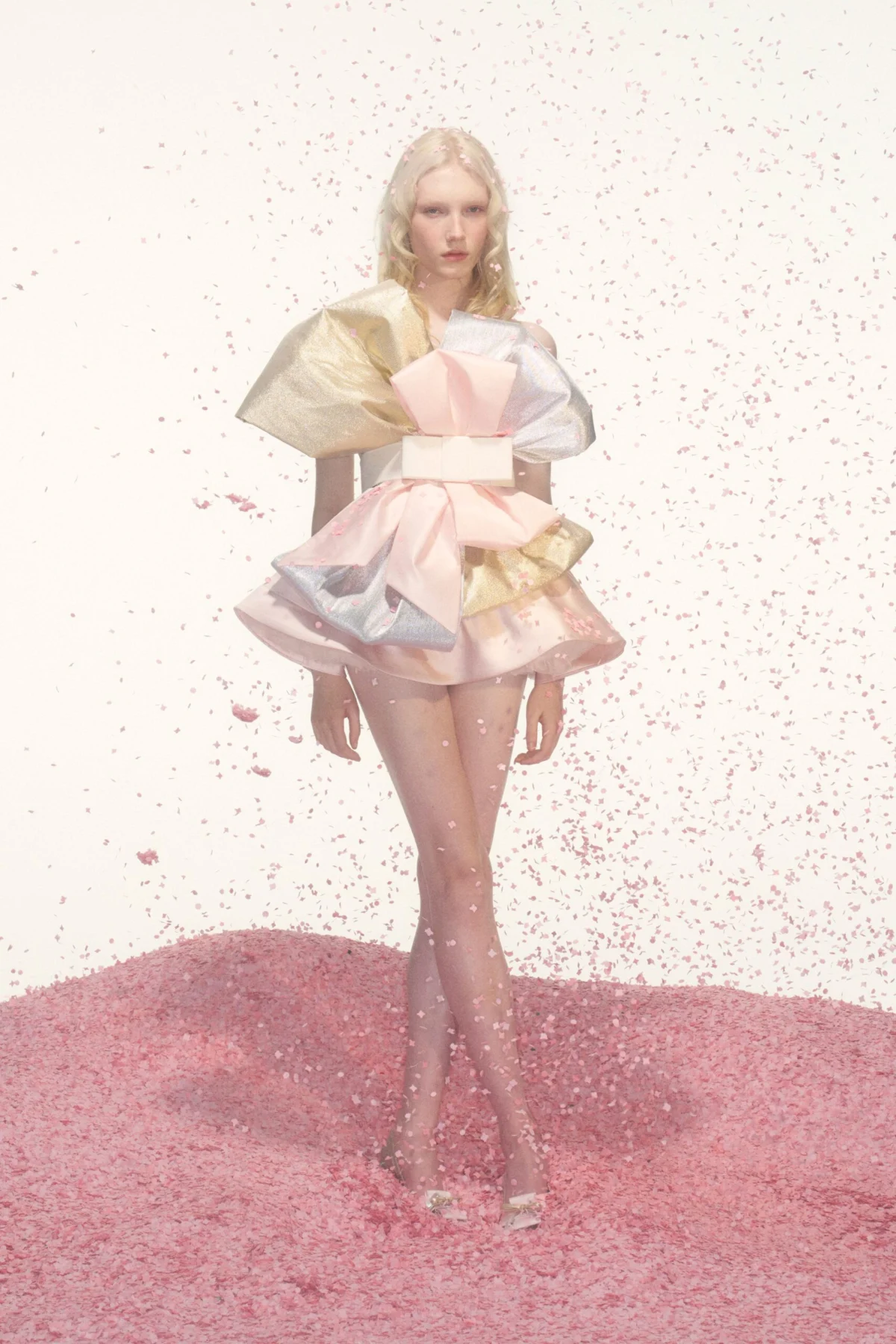
The contemporary fashion landscape has witnessed a significant evolution in the creative direction of Benjamin Barron and Bror August Vestbø, who recently unveiled their latest collection, "Bedtime Story," under their newly rebranded label, August Barron. Following a transformative year characterized by their selection as finalists for the prestigious LVMH Prize and a strategic name change from their previous moniker, All-In, the design duo has entered a new chapter that balances avant-garde experimentation with a refined brand identity. The Fall collection serves as a manifesto for the art of intentional surrender, utilizing the concept of a "slow-motion explosion" to deconstruct and reassemble the brand’s archival elements. By drawing inspiration from the whimsical and often disorienting narrative of Lewis Carroll’s Alice in Wonderland, the designers have cultivated a visual language that explores the intersections of vulnerability, teenage sentimentality, and the preservation of wonder in an increasingly volatile global climate.
The Strategic Rebranding from All-In to August Barron
The transition from All-In to August Barron marks a pivotal moment in the designers’ professional trajectory. Originally known for a high-octane, often chaotic approach to upcycling and kitsch, the move toward a namesake label suggests a desire for greater permanence and a more sophisticated market positioning. This shift coincided with their recognition by the LVMH Prize committee, an accolade that places them among the most promising emerging talents in the global fashion industry.
Historically, the LVMH Prize has served as a launchpad for brands that successfully bridge the gap between artistic provocation and commercial scalability. For Barron and Vestbø, the rebranding reflects a maturation of their design philosophy. While the "All-In" era was defined by a certain frantic energy, August Barron appears focused on "freezing perfect moments in time," as noted by Vestbø. This thematic shift allows the brand to maintain its subversive edge while appealing to a broader luxury demographic that values narrative depth and craftsmanship.
Thematic Core: Alice in Wonderland and the Aesthetics of Escapism
The Fall collection, titled "Bedtime Story," centers on the concept of falling—not into despair, but into a rabbit hole of imagination. The designers articulated a vision where the garments from their previous archives were figuratively thrown into the air, allowing them to land in new, unexpected configurations. This "willful letting go" resulted in an aesthetic that the designers described as a hybrid of a "1970s princess" and a "high school prom held in a gymnasium."
In a period where the fashion industry is frequently critiqued for its detachment from reality, August Barron leans into that detachment as a form of resistance. The collection posits a world where "fairy dust and confetti fall from the skies, rather than bombs," a stark juxtaposition to the contemporary geopolitical environment. This commitment to fantasy is not merely decorative; it is a structural pillar of the collection, manifesting in silhouettes that evoke the awkwardness of adolescence and the grandeur of fairy tales.
Design Analysis: Merging Sportswear with High-Fantasy Couture
The technical execution of the "Bedtime Story" collection showcases a sophisticated interplay between disparate sartorial codes. A primary focus of the lineup was the evolution of the "triple ball gown" skirts introduced in the Spring season. For the Fall iteration, these confectionery, multi-layered tulle structures were paired with traditionally utilitarian garments, such as oversized polo shirts.
Key design elements included:
- Deconstructed Polos: Standard athletic shirts were reimagined through the "AB treatment," featuring asymmetrical draping and integrated bow-tie closures.
- Ribbon Artistry: Several dresses were constructed entirely from silk ribbons, designed to mimic the appearance of a gift box that had been unwrapped and draped directly onto the wearer.
- Narrative Knitwear: Fair Isle sweaters in pastel "cotton candy" pink featured prancing unicorn motifs, blending traditional craft with juvenile iconography.
- Cinematic Sleeves: Zip-front tops were updated with voluminous, "Snow White" puffed sleeves, bridging the gap between modern activewear and costume history.
The inclusion of vintage stuffed animals, sourced via online marketplaces and "suspended" from dreamy gowns, served as a poignant reminder of the transitoriness of youth. This design choice highlights the brand’s continued interest in found objects and the emotional weight of nostalgia.
Gender Fluidity and the Deconstruction of Masculine Archetypes
A significant portion of the collection was dedicated to the subversion of traditionally masculine silhouettes. Barron and Vestbø expressed a keen interest in "feminizing" menswear staples, a trend that has gained considerable traction in the luxury sector over the last five years.
The "shrunken tuxedo" in baby blue served as a prime example of this exploration. Tailored so narrowly as to appear almost outgrown—mimicking the rapid physical changes of puberty—the suit was paired with a polo variant that featured a built-in, tulle-wrapped bustier. This ensemble challenges conventional notions of formal attire and gendered dressing.
Furthermore, the collection introduced the "romantic jock" archetype. This was embodied by a large-shouldered football jersey adorned with intricate confetti embroidery and a gold fabric boutonniere. When paired with side-stripe sweatpants, a formal cummerbund, and heels reminiscent of a Disney princess, the outfit dismantled the rigid boundaries between athletic masculinity and feminine artifice. This approach aligns with broader industry data suggesting that Gen Z and Millennial consumers are increasingly gravitating toward brands that reject binary gender classifications.
The Significance of the LVMH Prize Recognition
The inclusion of Benjamin Barron and Bror August Vestbø as LVMH Prize finalists provides essential context for the brand’s current momentum. The LVMH Prize for Young Fashion Designers is one of the most competitive awards in the industry, often receiving over 2,400 applications from across the globe. Finalists receive not only a grant but also a year of mentorship from experts within the LVMH Moët Hennessy Louis Vuitton group.
This mentorship typically focuses on:
- Supply Chain Optimization: Helping young brands transition from small-scale production to reliable luxury manufacturing.
- Intellectual Property Protection: Navigating the legalities of brand naming and global trademarks (likely a factor in the transition to "August Barron").
- Retail Strategy: Developing a cohesive wholesale and direct-to-consumer model.
The "Bedtime Story" collection demonstrates the fruits of this professionalization. While maintaining their signature "offness," the garments exhibit a higher level of finish and a clearer commercial logic than previous efforts.
Technical Innovations and Commercial Viability
While the thematic elements of August Barron are rooted in fantasy, the brand has demonstrated a keen eye for "cult" items that drive revenue. The "Level Boot," a signature footwear piece for the brand, was updated for the Fall season in a "scrunchy" edition. Footwear is a high-margin category for emerging luxury brands, and the success of the Level Boot provides the financial stability necessary for the designers to continue their more experimental runway work.
The use of "confetti embroidery" and "ribbon dresses" also points to a sophisticated understanding of texture and movement. These pieces are highly photographable, making them ideal for the current "editorial-to-social-media" pipeline that defines modern fashion marketing. By creating garments that are as much about the "freeze-frame" as they are about the wearability, August Barron secures its place in the wardrobes of fashion collectors and "style icons" who prioritize narrative-driven dressing.
Industry Outlook: The Role of Imagination in Contemporary Fashion
The critical reception of the "Bedtime Story" collection suggests a shift in how "awkwardness" is perceived in high fashion. Vestbø noted that the lineup was "not as wrong, maybe, as usual," indicating a move toward a more intentional, thematic awkwardness that mirrors the teenage experience. This nuance is vital; it transforms a stylistic quirk into a relatable human narrative.
In an era defined by rapid technological advancement and social fragmentation, the "Bedtime Story" collection serves as an invitation to linger in a world of magic. It encourages a "suspension of disbelief," urging the audience to prioritize imagination over the perceived decline of traditional structures.
As August Barron continues to evolve, the brand stands as a testament to the power of independent designers to reshape the luxury narrative. By blending the vulnerability of youth with the rigor of high-fashion construction, Barron and Vestbø have created a unique space in the market—one where the prom queen and the football jock can coexist in a glitter-filled, tulle-wrapped dreamscape. The brand’s trajectory following the LVMH Prize suggests that while their stories may start in the bedroom or the gym hall, their impact will be felt on a global stage.

0 Comments