
The landscape of independent Japanese fashion is poised for a significant transformation as Human Made Corporation, the entity founded by the influential designer Nigo, has entered into a non-binding agreement to acquire Undercover. The move signals the end of an era for one of the industry’s most storied independent labels, currently owned by its founder Jun Takahashi and his brother Hiroshi Takahashi. Under the terms of the preliminary agreement, a 100% share purchase is targeted for completion by September 2026, with a full transition of operations and ownership planned for February 2027. This transition represents a pivotal moment for Undercover, a brand that has remained largely autonomous since its inception in 1990, and highlights a broader trend of consolidation within the high-end streetwear and luxury sectors.
The Acquisition Framework and Ownership Transition
Undercover is presently structured as a family-held enterprise, with founder Jun Takahashi holding an 80% stake and his younger brother and business partner, Hiroshi Takahashi, holding the remaining 20%. The decision to sell to Human Made Corporation follows decades of independent growth during which Undercover evolved from a cult Harajuku label into a global powerhouse featured regularly on the Paris Fashion Week calendar.
The proposed acquisition timeline is structured to ensure operational continuity. Following the signing of the non-binding agreement, both parties are expected to engage in a period of due diligence and strategic alignment. The target date of September 2026 for the formal share purchase agreement allows for a gradual integration of Undercover’s supply chain, retail footprint, and administrative functions into the Human Made corporate umbrella. By the time the full transfer occurs in February 2027, the Takahashi brothers are expected to have established a long-term advisory or creative role within the new hierarchy, though the exact nature of their future involvement remains subject to final negotiations.
Historical Context: The Intersection of Jun Takahashi and Nigo
To understand the gravity of this acquisition, one must look back at the origins of both Undercover and the career of Nigo. Both Jun Takahashi and Nigo emerged from the "Ura-Harajuku" (back-street Harajuku) movement of the early 1990s, a period that redefined Japanese youth culture and eventually influenced global fashion.
Takahashi founded Undercover in 1990 while still a student at the Bunka Fashion College. The brand quickly became known for its "punk-inflected" aesthetic, blending high-concept avant-garde design with street-level subversion. Simultaneously, Nigo founded A Bathing Ape (BAPE) and later Human Made, focusing on a more graphic, heritage-inspired Americana and pop-culture aesthetic. The two designers have been close associates for over three decades; they famously opened the "Nowhere" boutique in Harajuku in 1993, a seminal retail space that acted as the epicenter for the burgeoning streetwear scene.
The acquisition of Undercover by Human Made Corporation is, in many ways, a consolidation of this shared history. While Nigo has seen massive corporate success—including his current tenure as the Artistic Director of Kenzo (LVMH)—Human Made has remained his primary vehicle for personal creative expression and business ventures. Bringing Undercover into this fold suggests a desire to preserve the legacy of the Harajuku movement under a unified, Japanese-led corporate structure rather than seeing it absorbed by a Western luxury conglomerate.
Analysis of the Undercover Resort Collection: A Study in "Cute Peripheries"
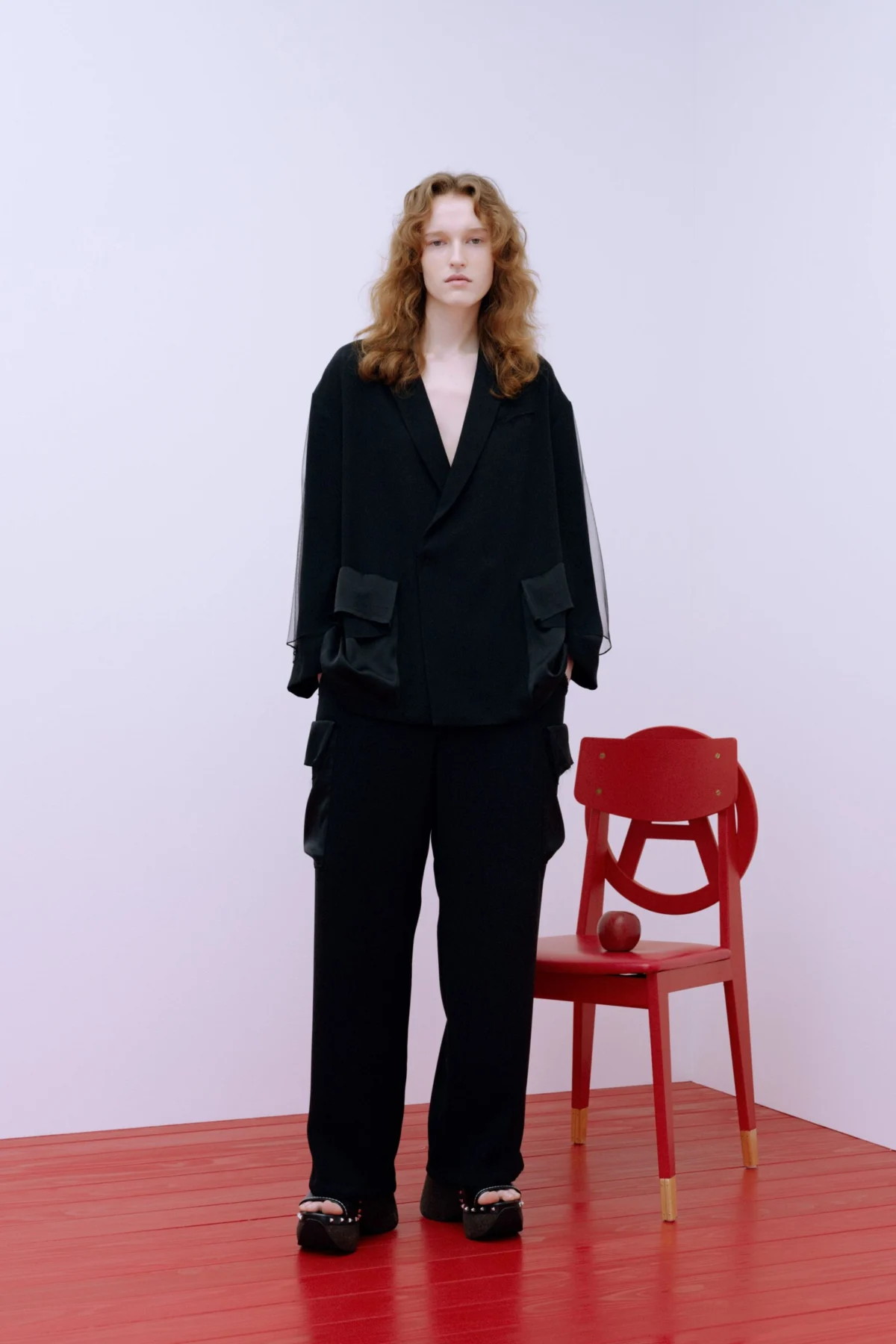
Against the backdrop of these corporate negotiations, Undercover’s latest Resort collection serves as a poignant reflection of the brand’s current creative state. The collection appears to be a meditation on domesticity, femininity, and the subtle subversion of traditional tropes—a "classically Undercover operation" that balances sweetness with a distinct, often unsettling, edge.
The collection is characterized by what observers have termed "cute peripheries." Rather than relying on overt punk motifs, Takahashi utilized delicate details to complicate the silhouettes. Garments were frequently edged with intricate lace or piped with playful cat prints, creating a sense of superficial innocence. This was further layered with sheer panels and translucent gauze that softened the outlines of the clothing without completely obscuring the wearer.
Notable pieces included:
- Layered Ensembles: Brown V-neck dresses framed at the sleeves and hems with contrasting navy bands, creating a structured yet fluid aesthetic.
- Proportional Play: Oversized T-shirts, boxy shirting, and cropped jackets that were interrupted or extended by gauzy overlays, challenging standard garment construction.
- Subverted Femininity: White shirts paired with black, corset-like panels and side-slit skirts that revealed pleated underlayers, referencing historical feminine silhouettes while modernizing them through a deconstructionist lens.
- Textural Contrast: The use of gingham, denim, and sailor-inspired ribbon ties provided a traditional "sweetness" that Takahashi "soured" through unexpected proportions and technical twists.
This collection demonstrates that despite the impending shift in ownership, Takahashi’s creative "gravity"—his ability to find tension between the beautiful and the bizarre—remains intact.
Market Data and the Landscape of Independent Fashion
The acquisition of Undercover reflects a broader economic reality facing independent fashion houses in the post-pandemic era. While Undercover has maintained a loyal global following and successful collaborations with brands like Nike (the Gyakusou line) and Supreme, the costs associated with international logistics, high-end manufacturing, and the maintenance of flagship retail spaces have increased significantly.
Data from the luxury sector suggests that mid-sized independent labels (those with annual revenues between $50 million and $200 million) are increasingly seeking the stability of larger parent companies. Similar moves have been seen across the industry:
- Stone Island: Acquired by Moncler in 2020 to bolster its "new luxury" portfolio.
- Ami Paris: Received significant investment from Sequoia Capital China to fuel global expansion.
- Dries Van Noten: Acquired by the Puig group in 2018, allowing the founder to focus on creative direction while leveraging Puig’s back-end infrastructure.
For Undercover, joining Human Made Corporation provides access to a more robust financial framework and potentially a more sophisticated digital and retail distribution network. It also allows the brand to leverage Human Made’s manufacturing efficiencies while remaining under the stewardship of a partner who understands the specific cultural nuances of the Japanese fashion market.
Strategic Implications and Official Outlook
While official statements from the Takahashi brothers have been sparse regarding the specific motivations behind the sale, industry insiders suggest that the move is a proactive step toward ensuring the brand’s longevity. By securing a partner like Human Made, Undercover avoids the risk of being "lost" within a massive global conglomerate that might prioritize margins over the label’s signature avant-garde experimentation.
The "benevolent partner" model is expected to be the blueprint for this transition. Human Made is likely to act as a facilitator, providing the resources necessary for Undercover to expand its reach in North America and Europe, where demand for Japanese "DNA" brands remains high.
Furthermore, the acquisition may lead to a more formalized synergy between Nigo’s and Takahashi’s creative outputs. While both brands will likely maintain separate identities, the potential for shared retail concepts, joint logistical hubs, and collaborative marketing efforts is high. This "Ura-Harajuku United" approach could create a formidable Japanese fashion bloc capable of competing with the major European houses.
The Future of Undercover’s Creative Identity
The primary concern among collectors and fashion critics is whether the "creative gravity" of Undercover will shift once it is no longer a fully independent entity. Historically, Undercover has been a manifestation of Jun Takahashi’s personal obsessions—ranging from the films of Akira Kurosawa and Alfred Hitchcock to the music of Joy Division and Patti Smith.
However, the choice of Human Made as a parent company suggests a commitment to maintaining that idiosyncratic spirit. Unlike a purely financial private equity firm, Human Made is led by a designer who understands the value of subcultural capital. The transition period between 2024 and 2027 is designed to mitigate any sudden shocks to the brand’s aesthetic or operational flow.
As the industry looks toward February 2027, the focus will remain on how Undercover balances its newfound corporate stability with the rebellious, "Noise"-inspired ethos that has defined it for over thirty years. If the recent Resort collection is any indication, the label is entering this new chapter with its penchant for complexity and subversion firmly in place. The acquisition marks not just a change in ownership, but a strategic evolution of a brand that has consistently proven its ability to adapt without losing its soul.

0 Comments