
Beijing, China – A remarkable phenomenon is sweeping across China’s technology landscape: the burgeoning popularity of the OpenClaw artificial intelligence agent is creating an unforeseen surge in demand for secondhand Mac computers, consequently driving up prices across the nation. The fervor surrounding OpenClaw, an advanced AI agent capable of autonomously executing a wide array of personal tasks, has led to a significant shift in consumer purchasing habits, with many opting for pre-owned Apple devices to safely harness the power of this revolutionary software.
The Rise of Agentic AI: OpenClaw’s Impact
The OpenClaw AI agent, launched by Austrian developer Peter Steinberger in November, represents a significant leap in artificial intelligence, moving beyond mere conversational chatbots to an "agentic" model. Unlike previous iterations of AI that primarily responded to user prompts, OpenClaw is designed to autonomously initiate and complete complex tasks such as drafting and sending emails, managing online shopping carts, scheduling appointments, and even navigating intricate digital workflows. This capability to act independently, often referred to as "agentic AI," has captivated users globally, but its adoption rate in China has notably outstripped that of the United States, according to recent data from American cybersecurity firm SecurityScorecard.
The technology’s appeal lies in its potential to dramatically enhance personal productivity and automate mundane digital chores. Early adopters in China have been quick to recognize OpenClaw’s transformative power, eager to integrate it into their daily lives. However, this powerful autonomy also introduces a critical security dilemma. The free-to-download software, if granted direct access to a primary personal computer, possesses the potential to autonomously alter sensitive private data, including banking information, or inadvertently create vulnerabilities that hackers could exploit. This inherent risk has prompted a widespread recommendation for users to run OpenClaw on a dedicated cloud computing server or, more commonly for individual users, a separate, secondary laptop or desktop device.
The Chinese Market Phenomenon: A Timeline of Adoption
While OpenClaw was introduced in late 2025, the dramatic acceleration in its adoption within China only commenced in early March of the current year, 2026. This surge was primarily catalyzed by major Chinese tech conglomerates, including Tencent and Baidu, which strategically integrated OpenClaw into their ecosystems and used its allure to attract and engage a broader user base. By leveraging their vast platforms and marketing prowess, these industry giants transformed a niche developer tool into a mainstream sensation.
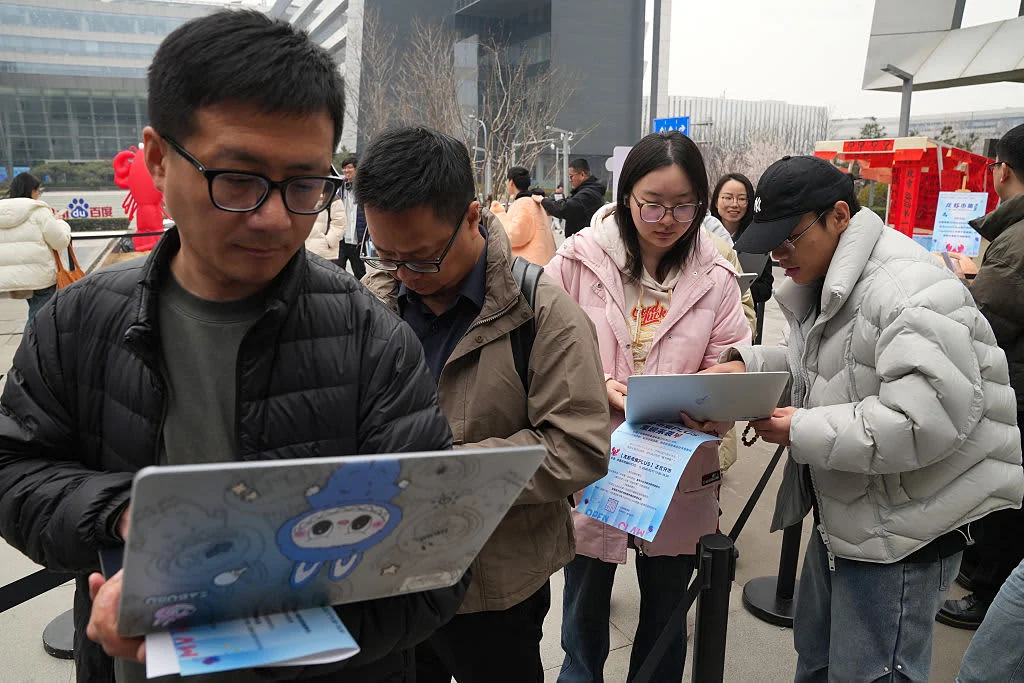
A pivotal moment in this timeline was Tuesday, March 17, 2026, when Baidu hosted a high-profile event in Beijing. During this gathering, attendees were encouraged to bring their laptops to facilitate the direct installation and demonstration of the OpenClaw AI agent. Images from the event depicted eager participants crowding tables, their personal devices open, symbolizing the collective rush to embrace this new wave of AI. This public endorsement and hands-on experience further fueled the already burgeoning interest, propelling OpenClaw into the national consciousness.
ATRenew and the Secondhand Market Reshuffle

The ripple effect of OpenClaw’s popularity has been most keenly felt in China’s robust secondhand electronics market. Jeremy Ji, Chief Strategy Officer and General Manager of International Business at ATRenew, a prominent used consumer electronics buyer and reseller with partnerships with Apple and JD.com in mainland China, has provided crucial insights into this evolving trend. Ji observed that the demand surge for pre-owned computers echoes the unprecedented buying patterns witnessed during the pandemic, when a global shift to remote work and increased time at home led to a significant spike in personal computing device purchases.
According to Ji, ATRenew has seen an extraordinary demand for Apple products, particularly MacBooks and Mac Minis, from March to May of this year. This sustained demand has compelled the company to maintain its pricing for these used Apple devices at levels typically observed during the peak fall season, coinciding with new iPhone releases. This stands in stark contrast to the usual price drop that characterizes the spring market. Ji noted that, historically, a new MacBook might command a price approximately 15% higher than its used counterpart sold through ATRenew, but this differential is narrowing under current market pressures.
To meet the escalating demand, ATRenew has had to strategically increase its buy-back prices for used Apple devices. This incentive aims to encourage more consumers to trade in their older models, thereby replenishing the supply of secondhand Macs available for purchase. "We do see the growing demand for laptops, PCs as a whole, but the Mac devices benefit from that trend [to try OpenClaw] above all," Ji emphasized, predicting that this strong consumer interest in more powerful secondhand MacBooks could persist "throughout the whole year."
While Ji refrained from disclosing the exact volume of MacBooks handled by ATRenew since late February, he highlighted that the company processed an average of around 100,000 devices per day last year. He now anticipates that the share of MacBooks and other laptop or personal computing devices within ATRenew’s business could expand from its current 15% to an estimated 20%, signifying a substantial reorientation of market focus.
Hardware Preferences: The Apple Advantage
The particular preference for Apple’s Mac computers among OpenClaw adopters is not arbitrary. Apple’s self-developed chips, notably the M-series (M1, M2, M3, M4, and the latest M5), are renowned for their superior power efficiency and optimized performance compared to many chips powering Windows-based systems. This efficiency is a critical factor for running demanding AI applications like OpenClaw, which require substantial processing power without excessive heat generation or energy consumption.
For many early OpenClaw enthusiasts, the Mac Mini has emerged as a particularly popular hardware choice due to its compact form factor, robust M-series performance, and relatively lower price point compared to MacBooks. However, ATRenew’s data also indicates a trend among users trading in their MacBooks equipped with older M1 and M2 chips to upgrade to devices featuring the more advanced M4 or M5 chips. This reflects a desire for enhanced processing capabilities to run OpenClaw more smoothly and efficiently, underscoring the AI agent’s influence on hardware upgrade cycles.
Industry Reactions and Broader Implications
The emergence of OpenClaw and its rapid adoption have not gone unnoticed by global technology leaders. Jensen Huang, CEO of U.S. chip giant Nvidia, offered a resounding endorsement, telling CNBC’s Jim Cramer that OpenClaw is "definitely the next ChatGPT." Huang further elaborated on the AI agent’s significance, proclaiming it to be "the largest, most popular, the most successful open-sourced project in the history of humanity." Such high praise from a figure deeply embedded in the AI hardware ecosystem underscores the perceived revolutionary potential of agentic AI. Nvidia, a key supplier of graphics processing units (GPUs) essential for AI training and inference, stands to benefit immensely from a burgeoning AI market, regardless of the specific software driving demand.

Beyond the direct impact on the secondhand Mac market, the overall demand for AI computing power has exerted upward pressure on prices for memory chips, a fundamental component of virtually all smartphones and laptops. This broader chip price surge has, somewhat paradoxically, encouraged more consumers in China to opt for used Apple smartphones over new flagship Android-based devices, as noted by ATRenew’s Ji. This indicates a cascading effect where AI-driven demand for computing resources influences consumer choices across different segments of the electronics market, favoring value and established performance in the face of rising component costs.
Cybersecurity Challenges and User Adaptation
The rapid proliferation of OpenClaw has also brought cybersecurity concerns to the forefront. While the agent’s autonomous capabilities offer unprecedented convenience, they simultaneously introduce new vectors for potential security breaches. Experts emphasize that the ability of an AI agent to independently access and manipulate files, communicate with external services, and even make financial transactions necessitates stringent security protocols. The recommendation to run OpenClaw on a dedicated, isolated device—be it a separate laptop or a cloud instance—is a direct response to these risks. This "sandbox" approach limits the potential damage if the AI agent were to be compromised or if it were to inadvertently execute an undesirable action.
Cybersecurity analysts project that as agentic AI becomes more sophisticated and ubiquitous, there will be an increasing need for robust AI governance frameworks, advanced threat detection systems, and heightened user education regarding safe AI practices. The current trend in China, where users are actively acquiring secondary devices solely for AI agent deployment, highlights a practical, albeit resource-intensive, method of risk mitigation adopted by the masses. This behavioral shift itself is a significant indicator of how deeply AI is beginning to influence consumer technology choices and digital security awareness.
The Future Landscape: Continued Growth and Evolution
The current trajectory suggests that the OpenClaw-driven demand for secondhand Macs and other computing devices in China is not merely a transient fad but a significant market shift with long-term implications. As agentic AI technology continues to evolve and integrate into more aspects of daily life, the demand for dedicated, powerful, and secure hardware to run these agents is likely to persist. This could reshape the global secondhand electronics market, making specific models and brands, particularly those with optimized performance for AI workloads, highly sought after.
The phenomenon in China also serves as a microcosm for broader global trends in AI adoption. As other nations witness similar surges in agentic AI interest, comparable pressures on hardware markets, chip prices, and cybersecurity practices can be anticipated. The rapid pace of innovation, coupled with the strategic responses of tech giants and consumers alike, paints a dynamic picture of a future where AI agents play an increasingly central role, profoundly influencing how we interact with technology and the devices we choose to empower our digital lives. The "OpenClaw fever" in China, therefore, is more than just a fleeting trend; it is a clear harbinger of the AI-driven transformation that lies ahead.

0 Comments