
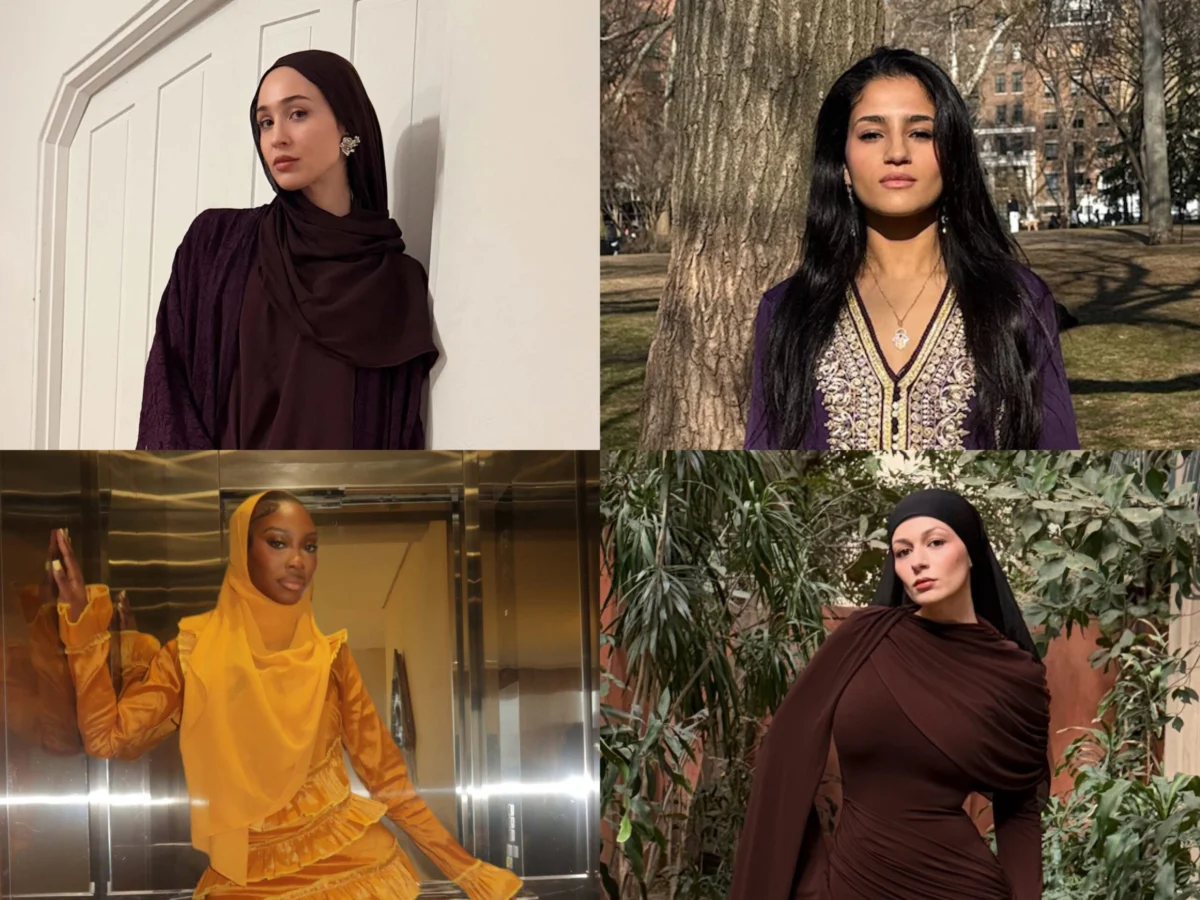
For nearly two billion Muslims worldwide, the conclusion of Ramadan is marked by Eid al-Fitr, a festival that serves as both a spiritual milestone and a profound cultural expression. While the month-long period of fasting focuses on internal discipline, prayer, and charity, the arrival of Eid shifts the focus toward celebration, community, and the "Sunnah"—the traditions and practices of the Prophet Muhammad. Among these traditions is the specific encouragement to wear one’s finest attire, a practice that transforms the act of getting dressed into a sacred ritual of gratitude and dignity. In the modern era, this religious mandate has evolved into a sophisticated intersection of high fashion, heritage, and personal identity, as Muslim women navigate the complexities of contemporary style while honoring their faith.
The Theological and Cultural Foundation of Eid Adornment
The relationship between Islam and aesthetics is rooted in the concept that "God is beautiful and loves beauty." On Eid, this principle is manifested through the physical body. The ritual begins with Ghusl (a full-body purification) and the application of perfume, followed by the donning of new or best-quality clothing. This is not interpreted by practitioners as an act of vanity, but rather as an outward reflection of the internal transformation achieved during thirty days of fasting.
The symbolism of the garments often carries deep spiritual weight. For many, the choice of fabric and motif is intentional. For example, the pomegranate—a fruit mentioned in the Qur’an as a symbol of the gardens of Jannah (Paradise)—often appears in embroidery and textile patterns during the holiday. When a devotee wears a maroon abaya adorned with such motifs, the clothing ceases to be mere "fashion" and becomes a narrative of faith. This blending of the sacred and the sartorial creates a "prelude" to the public festivities, a private ceremony of intention that precedes the communal Eid prayer.

The Economic Rise and Influence of Modest Fashion
The individual stories of Eid dressing reflect a broader global shift in the retail and fashion landscapes. According to the "State of the Global Islamic Economy Report," spending on modest fashion is projected to reach over $375 billion by 2025. What was once a niche market has become a dominant force, with luxury houses like Prada, Maison Margiela, and Coperni increasingly appearing in the wardrobes of Muslim style icons.
This economic power is driven by a generation of "Modististas"—consumers who demand high-fashion aesthetics that do not compromise on religious requirements for coverage. The integration of high-end Western accessories, such as the Prada Cleo bag or Maison Margiela’s iconic Tabi boots, with traditional garments like the abaya or the thobe, signifies a sophisticated global identity. These consumers are not merely adopting Western trends; they are subverting them to fit a modest framework, thereby influencing the global design cycle.
Case Studies in Contemporary Eid Style: A Synthesis of Heritage
The diversity of the Muslim diaspora ensures that Eid fashion is never monolithic. Instead, it is a tapestry of regional histories and personal journeys.
The Palestinian Thobe and the Politics of Identity
For many, such as influencer Noor Elkhaldi, the Eid outfit is a vehicle for heritage. While modern silhouettes like rich brown draped dresses from labels like Khanum’s are popular, there is a recurring return to traditional garments. The Palestinian thobe, specifically pieces sourced from Gaza, represents more than a cultural costume; it is an assertion of existence and a connection to a homeland. In the context of global displacement and political strife, wearing a thobe on Eid becomes a powerful act of remembrance and resilience.

The Evolution of the West African Aesthetic
The Nigerian experience of Eid offers another perspective on the fusion of faith and culture. Designer Tia Adeola notes that traditional West African attire—comprising the iro (wrap skirt), buba (blouse), and gele (head tie)—is often layered with a hijab for Eid. This "blend of culture and faith" highlights how Islamic practice adapts to local customs. As a designer, Adeola views the Eid garment as a form of storytelling, where soft ruffles and sculpted silhouettes meet the functional requirements of the mosque, proving that modesty can enhance rather than diminish creative expression.
The Algerian Kaftan and Ancestral Connection
In the streets of New York City, the Eid morning ritual often involves a transition from the private home to public spaces like Washington Square Park. For Sarah Daoui, the choice of an Algerian kaftan from her parents’ hometown of Oran serves as a "conversation" with her ancestors. By pairing ceremonial jewelry, such as the Hand of Fatima, with traditional kohl-lined eyes—a beauty ritual used for both aesthetics and protection—modern Muslims are reclaiming ancient practices within a metropolitan, secular environment.
The Chronology of the Eid Ritual
The process of preparing for Eid is a multi-day endeavor that follows a specific chronological order, mirroring the structure of the religious holiday itself:
- The Preparation Phase (Mid-Ramadan): Planning often begins weeks in advance to avoid the "last-minute chaos" of the final nights of fasting. This involves sourcing specific fabrics or ordering custom-made abayas.
- The Night of Sighting (Chaand Raat): Once the new moon is sighted, the focus shifts to the final details—jewelry, shoes, and the application of henna (Mehendi).
- The Morning of Eid: The ritual starts with the Ghusl and the application of "Attar" (perfume oil). The family gathers, often dressed in a unified or coordinated style, to head to the Eid Gah (prayer ground) or mosque.
- The Public Manifestation: The communal prayer is followed by "Eid greetings," where the aesthetic effort of the community is finally visible. In cities like New York, London, and Dubai, this becomes a public display of "timelessness," where trends are secondary to heritage.
Modest Fashion Trends: From Understated to Experimental
Analysts have noted a significant evolution in the design of the abaya and other traditional garments over the last decade. Historically, these pieces were often monochromatic and understated, designed primarily for concealment. Today, there is a marked trend toward:

- Structural Innovation: The use of waist definition, sculpted shoulders, and draped overlays.
- Textural Diversity: Purple lace, crinkle chiffon, and heavy embroidery are replacing simple cotton or polyester.
- Color Theory: While black remains a staple, the "Ramadan/Eid palette" has expanded to include deep berries, sage greens, and rich earth tones.
Maria Al-Sadek, a prominent figure in the modest fashion space, exemplifies this trend by layering vintage Prada skirts under purple lace abayas. This "extra" approach to styling demonstrates that the modern Muslim woman views the abaya as a versatile canvas for self-expression rather than a uniform.
Broader Impact and Social Implications
The visibility of stylish Muslim women on Eid has broader social implications beyond the fashion industry. By taking up space in major cities and on social media platforms in their "best clothes," these individuals are challenging long-standing Western stereotypes that associate modesty with oppression or a lack of agency.
Furthermore, the "cultural-wear trend"—where Muslims from various backgrounds (Puerto Rican, Nigerian, Palestinian, Algerian) wear their specific ethnic dress—fosters a sense of "Global Ummah" (community). It highlights the internal diversity of Islam, showing it to be a faith that accommodates a vast array of cultural identities.
The ritual of dressing for Eid also serves as a mental health touchpoint. After a month of physical exhaustion and spiritual intensity, the act of "showing up" for oneself and one’s family provides a sense of fulfillment and joy. It is a recognition of the hard work of the previous thirty days.

Analysis: The Future of the Eid Aesthetic
As the modest fashion industry continues to mature, we can expect to see more collaborations between traditional modest wear brands and luxury houses. The "Ramadan capsule collections" now released annually by brands like Dior, Gucci, and Net-a-Porter are a testament to the growing influence of this demographic.
However, the heart of Eid fashion will likely remain rooted in the personal and the ancestral. As seen in the accounts of designers and influencers alike, the most "successful" Eid looks are those that manage to bridge the gap between the contemporary world and the traditions of the past. Whether it is a pair of six-inch Coperni platforms hidden under a traditional robe or a Hand of Fatima necklace worn with a modern silhouette, the goal remains the same: to embody a state of purity, gratitude, and dignity.
In conclusion, the Eid outfit is much more than a seasonal trend. It is a complex signifier of religious devotion, a sophisticated economic driver, and a vital tool for cultural preservation. As the global Muslim population continues to grow and its youth become more digitally connected, the rituals of Eid dressing will continue to redefine the boundaries of global fashion, proving that the sacred and the stylish are not mutually exclusive, but are, in fact, deeply intertwined.

0 Comments