
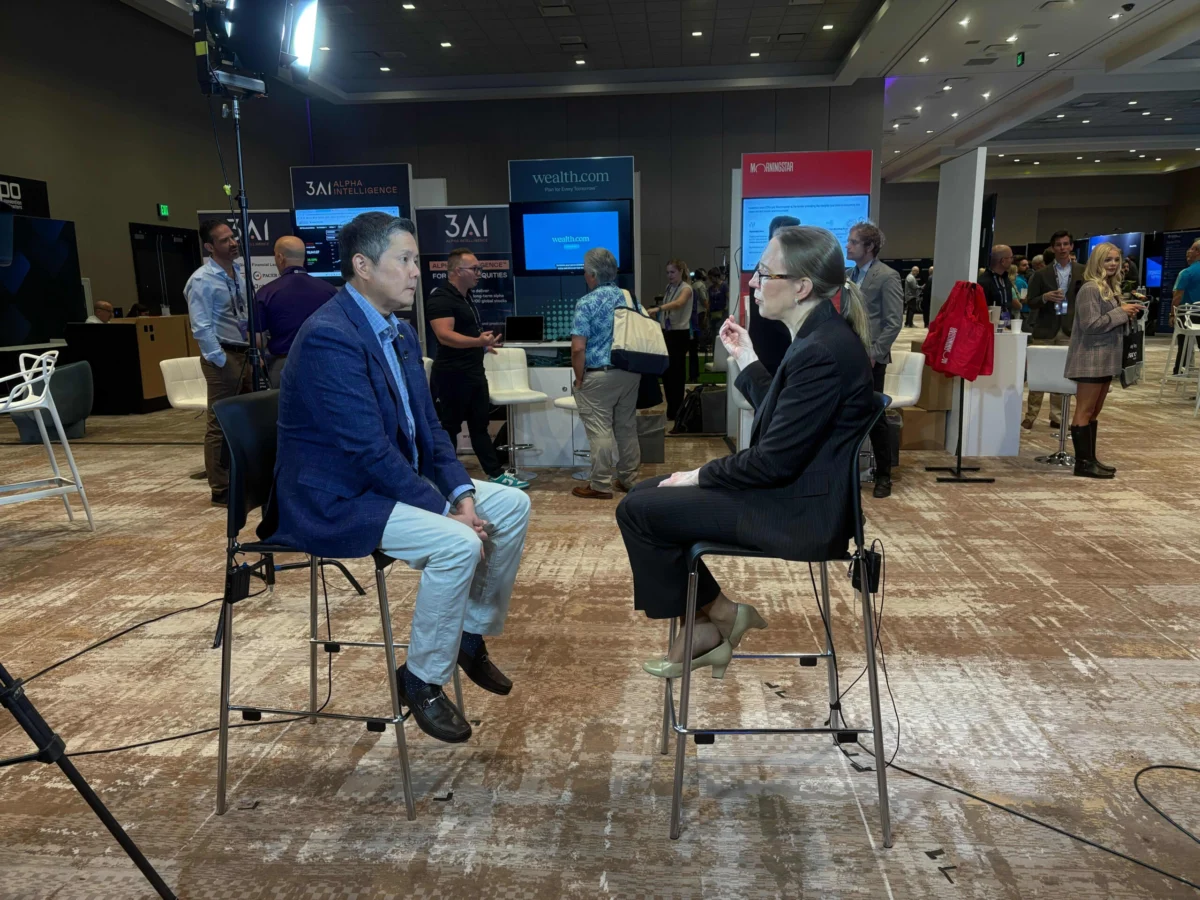
SEC Commissioner Hester Peirce has articulated a clear willingness to engage collaboratively with Wall Street on the development and regulation of nascent exchange-traded fund (ETF) products linked to cryptocurrencies and the burgeoning field of tokenization. Speaking this week during an exclusive interview with "ETF Edge" host Dominic Chu at the VettaFi’s Exchange 2026 conference in Las Vegas, Commissioner Peirce extended an open invitation to innovators, stating, "We want to work with people on new products. It really is a come in and talk to us about what you’re trying to do. We want to work with you toward being able to experiment to see whether the market wants your products." This stance underscores a potentially evolving regulatory posture at a pivotal moment for digital assets in mainstream finance.
A Crucial Juncture for Digital Assets and ETFs
Commissioner Peirce’s presence at the VettaFi’s Exchange 2026 conference itself speaks volumes about the Securities and Exchange Commission’s (SEC) recognition of the ETF industry’s growing influence. VettaFi, a prominent data and analytics provider in the ETF space, hosts this annual event as a key gathering for financial advisors, asset managers, and industry professionals. Her comment, "I’m here because this is such an important segment of what we regulate," highlights the SEC’s acknowledgment of ETFs as a critical conduit for capital formation and investor access, particularly as these products increasingly integrate complex and novel underlying assets. The conference typically serves as a barometer for industry trends, with discussions frequently centering on innovation, technological advancements like artificial intelligence (AI) and blockchain, and the future of investment vehicles. Peirce’s participation suggests an active desire to understand and adapt to these rapid shifts rather than merely react to them.
The backdrop to Peirce’s remarks is a period of significant dynamism in the digital asset landscape. Following years of cautious, and often resistant, regulatory engagement, the SEC recently approved several spot Bitcoin ETFs in January 2024. This landmark decision, coming after numerous rejections and a crucial court ruling in favor of Grayscale Investments against the SEC, has dramatically altered the accessibility of cryptocurrency investments for retail and institutional investors alike. The approval has been met with substantial market interest, with these new funds collectively accumulating tens of billions of dollars in assets under management within months of their launch. For instance, by early 2024, the newly launched spot Bitcoin ETFs had already surpassed $50 billion in AUM, demonstrating robust investor demand. This development has inevitably shifted the conversation towards other potential crypto-linked ETFs, most notably those tied to Ethereum, with several applications currently awaiting SEC review.
The Rising Tide of Tokenization
Beyond direct cryptocurrency ETFs, Commissioner Peirce specifically addressed the accelerating interest in the tokenization of financial instruments. "It’s not the SEC’s job to decide… how the market moves forward," she clarified, emphasizing the regulator’s role in facilitating, not dictating, market evolution. However, she noted a distinct shift in dialogue: "But tokenization is one of those areas that since the administration changed and since the attitude toward crypto and blockchain changed, people have come to us and they’ve said, ‘We really think tokenization has potential here.’"
Tokenization involves representing real-world assets, such as stocks, bonds, real estate, commodities, or even intellectual property, as digital tokens on a blockchain. This process has garnered significant attention from financial institutions globally due to its potential to revolutionize traditional finance. The benefits are manifold: increased liquidity through fractional ownership, enhanced transparency, faster settlement times, reduced intermediation costs, and broader market access. For instance, a high-value asset like a commercial property could be tokenized, allowing multiple investors to own a fraction of it, thereby democratizing investment opportunities previously reserved for institutional players. Industry forecasts suggest that the market for tokenized assets could reach trillions of dollars in the coming decade, with major financial players like JPMorgan and BlackRock actively exploring blockchain-based solutions for asset management and trading.
The "administration change" and the evolving "attitude toward crypto and blockchain" alluded to by Peirce likely refer to a broader maturation of understanding within Washington and regulatory bodies regarding the permanence and potential of distributed ledger technology (DLT). While initial regulatory responses to crypto were often characterized by skepticism and a focus on risks, particularly during periods of market volatility or fraud, there appears to be a growing recognition of the underlying technological innovation and its potential to enhance efficiency and transparency in financial markets. This shift doesn’t necessarily mean a softer regulatory touch, but rather a more engaged and constructive dialogue aimed at integrating these innovations responsibly into existing frameworks.
Peirce’s Consistent Advocacy for Clarity and Innovation
Commissioner Peirce, often dubbed "Crypto Mom" within the digital asset community, has historically been one of the most vocal advocates within the SEC for clearer regulatory frameworks for cryptocurrencies and blockchain innovation. Her stance at the VettaFi conference aligns perfectly with her long-held philosophy that regulators should provide guardrails for innovation rather than stifling it through ambiguity or outright prohibition. She has frequently dissented from SEC decisions that she viewed as overly restrictive or lacking a forward-looking perspective on digital assets. Her consistent call has been for a regulatory environment that allows experimentation while prioritizing investor protection.

Her emphasis on collaboration—"come in and talk to us"—is particularly significant given the SEC’s past reputation for being less accessible to crypto innovators. The intricate nature of blockchain technology and its application to securities necessitates a deeper understanding from regulators, and a proactive engagement from the industry is crucial for bridging this knowledge gap. This invitation suggests a more open-door policy, encouraging companies to present their products, articulate their underlying technologies, and explain their risk mitigation strategies directly to the commission.
The Imperative of Investor Protection and Disclosure
While open to innovation, Commissioner Peirce firmly reiterated the SEC’s unwavering commitment to its core mandate: investor protection. "We want to do it [work with issuers] in a way that respects investor protection," she stated. This involves ensuring that new products, regardless of their innovative nature, are presented to the public with full transparency regarding their characteristics, risks, and intended use. "It’s not our job to say which products are good or bad. It is our job to work with sponsors to make sure that they’re disclosing what those products are, what the risks are [and] what they’re intended to be used for."
This principle of full and fair disclosure is fundamental to securities law. For novel products like crypto ETFs and tokenized assets, the risks can be multifaceted and often less familiar to the average retail investor. These include, but are not limited to, extreme price volatility, cybersecurity risks associated with digital asset custody, smart contract vulnerabilities, regulatory uncertainty across jurisdictions, and potential liquidity issues. For complex products like leveraged ETFs (briefly alluded to in the original context), the risks are amplified, as these products use derivatives to magnify returns but also potential losses, often making them unsuitable for long-term buy-and-hold strategies or inexperienced investors. The SEC’s scrutiny of such products ensures that investors are fully aware of the leveraged nature and associated risks.
Therefore, the SEC’s role, as articulated by Peirce, is not to act as an arbiter of product quality or market demand, but rather to ensure that the information necessary for informed investment decisions is readily available and clearly communicated. This entails rigorous review of prospectuses, marketing materials, and disclosure documents to guarantee accuracy, completeness, and plain language explanations of complex financial structures and underlying technologies. Furthermore, it implies a need for robust compliance frameworks from issuers, including anti-money laundering (AML) and Know Your Customer (KYC) protocols, to safeguard against illicit activities within these new financial ecosystems.
Broader Implications and the Path Forward
Commissioner Peirce’s remarks signify a critical juncture where technological innovation and regulatory prudence must converge. The SEC’s openness, while cautious, suggests a pragmatic approach to integrating digital assets into the mainstream financial system. This stance has several profound implications:
Firstly, for the financial industry, it represents a clearer, albeit still challenging, path for developing and launching new digital asset products. The invitation to collaborate could foster a more constructive dialogue, potentially leading to more tailored and effective regulatory frameworks that accommodate the unique characteristics of blockchain technology without compromising investor safeguards. Industry participants, from fintech startups to established Wall Street giants, will likely interpret this as an encouragement to double down on their innovation efforts, while simultaneously enhancing their regulatory compliance strategies.
Secondly, for investors, particularly retail investors, the continued integration of digital assets through regulated vehicles like ETFs and potentially tokenized securities offers greater access and potentially enhanced protection compared to direct investments on unregulated platforms. However, the onus remains on investors to understand the disclosures and assess their risk tolerance. Educational initiatives from both regulators and industry will be crucial in this regard.
Thirdly, this evolving stance contributes to the broader global conversation on digital asset regulation. As jurisdictions worldwide grapple with how to supervise crypto and blockchain, the SEC’s approach, particularly from a key commissioner, sends an important signal. While other regions like the European Union (with MiCA regulation) and various Asian financial hubs have moved more aggressively to establish comprehensive frameworks, the U.S. remains a dominant force in global finance, and its regulatory direction significantly influences international standards and market development.
In conclusion, Commissioner Hester Peirce’s statements at the VettaFi’s Exchange 2026 conference highlight a strategic pivot for the SEC – one that balances the imperative of investor protection with an acknowledgment of technological inevitability and market demand. By inviting direct engagement and emphasizing disclosure over subjective judgment, the SEC appears poised to navigate the complex waters of crypto ETFs and tokenization, potentially ushering in a new era of innovation and accessibility within the financial markets, provided the industry responds with robust compliance and transparency. The dialogue between innovators and regulators will be paramount in shaping the future of digital finance.

0 Comments