
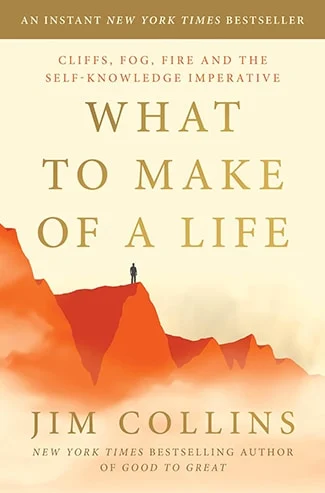
The Conceptual Framework of the Fog and the Frame
The research presented by Collins, spanning over a decade of observation and case studies, identifies a recurring pattern of disorientation that he labels "the fog." This state is characterized by a lack of clarity regarding one’s purpose, direction, or identity. According to the framework, individuals typically encounter this phenomenon at least three distinct times during their lives.
The first instance occurs during youth, as individuals attempt to transition from the structured environment of education into the complexities of the adult world. The second instance is triggered by what Collins calls a "cliff" event—a sudden, life-altering disruption such as the loss of a career, the end of a significant relationship, or a health crisis. The third instance manifests during the transition from midlife into older age, where individuals often grapple with questions of legacy and the shifting nature of their contributions to society.
To navigate these periods of uncertainty, Collins introduces the concept of the "frame." Finding one’s frame involves the alignment of three critical elements: what an individual is genetically or temperamentally built to do, what they find meaningful or enlivening, and what the world requires of them. When these elements align, the individual moves out of the fog and into a period of high-impact, purposeful action.
Chronology of Jim Collins’ Research and Philosophical Evolution
The development of these personal life principles follows a decades-long career in management science. Collins’ trajectory provides context for how he arrived at his current focus on individual purpose.
- 1994: The Foundation of Longevity: Collins co-authored Built to Last, which examined why some companies remain successful over decades. This established his interest in "endurance" as a metric of success.
- 2001: The Mechanics of Excellence: With the release of Good to Great, Collins identified the specific traits of leaders and organizations that outperform their peers. This introduced the "Hedgehog Concept," a precursor to the "frame" concept used in personal development.
- 2011: Navigating Uncertainty: Great by Choice analyzed how organizations survive in chaotic environments. The research focused on "Return on Luck" (ROL), a concept Collins now applies to how individuals handle unforeseen life events.
- 2015–2025: The Decadel Research Phase: Collins shifted his focus toward individual case studies, examining the lives of historical figures and contemporary leaders to see if the principles of organizational greatness applied to personal fulfillment.
- 2026: The Personal Map: The release of What to Make of a Life marks the culmination of this research, offering a codified map for individual navigation through life’s cycles.
Supporting Data: The Prevalence of Life Transitions
The necessity of a "map" for life direction is supported by contemporary sociological and psychological data. Research into adult development suggests that the traditional model of a single, stable career followed by retirement is becoming obsolete.
According to data from the Bureau of Labor Statistics, the average individual changes jobs approximately 12 times throughout their career, with many of these changes involving a complete shift in industry or role. Furthermore, psychological studies on the "U-bend of happiness"—a theory popularized by economists David Blanchflower and Andrew Oswald—indicate that life satisfaction tends to dip significantly in the late 40s and early 50s. This data aligns with Collins’ observation of the midlife "fog."
In a post-pandemic global economy, the "cliff" events Collins describes have become more frequent. The "Great Resignation" and subsequent labor market shifts saw millions of workers re-evaluating their relationship with work. A 2023 survey by Pew Research Center found that 44% of workers who changed jobs did so because they felt their work lacked a sense of purpose, highlighting the widespread search for the "frame" that Collins describes.
The Three Elements of the Frame
Collins posits that finding one’s direction is not a one-time event but a repetitive process of realignment. He breaks down the "frame" into three distinct pillars that individuals must evaluate when they find themselves in the fog.

1. The Internal Wiring (The "Who")
This element focuses on innate talents and temperamental predispositions. Collins argues that individuals often waste years trying to excel in areas for which they are not naturally suited. The "frame" requires a rigorous, honest assessment of what one is "built" to do, rather than what they feel they "should" do based on external pressures.
2. The Enlivening Work (The "What")
The second pillar is the identification of work that provides intrinsic energy. Collins notes that even in a chosen field, "drudgery" is inevitable. However, the distinction lies in whether the core of the work leaves the individual feeling more or less alive. His research suggests that high achievers are not those who avoid hard work, but those who find the hard work fundamentally engaging.
3. The Contribution (The "Why")
The final pillar is the external application of one’s talents. This involves finding a way to serve a need in the world that provides a sense of meaning. Collins emphasizes that purpose is rarely found in isolation; it is discovered at the intersection of personal skill and societal contribution.

Analysis of the Role of Luck and Discipline
A significant portion of Collins’ framework deals with the intersection of luck and individual agency. In his business research, Collins found that successful companies did not necessarily have "more" luck than unsuccessful ones; rather, they had a higher "Return on Luck."
In a personal context, this implies that while "cliff" events (bad luck) or unexpected opportunities (good luck) are outside an individual’s control, the response to these events determines the trajectory of their life. The "map" provided by Collins encourages individuals to prepare for luck by building a foundation of discipline and clarity, so that when a window of opportunity opens—or a cliff event occurs—they have the tools to navigate it.
Furthermore, Collins addresses the "inevitability of drudgery." A common misconception in modern self-help is that finding one’s purpose leads to a life free of mundane or difficult tasks. Collins’ research refutes this, suggesting that the most meaningful lives are often the most disciplined. The "inner fire" required to sustain a long-term path is fueled not by constant excitement, but by the deep-seated conviction that one is in the correct "frame."

Broader Implications for Society and Workforce Development
The shift toward a cyclical view of life has significant implications for how society approaches education, career development, and aging. If the "fog" is an inevitable and recurring part of the human experience, the traditional pressures to "have it all figured out" by age 22 are counterproductive.
Educational institutions may need to pivot toward teaching "navigational skills"—such as self-assessment and resilience—rather than just technical skills. In the corporate world, organizations that recognize their employees may go through periodic "fogs" can implement better support systems for lateral moves or mid-career sabbaticals, potentially increasing long-term retention and employee satisfaction.
For the aging population, Collins’ framework provides a more optimistic outlook on the later stages of life. Rather than viewing older age as a period of decline, the "map" suggests it is a time for "re-framing." As life expectancy increases, the period between age 60 and 90 represents a significant "third act" where individuals can apply a lifetime of wisdom to new, meaningful contributions.

Conclusion and Future Outlook
Jim Collins’ transition from corporate strategist to life cartographer reflects a growing demand for rigorous, evidence-based approaches to personal fulfillment. What to Make of a Life and the concepts of the "fog" and "frame" offer a structured alternative to more abstract self-help philosophies.
As individuals continue to navigate an increasingly volatile global landscape, the ability to "re-find" direction will become a critical survival skill. The principles discussed in Podcast 1115 suggest that while the fog is inevitable, it is not permanent. By understanding the cyclical nature of life and the elements required to build a new frame, individuals can maintain their inner fire across the entirety of their lives, regardless of the external challenges they face. The enduring message of Collins’ latest work is one of agency: while we cannot control the weather of our lives, we can certainly learn to navigate the terrain.

0 Comments