
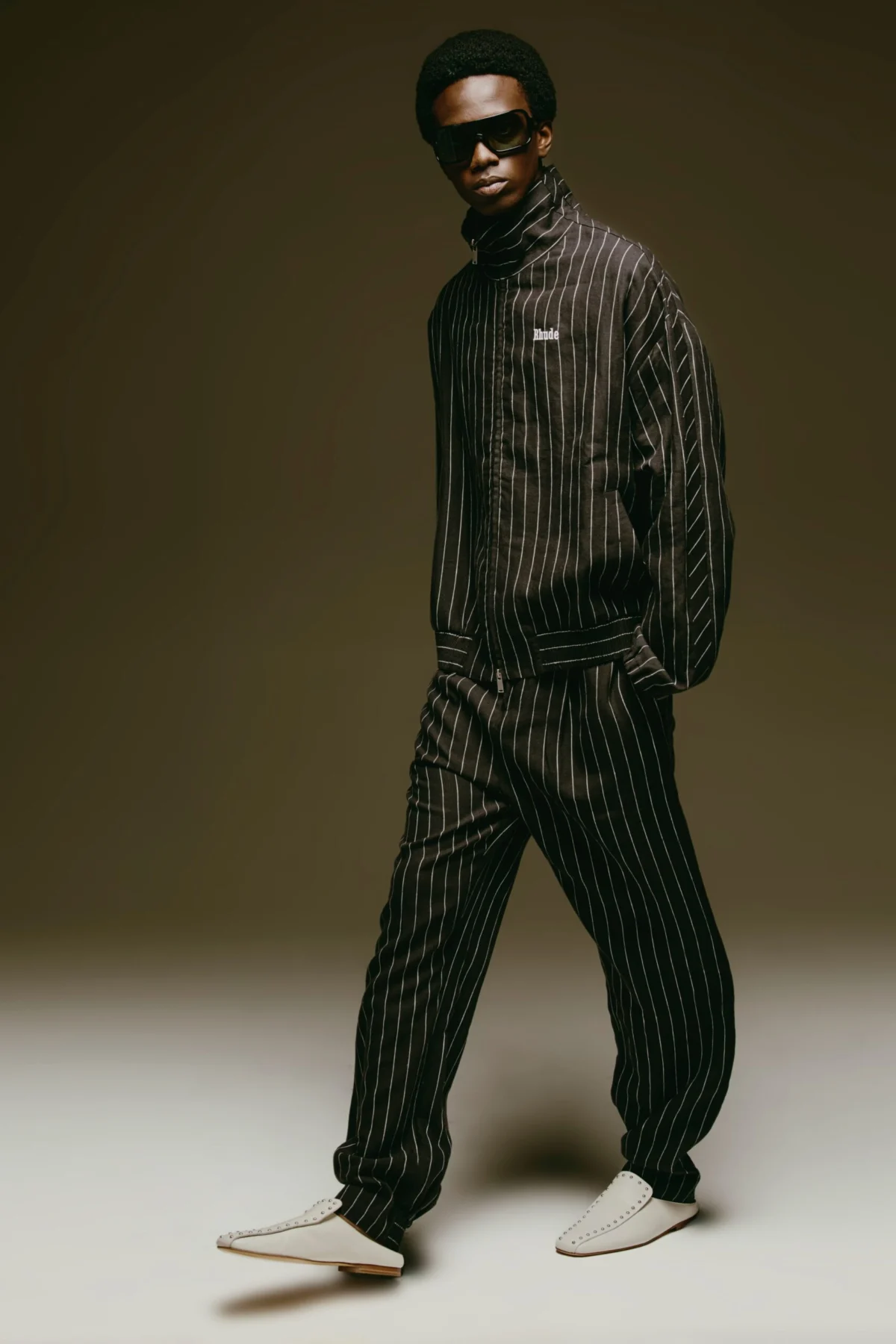
The convergence of professional sports and high fashion has transitioned from a niche trend into a fundamental pillar of the global luxury economy. Rhuigi Villaseñor, the founder of the Los Angeles-based luxury label Rhude, is positioning himself at the epicenter of this shift, questioning why the two industries should not be fully integrated rather than merely collaborative. Speaking from a Paris showroom during the unveiling of Rhude’s latest collection, Villaseñor outlined a vision that extends far beyond the traditional boundaries of streetwear. Having built a career that spans the founding of Rhude in 2015, a tenure as the creative director of the Swiss luxury house Bally, and a high-profile collaboration with the global retailer Zara, Villaseñor is now leveraging his influence to disrupt the structural mechanics of football apparel.
In 2024, Villaseñor’s trajectory took a significant turn into the world of professional athletics with his appointment as the Chief Brand Officer of Como 1907. The Italian football club, situated on the shores of Lake Como, has recently achieved a historic milestone by qualifying for the Champions League for the first time in its history. This role has not only provided Villaseñor with a platform to showcase his lifestyle—often documented through his signature social media presence involving luxury Rivas and fine wines—but has also immersed him in the complex supply chains and branding hierarchies of European football. Through this immersion, Villaseñor identified what he describes as a systemic gap in how sportswear giants service professional clubs, particularly those outside the elite "superclub" bracket.
The Structural Disruption of Football Merchandising
The current landscape of football apparel is dominated by a handful of multi-billion-dollar sportswear conglomerates. These entities prioritize "Tier 1" clubs—such as Arsenal, Real Madrid, and Bayern Munich—providing them with bespoke designs, massive marketing budgets, and global distribution networks. However, Villaseñor argues that clubs positioned just below this top tier often face a standardized approach, receiving less investment and lower profit margins despite possessing rich histories and fervent, culturally savvy fanbases.
To address this disparity, Villaseñor has introduced a new partnership model through "Rhu," the sports-focused extension of his creative universe. This model treats football clubs not merely as athletic teams, but as cultural properties with untapped fashion potential. Central to this strategy is a partnership with Lorenzo Boglione of BasicNet, the Italian powerhouse behind brands such as Kappa, K-Way, and Superga. By combining Rhude’s luxury positioning with BasicNet’s manufacturing and distribution infrastructure, Villaseñor aims to create a system where clubs with strong identities can access elevated retail spaces and retain better margins on their merchandise.
According to Villaseñor, this initiative has already gained significant traction. Seventeen prominent European football clubs, alongside the Premier League’s Tottenham Hotspur, have reportedly signed on to this new framework. This move signals a shift away from the traditional "kit deal" toward a holistic brand management strategy that prioritizes aesthetic longevity and cultural relevance over mass-market ubiquity.
A Chronology of Rhuigi Villaseñor’s Influence
The rise of Rhuigi Villaseñor is a case study in the evolution of modern luxury. Understanding his current ventures requires a look at the timeline of his career:
- 2015: Villaseñor founds Rhude in Los Angeles. The brand quickly gains a cult following for its "Trauma" t-shirt and its ability to blend Americana motifs with high-end construction.
- 2019-2021: Rhude makes its debut at Paris Fashion Week, transitioning from a streetwear label to a recognized luxury contender. The brand’s signature "Marlboro-esque" chevron becomes a staple of the luxury market.
- 2022: Villaseñor is appointed Creative Director of Bally, marking a rare instance of a streetwear founder taking the helm of a heritage Swiss house.
- 2023: A massive collaboration with Zara brings Villaseñor’s aesthetic to the global mass market, proving the commercial scalability of his "Redesigning Happiness" philosophy.
- 2024: Villaseñor assumes the role of Chief Brand Officer at Como 1907 and launches the "Rhu" partnership model in collaboration with BasicNet, officially bridging the gap between his fashion house and the sports world.
Market Context: The "Bloke-core" Phenomenon and Luxury Sportswear
The timing of Villaseñor’s expansion into football is strategically aligned with broader market trends. The "Bloke-core" aesthetic—a fashion movement characterized by wearing vintage and contemporary football jerseys as everyday lifestyle pieces—has exploded across social media platforms like TikTok and Instagram. This trend has transformed the football kit from a piece of performance gear into a high-fashion statement.
Data from the luxury sector indicates that the global sports apparel market is expected to reach a valuation of approximately $250 billion by 2026. Within this, the "sport-luxe" segment is growing at a faster rate than traditional luxury goods. By positioning Rhude and Rhu at the intersection of these markets, Villaseñor is capitalizing on a consumer base that values authenticity, athletic heritage, and premium craftsmanship. The inclusion of Tottenham Hotspur—a club that has consistently outperformed its peers in terms of stadium-led revenue and lifestyle branding—further validates the commercial viability of Villaseñor’s model.
Analysis of the Rhude Seasonal Collection: Archiving the Future
While Villaseñor’s corporate maneuvers in the sports world are expansive, the heart of his operations remains his flagship brand, Rhude. In his latest Paris presentation, the designer reflected on the brand’s nearly decade-long history, noting that the current generation of consumers is increasingly obsessed with "archival" fashion. "I’ve been around for so long now that I think I can kind of archive our own," Villaseñor remarked, signaling a shift toward refining and recontextualizing the brand’s established codes.
The collection showcased a sophisticated evolution of "post-streetwear." Key highlights included:
- Signature Motifs: The Marlboro-inspired chevron was utilized with surgical precision. It appeared on the eye stays of suede slipper sneakers—reminiscent of traditional Repetto silhouettes—and was integrated into the collars of bronze MA-1 flight jackets.
- Materiality and Tailoring: Moving away from heavy fleece and jersey, the collection emphasized raw linen track tops, Neapolitan-style white-on-black chalk stripe jumpsuits, and chinoiserie house shorts. This shift suggests a more mature, travel-oriented wardrobe.
- Hybridization: A standout piece was a horizontally ribbed terry top in a red and blue stripe pattern. The garment successfully merged the aesthetic of French jolie-madame bouclé tailoring with the functional, mid-layer silhouettes common in "gorpcore" and tech-focused wardrobes.
- The Como Influence: The designer’s time in Italy was evident in the "Como-coded" camp-collar shirts featuring sailing scenes, reflecting the luxury lakeside lifestyle that has become synonymous with his new role at the football club.
Industry Implications and Future Outlook
The implications of Villaseñor’s new model extend to the very foundations of how sports brands operate. If successful, the partnership between Rhu and BasicNet could provide a blueprint for other mid-tier clubs to reclaim their brand equity. By moving away from the "template" designs often provided by major sportswear brands, these clubs can cultivate a unique visual identity that appeals to the lucrative luxury consumer.
Furthermore, Villaseñor’s dual role as a designer and a C-suite executive at a football club represents a new era of the "creative director" as a multi-disciplinary business architect. His ability to navigate the boardrooms of Italian football while maintaining a credible presence on the Paris runway suggests that the future of fashion lies in total lifestyle integration.
Observers in the industry suggest that the success of this model will depend on the performance of the participating clubs and the scalability of the "Rhu" distribution network. However, with 17 clubs already committed and the backing of a manufacturing giant like BasicNet, the project has significant momentum.
As the fashion industry continues to grapple with cooling demand in traditional sectors, the expansion into the resilient and emotionally charged world of sports offers a promising avenue for growth. Villaseñor’s philosophy—driven by curiosity and a refusal to see sports and fashion as separate entities—may well define the next decade of luxury branding. "As long as we remain curious," Villaseñor noted, "I think it’s going to always work." For now, Rhude remains the center of his universe, but the orbit of his influence is expanding into territories that few in the fashion world have successfully charted.

0 Comments