
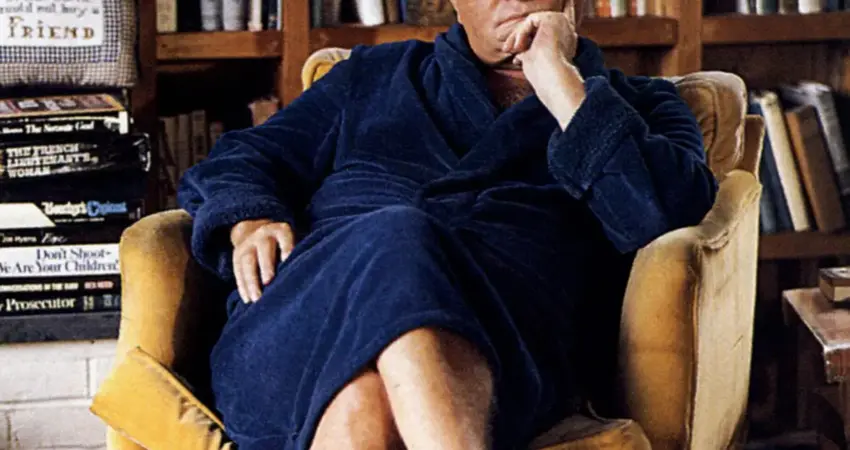
Fans of the late, iconic author Truman Capote will soon have a unique opportunity to acquire pieces of his personal history. Nearly 400 lots of the celebrated writer’s belongings are set to go under the auction block, offering a tangible connection to the man behind seminal works like "In Cold Blood" and "Breakfast at Tiffany’s." The auction, spearheaded by Cornell Auction in Bellport, New York, marks a significant moment for literary enthusiasts and collectors alike, providing a rare glimpse into the private life of a cultural titan.
The collection originates from the estate of Gerald Clarke, a journalist and close friend of Capote, who received many of the author’s personal effects after his death in 1984 at the age of 59. Clarke, now 89 years old, is reportedly downsizing his residence, prompting the decision to part with these historically significant items. Capote, whose life and work have been subject to numerous portrayals, including the 2005 film "Capote" and the 2024 miniseries "Feud: Capote vs. the Swans," remains a towering figure in 20th-century American literature.
The Auction: A Window into Capote’s World

The Cornell Auction sale is officially scheduled for November 21, with an online preview and bidding commencing on October 26. While the complete catalogue has yet to be released, the auction house shared details via an Instagram video, revealing that many of the items were prominently featured in a 1976 Architectural Digest spread that documented Capote’s then-residence in Sagaponack, Long Island. This historical connection adds an extra layer of allure to the impending sale, as these objects were once part of the very spaces that inspired and housed the renowned author.
The provenance of the items is further underscored by confirmations from The New York Times, which has featured images of some of Capote’s extensive paperweight collection, a known passion of the author. Clarke recounted to The Times that Capote had developed an "addiction to paperweights," amassing a considerable collection. Notably, some of these pieces, featuring preserved flowers, were reportedly crafted by Capote himself, adding a personal, artisanal touch to his acquisitions. One particularly poignant item up for auction is a paperweight created with rocks from the Kansas farm that served as the backdrop for his groundbreaking work, "In Cold Blood."
Beyond the paperweights, the auction promises a diverse array of personal effects. Other confirmed lots include a signed copy of Harper Lee’s "To Kill a Mockingbird," a testament to Capote’s enduring friendship with the acclaimed author. Also slated for sale is a bronze frog inkwell and even the personal house keys of Truman Capote, offering an intimate glimpse into his daily life.
Revisiting Capote’s Sagaponack Sanctuary

The impending auction naturally draws attention back to Capote’s former Hamptons home, a secluded retreat he described as "Kansas with a sea breeze." In a 1976 Architectural Digest feature, writer Rosemary Kent explored the author’s custom-designed beach house near Sagaponack, a property he purchased in 1962. The article paints a picture of a deliberately understated residence, nestled amidst scrub pine and hydrangeas, designed for solitude and creative work.
Capote envisioned his Sagaponack home as a sanctuary, a place to escape the clamor of his public life and focus on his writing. He described the area as a "rural Montparnasse," attracting a constellation of artists and writers. Yet, his own property was intentionally shielded from view, accessible only via a discreet dirt lane and a gravel driveway leading past a natural bird sanctuary and a friend’s cottage. This deliberate seclusion allowed Capote to cultivate a private world, a stark contrast to his reputation as a prominent social figure.
The house itself, a two-story, weathered-gray structure with a flat roof, was built to his exact specifications by a local carpenter. Capote took pride in its "untended look," a calculated aesthetic that blended with the natural landscape. He owned six acres of land, cherishing the privacy it afforded. "It’s exactly the way I wanted it," he was quoted as saying, emphasizing his desire for a place where he could "be alone."
A Haven for Reflection and Creation

Inside, Capote’s home was a curated reflection of his personality and intellectual pursuits. The two-story living room was designed to evoke a sense of "oceanside ease tinged with intelligence and humor." Personal objects, memorabilia, and an extensive collection of books, including his own works in multiple languages, were casually interspersed with simple furnishings. The space was a testament to his belief that possessions should be used and enjoyed, not merely displayed. A priceless Tiffany lamp might sit beside a worn velvet armchair, and upholstery might bear the marks of sun-fading, reflecting a lived-in comfort rather than pristine display.
Capote himself was deeply involved in the interior design, eschewing decorators to realize his precise vision. He described his approach as creating "run-down comfort," a style that embraced texture and rawness, exemplified by the exposed wooden studs and horizontal bracings of the exterior walls, designed to mimic a "raincoat" protecting the interior. Mirrors lining one end of the living room added depth and light, enhancing the connection to the surrounding natural beauty.
A floor-to-ceiling window offered panoramic views of the sea and sand, while a spiraling steel staircase led to a second-floor study. This loft-like space, furnished with red sofas, wicker chairs, and hassocks, was Capote’s dedicated work area, adorned with a Renée Bouché sketch of the author. Here, amidst his books and personal mementos, he would immerse himself in his literary endeavors.
Personal Touches and Beloved Companions

The article also sheds light on Capote’s more whimsical side. A "witchcraft altar," as he termed it, was arranged on a small set of steps in the living room, featuring an antique wooden cat, a bronze bell, and a needlepoint mask pillow designed by Cocteau. This eclectic display hinted at his fascination with the unconventional and the artistic.
His beloved English bulldog, Maggie, a frequent companion and subject of anecdotes, was an integral part of his life at Sagaponack. While Maggie was not present during the 1976 interview, her presence was felt through the traces she left behind and the fond stories Capote shared about her mischievous escapades. His affection for his pet was evident in his description of her as "sweet, quirky and huggy."
Capote’s bedroom, located near the kitchen, was described as remarkably stark, resembling a "summer camper’s tent." It featured miniature wood chests of drawers, a gilt-framed mirror, and a single iron bedstead. Beside his bed, a card table held detective magazines and a floor lamp, facilitating his late-night reading habits. He famously stated, "I like to have my own things around me. Even when I travel… I take things of my own with me," underscoring his desire for familiarity and comfort, even on the road.
A Life of Contrasts: Solitude and Social Grace

The article highlights the intriguing paradox of Truman Capote’s life: his craving for solitude in Sagaponack contrasted sharply with his public persona as a celebrated social butterfly. He expressed a disdain for the crowded Hamptons summers, preferring the quiet introspection of autumn and winter. "I don’t care for the Hamptons in the summer—it’s gotten too crowded," he stated, finding the social scene often unproductive. He believed that some writers visiting the Hamptons were not genuinely working.
His daily routine in Sagaponack was deliberately structured and uncomplicated: waking around 7:00 a.m., working until 11:00 a.m., followed by another work session until lunch. Afternoons were typically reserved for errands, walks, and spending time with Maggie. Evenings were for reading and relaxation, with an early bedtime around 9:30 p.m. This disciplined schedule was a testament to his commitment to his craft, even amidst his demanding social life.
Enduring Impact and Collector’s Appeal
The upcoming auction of Truman Capote’s personal effects represents a significant cultural event. These items are not merely objects; they are fragments of a literary legend’s life, imbued with the stories and experiences that shaped his iconic works. For collectors, scholars, and admirers of Capote’s literary genius, the auction offers a rare opportunity to own a piece of history. The paperweights, the signed book, the house keys – each item carries the weight of his legacy, promising to spark considerable interest and competitive bidding.

The sale also serves as a poignant reminder of Capote’s enduring impact on literature and popular culture. His ability to capture the nuances of human experience, his sharp wit, and his distinctive prose continue to resonate with readers decades after his passing. As these personal belongings transition to new custodians, they will undoubtedly continue to tell the story of one of America’s most fascinating and influential literary voices. The rediscovery and re-contextualization of these objects through the auction process offer a fresh perspective on Capote’s life and enduring artistic contributions.

0 Comments