
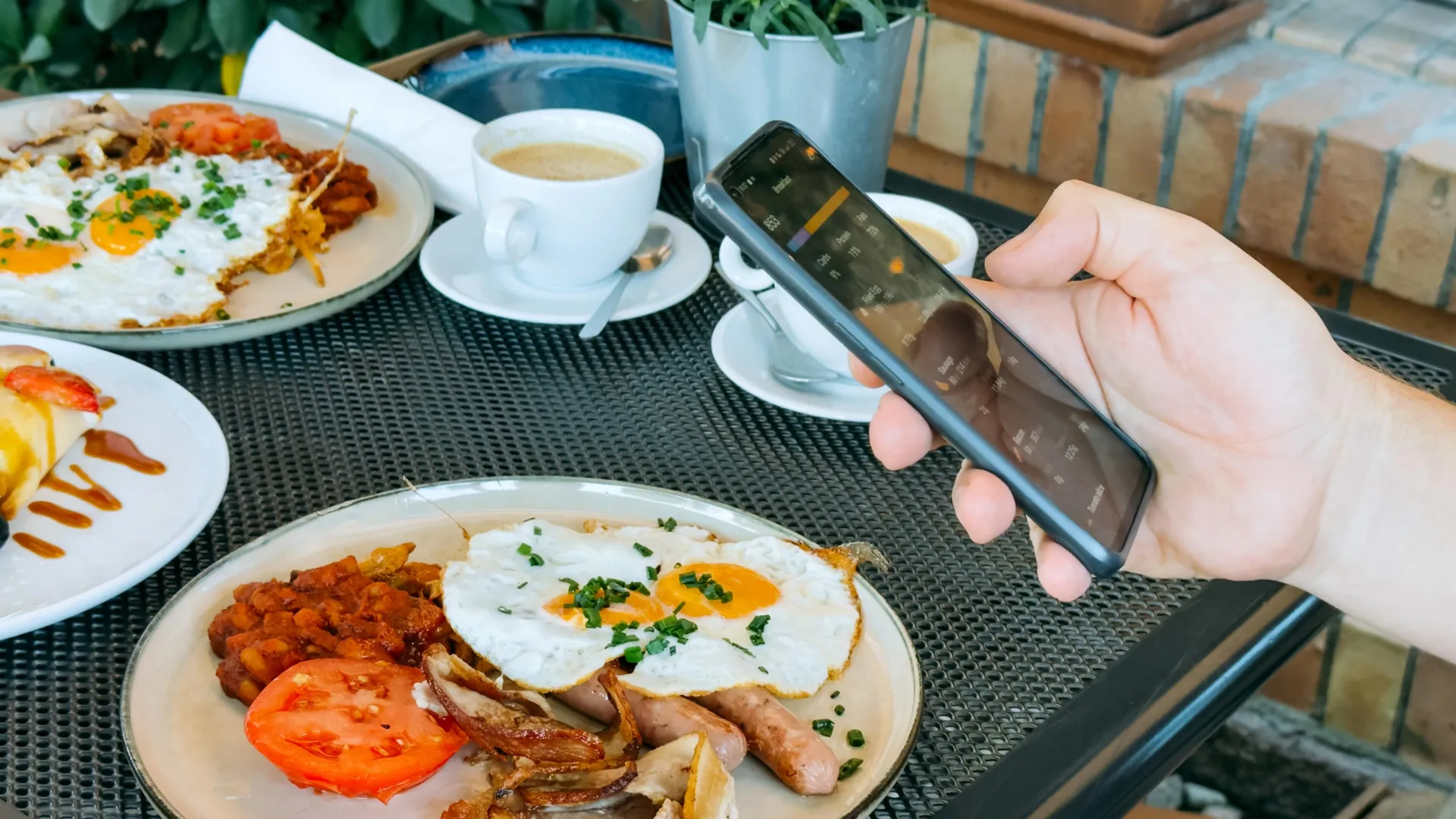
A groundbreaking study presented at the prestigious NUTRITION 2026 annual meeting has cast a significant shadow over the widespread adoption of AI-powered calorie tracking applications. These popular tools, which promise effortless nutritional estimation through a single photograph, may be providing users with substantially inaccurate data, potentially leading to misinformed health and weight management decisions. Researchers from the National Institute of Diabetes and Digestive and Kidney Diseases (NIDDK), part of the National Institutes of Health (NIH), found that four leading photo-based calorie tracking apps consistently underestimated the caloric and fat content of meals, sometimes by as much as one-third.
The Allure and Ambition of AI in Nutrition
In an era where health and wellness are paramount, millions have turned to technology for assistance. AI-driven applications that can instantaneously analyze a meal from a photograph represent a significant leap forward from the tedious process of manually logging every food item and its precise portion size. This convenience factor has fueled their popularity, particularly among individuals striving to manage their weight, monitor chronic conditions, or simply gain a better understanding of their dietary habits.
"Photo-based calorie tracking apps are very popular, especially for people trying to manage their health or lose weight," stated Aaron Hengist, a postdoctoral visiting fellow with the NIDDK’s Intramural Program. "However, the accuracy of many of these apps has not been thoroughly evaluated. Our study helps address this question by looking at whether these apps can reliably estimate calories."
The NIDDK’s research, presented by Olivia Charles, a postbaccalaureate intramural research training fellow, aimed to provide that critical evaluation. Charles unveiled the findings during the NUTRITION 2026 conference, held from July 25-28 in National Harbor, Maryland. This annual gathering is the flagship meeting of the American Society for Nutrition, attracting leading scientists and researchers in the field of human nutrition. The abstract of this presented research, available for review, highlights the methodology and preliminary results, underscoring the importance of rigorous scientific scrutiny for emerging health technologies.
Meticulous Meal Preparation: The Foundation of Accurate Assessment
To ensure the highest level of accuracy in their evaluation, the research team employed a unique and highly controlled methodology. The study is an integral part of a larger nutrition investigation conducted at the NIH Clinical Center, which is examining how the human body processes nutrients under different dietary conditions, specifically a low-carbohydrate (ketogenic) diet versus a standard diet.
A cornerstone of this investigation is the use of a meticulously managed metabolic kitchen. Here, all meals are prepared with an almost surgical precision, with ingredients weighed to the nearest 0.1 gram. This level of control provides an unparalleled, highly accurate baseline against which the performance of the AI apps could be measured. This scientific rigor is crucial, as it minimizes variables and allows researchers to isolate the impact of the apps themselves on the accuracy of nutritional estimations.
The Testing Protocol: A Head-to-Head Comparison
The research team systematically collected standardized photographs of 102 meals that had been prepared for the diet study. These images were then fed into four popular photo-based calorie tracking applications: MyFitnessPal, LoseIt!, CalAI, and Appediet. The objective was to compare the nutritional content estimated by each app against the precisely known nutritional composition of the meals, determined through the metabolic kitchen’s precise measurements.
"By using meals prepared in a tightly controlled metabolic kitchen, we were able to compare the apps’ estimates against a precise reference," Hengist elaborated. "This kind of direct, high-quality comparison hasn’t been available before." This direct comparison is a significant advancement, as previous assessments of such apps may have relied on less controlled user-generated data or self-reported portion sizes, which are inherently prone to error.
Discrepancies Revealed: Hundreds of Calories Overlooked
The results of this rigorous testing were stark. Across all four evaluated applications, the estimated calorie totals for the meals were, on average, approximately 250 to 345 calories lower than the actual caloric content. This substantial discrepancy means that individuals relying solely on these apps might be unknowingly consuming hundreds of extra calories per meal.
Furthermore, the apps demonstrated a significant underestimation of fat content, with estimates falling short by approximately 30 grams on average. Fat is a dense macronutrient, providing nine calories per gram, so an underestimation of 30 grams translates to a significant caloric deficit in the app’s calculation.
Nuances in Performance: Varying Accuracy Across Meal Types
While the overall trend indicated underestimation, the study also identified some nuances in the performance of the apps. Notably, MyFitnessPal and LoseIt! exhibited a tendency to be more accurate when analyzing higher-calorie meals compared to their performance with lower-calorie meals. This suggests that the AI algorithms might struggle with the finer details of less calorically dense dishes, or perhaps with variations in ingredient density and composition in simpler meals.
An area where the apps showed more consistent, albeit still potentially inaccurate, results was in the estimation of carbohydrates. While the calorie and fat estimations were particularly problematic, the apps produced more uniform estimates for carbohydrates than for other macronutrients. This could be due to the more visually distinct nature of many carbohydrate-rich foods, making them easier for image recognition algorithms to identify and quantify.
"People using a photo-based tracking app without adjusting the portions or entering the amounts of food should take the results with a grain of salt," Hengist cautioned. "These apps tend to underestimate calories, especially from fats, so what they actually ate is likely higher than what the app shows." This advice is critical for users who may be placing undue trust in the automated estimations provided by these technologies.
Challenges with Ketogenic Diets: A Complex Frontier for AI
The research extended beyond the initial analysis to explore factors that might influence the accuracy of the AI estimations. In a subsequent phase, researchers tested over 200 additional meals, focusing on identifying specific challenges. Preliminary findings indicated that meals prepared according to a low-carb ketogenic diet posed particular difficulties for the AI algorithms.
Ketogenic diets are often characterized by a higher proportion of fat and a lower proportion of carbohydrates. As previously noted, the apps consistently underestimated fat content. This tendency is likely exacerbated when dealing with ketogenic meals, which can be rich in fats from sources like oils, butter, nuts, and fatty meats. The visual similarity between different types of fats, or the difficulty in discerning exact quantities from a photograph, could contribute to this underestimation.
The complexity of identifying and quantifying various fats and their precise amounts within a photograph presents a significant hurdle for current image recognition technology. This suggests that AI models may need further refinement to accurately assess the nutritional profiles of diets that deviate significantly from more conventional eating patterns.
Recommendations for Enhanced Accuracy and Future Directions
The implications of this study are substantial for the millions of individuals who rely on AI-powered apps for dietary guidance. The researchers strongly advocate for a more integrated approach to calorie tracking. They suggest that combining the convenience of photo-based tools with traditional methods of evaluating food intake and diet quality could significantly improve accuracy in everyday use. This might involve manual verification of app-generated estimates, supplementing app data with user-inputted details about preparation methods or ingredient substitutions, or utilizing apps that offer more robust manual editing capabilities.
The findings also present a clear call to action for app developers. There is a pressing need to improve the underlying AI algorithms, particularly in their ability to accurately assess portion sizes and differentiate between various food components, especially fats. Investing in more comprehensive training datasets that include a wider variety of meals and dietary patterns, including those common in specialized diets like keto, could lead to more reliable estimations.
Furthermore, greater transparency regarding the limitations and potential inaccuracies of these apps is crucial. Users should be educated about the possibility of underestimation and encouraged to exercise critical judgment when interpreting the data provided.
The Scientific Community’s Response and the Path Forward
The presentation of these findings at NUTRITION 2026, a highly regarded scientific conference, signifies the scientific community’s growing interest in the real-world applicability and accuracy of AI in health and nutrition. While abstracts presented at such meetings are peer-reviewed by expert committees, they represent preliminary findings that have not yet undergone the full peer-review process required for publication in a scientific journal. Therefore, the results should be considered provisional until they are formally published in a peer-reviewed scientific outlet.
This ongoing research underscores the dynamic nature of AI development and its integration into critical aspects of daily life. As AI technology continues to evolve, so too must the methods by which we evaluate its efficacy and impact, particularly in areas as vital as personal health and nutrition. The NIDDK’s work provides a crucial benchmark, highlighting the gap between the promise of effortless AI-driven nutrition tracking and the current reality of its accuracy, paving the way for more reliable and trustworthy tools in the future. The scientific community and the public alike will be watching closely as this field progresses.

0 Comments