
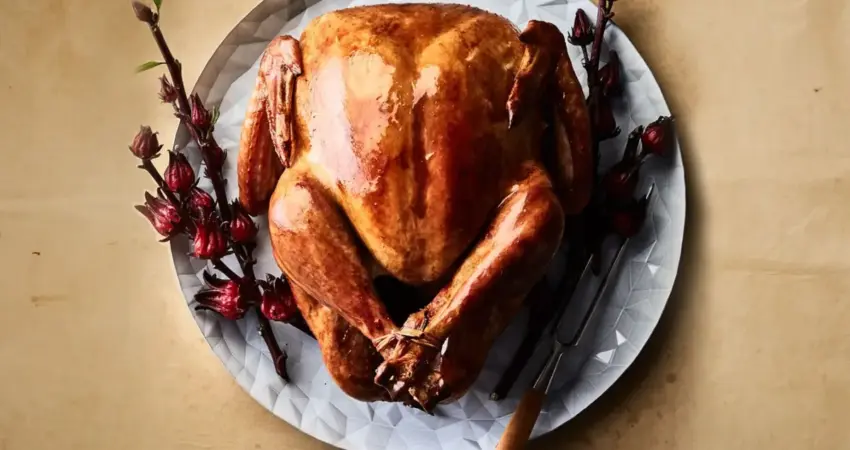
The perennial holiday challenge of fitting a large turkey into a refrigerator has been met with an innovative solution by culinary expert Alton Brown. His wet-brining technique, designed to maximize flavor and moisture while optimizing kitchen space, utilizes an insulated cooler as a primary vessel, freeing up valuable refrigerator real estate during the often-crowded holiday season. This method not only addresses a common logistical hurdle but also promises a more succulent and perfectly seasoned bird, setting the stage for a stress-free Thanksgiving or Christmas feast.
Brown’s approach centers on a straightforward brine, a carefully balanced mixture of kosher salt, sugar, and vegetable broth. This solution is key to the turkey’s final texture and taste. The salt works to break down muscle proteins, allowing the meat to absorb more moisture and subsequently retain it during the high-heat roasting process. The sugar, in turn, contributes to a beautifully browned and crisp skin. Once the turkey has undergone its crucial soaking period, typically ranging from 8 to 12 hours for a standard 14- to 18-pound bird, it is thoroughly patted dry. This step is critical for achieving that desirable crispy skin. The bird is then introduced to an intensely hot oven, preheated to 500 degrees Fahrenheit. This initial blast of heat rapidly cooks the exterior, initiating the skin’s transformation into a golden, appealing crisp. After approximately 30 to 40 minutes, a strategic shift occurs: the breast of the turkey is shielded with aluminum foil, and the oven temperature is reduced to 350 degrees Fahrenheit. This allows the interior to cook through gently, ensuring a moist and tender result without drying out the most vulnerable part of the bird.
A significant advantage of Brown’s method, beyond refrigerator space, is the elimination of the time-consuming and often messy practice of basting. By brining the turkey thoroughly beforehand, the need for constant attention and oven-side hovering is significantly diminished. This frees up valuable time and mental energy for hosts to focus on preparing other elements of the holiday meal, such as traditional side dishes like sweet potatoes or classic desserts like apple pie, contributing to a more relaxed and enjoyable hosting experience.
The Science and Safety of Brining
The practice of brining, while popularized in recent decades, has roots in ancient food preservation techniques. Salt has long been recognized for its ability to draw out moisture and inhibit bacterial growth. In the context of cooking, however, brining has evolved into a culinary art form, specifically aimed at enhancing flavor and texture. The process involves submerging food in a saltwater solution, allowing the salt ions to penetrate the meat’s cellular structure. This osmotic process not only seasons the meat from within but also alters the protein’s ability to hold onto water.
Timeline of Brining and Roasting:
- Pre-Brining Preparation: Approximately 12-18 hours before roasting.
- Brining Period: 8-12 hours (for a 14-18 lb turkey).
- Rinsing and Drying: 15-30 minutes.
- Initial Roasting (500°F): 30-40 minutes.
- Second Roasting (350°F): Varies based on turkey size and oven calibration, typically 1.5-2.5 hours.
- Resting Period: 20-30 minutes before carving.
The total active preparation time for the turkey, excluding the brining period, is relatively minimal. The bulk of the process is passive, allowing the brine to work its magic. This efficiency is a key selling point for home cooks facing the pressures of holiday entertaining.
Addressing Common Concerns: Cooler Safety and Turkey Selection
A frequent question arising from this cooler-based brining method is its safety. Culinary authorities, including Brown himself, emphasize that brining in a cooler is perfectly safe, provided strict temperature control is maintained. The insulated nature of a cooler is designed to keep its contents cold, much like a refrigerator. The critical threshold to observe is 40 degrees Fahrenheit. The brine and the turkey must remain at or below this temperature throughout the entire brining period to prevent the growth of harmful bacteria.
Food Safety Guidelines for Cooler Brining:
- Cooler Selection: Use a food-grade, thoroughly cleaned insulated cooler.
- Temperature Monitoring: Employ a reliable probe thermometer to continuously monitor the brine’s temperature.
- Cooling Agents: Incorporate sealed ice packs or frozen water bottles into the cooler to maintain the target temperature. Replenish or replace as needed.
- Location: Store the cooler in a cool environment, away from direct sunlight or heat sources.
The National Turkey Federation, a leading industry organization, reports that approximately 85% of American households serve turkey on Thanksgiving, with over 46 million turkeys consumed annually. This staggering number underscores the importance of efficient and reliable preparation methods for such a central holiday dish.
Another crucial consideration for home cooks is the type of turkey purchased. Many commercially available turkeys are now pre-brined or injected with a saline solution, often indicated by terms such as "self-basting," "enhanced," or "contains a solution" on the packaging. Brining a turkey that has already undergone such a process can lead to an unpleasantly salty final product. Therefore, it is imperative for consumers to check the packaging carefully and opt for an "unbrined" or "natural" turkey when employing this wet-brining technique.
Alternatives for Time-Strapped Cooks and Different Preferences
Recognizing that not all home cooks have the luxury of extended preparation time or a preference for wet brining, Alton Brown also offers alternative strategies. For those seeking a less hands-on approach or a different flavor profile, a dry-brined turkey recipe is available. Dry brining involves rubbing the turkey with a mixture of salt and seasonings and allowing it to air-dry in the refrigerator. This method also draws out moisture, concentrating the turkey’s natural flavors and resulting in exceptionally crispy skin.
Furthermore, for individuals facing severe time constraints, Chris Morocco’s innovative method of breaking down a whole turkey into parts offers a significantly reduced cooking time, often under two hours. This technique allows for more precise cooking of individual components, ensuring that the breast and legs are perfectly cooked without overcooking one while the other is still raw. This is particularly beneficial for smaller gatherings or when speed is of the essence.
The Ripple Effect: Managing Salty Pan Drippings and Gravy
The impact of brining extends beyond the turkey itself, particularly influencing the pan drippings and the subsequent gravy. The salt that seasons the turkey will also be present in the juices released during roasting. This can lead to gravy that is excessively salty if not managed carefully.
Strategies for Salty Gravy:
- Taste Before Seasoning: Always taste the pan drippings and the gravy before adding any additional salt or seasonings.
- Low-Sodium Broth: Utilize low-sodium or unsalted broth when making gravy to maintain greater control over the final salt content.
- Dilution: If the gravy is too salty, it can be thinned by adding unsalted butter, which can help to balance the saltiness, or by incorporating more salt-free broth.
The National Restaurant Association notes that the average American spends over $150 on their Thanksgiving meal, with the turkey being the centerpiece. Ensuring that this centerpiece is perfectly cooked and seasoned, and that its accompanying gravies and sauces are equally delicious, is a significant aspect of holiday culinary success. Brown’s brining method, by addressing both the turkey’s moisture and flavor, and by offering solutions for potential gravy pitfalls, contributes to a more positive and less stressful holiday dining experience for millions of households. The cooler brining technique, in particular, represents a clever and practical innovation that continues to gain traction among home cooks looking to elevate their holiday feasts.

0 Comments