
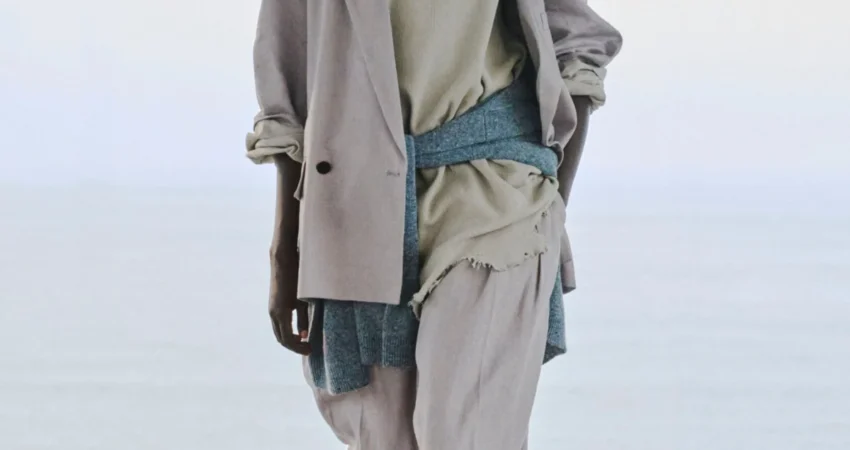
The contemporary fashion landscape is often defined by a rigid adherence to established manufacturing protocols, yet Kazuya Yamachika, the founder and creative director of the Japanese label Ancellm, has built his brand on the deliberate subversion of these norms. Since its inception in 2020, Ancellm has distinguished itself not merely through silhouette or marketing, but through a radical, laboratory-like approach to textile manipulation. Operating out of the Kojima region—Japan’s historic heart of denim and textile production—Yamachika has spent the last four years challenging the technical boundaries of what fabric can endure. By subjecting materials to unconventional treatments, such as the intentional shrinking of leather and the loosening of traditional tapestry weaves, the brand has carved out a unique niche that balances avant-garde experimentation with a commercially viable, "fabric-first" philosophy.
The Philosophy of Experimental Craftsmanship
At the core of Ancellm’s identity is Yamachika’s refusal to accept the limitations imposed by traditional garment factories. In recent presentations at his Tokyo showroom, the designer noted that his requests often elicit surprise from seasoned factory technicians. This friction between traditional expertise and experimental vision is where Ancellm finds its aesthetic voice. For the latest collection, this manifested in a shift toward what Yamachika describes as a "more refined look," moving away from the overt "distressing" that characterized earlier seasons toward a more nuanced, sophisticated form of processing.
The technical focus of the current season involves a delicate balance: maintaining the brand’s signature special finishes while ensuring they do not overshadow the garment’s silhouette. This "tinkering," as Yamachika describes it, occurs in a controlled environment where the goal is to enhance the drape and movement of the fabric. By prioritizing the physical behavior of the material over mere visual decoration, the collection has adopted a "bohemian flavor," characterized by relaxed proportions and an organic, lived-in feel that belies the rigorous engineering behind each piece.
A Chronological Progression: From Foundation to Global Presence
The trajectory of Ancellm provides a case study in rapid, strategic growth within the boutique fashion sector.
- 2020: The Foundation: Ancellm was launched during a period of global uncertainty. Despite the challenges of the pandemic, Yamachika utilized the brand’s proximity to the Kojima textile mills to establish a supply chain rooted in high-quality craftsmanship.
- 2021–2022: Establishing the Aesthetic: The brand gained early traction by focusing on heavily processed denim and outerwear. The "shaved leather" and "sulfur-dyed" techniques became hallmarks of the brand, appealing to a consumer base interested in the intersection of workwear and high fashion.
- 2023: Retail Expansion: During this period, Ancellm significantly expanded its wholesale footprint. The brand’s pricing strategy—designed to undercut competitors who offer similar "fabric-first" products—allowed it to enter prestigious international markets.
- 2024: Refinement and the Flagship Store: The current year marks a pivotal transition. With the opening of a new flagship store in Tokyo and a presence in approximately 90 retailers globally, including major hubs like Vancouver, Los Angeles, and Shanghai, the brand has shifted its focus toward a more "refined" aesthetic, emphasizing silhouette and wearable luxury.
This season, the brand also departed from the traditional runway format, opting instead for a meticulously timed lookbook shoot at a glass-walled train station. This decision was not merely stylistic but served as a narrative device; as the natural light transitioned from the pale blue of midday to the indigo of dusk, the collection’s palette—ranging from sunset oranges and dusty pinks to inky denims—was showcased in a way that mirrored the natural aging and shading of the fabrics themselves.
Technical Innovations: The Gobelin Success and Material Manipulation
One of the standout achievements of the recent collection is the re-engineering of Gobelin fabric. Historically, Gobelin is a heavy, unwieldy jacquard tapestry fabric, often associated with upholstery or formal decorative arts. Yamachika sought to translate this rigid material into the realm of contemporary apparel by loosening the weave.
This technical adjustment resulted in a fabric that retained the intricate visual detail of a hand-drawn toile de Jouy pastoral scene while gaining the softness and fluidity necessary for apparel. The resulting pieces—a pair of wide-leg shorts and a belted jacket—demonstrate a successful marriage of historical textile art and modern functional design. Yamachika explained that the weave was calibrated to be "just tight enough for the pattern to show through," a testament to the precision required when altering traditional textile structures.
Beyond Gobelin, the collection utilizes sulfur-dyed tailoring and shaved leather. Sulfur dyeing is a process that allows for a specific type of fading over time, giving the garments a kinetic quality as they evolve with the wearer. Shaving leather, conversely, reduces the bulk and weight of the hide, allowing it to be draped more like a heavy cotton or wool, further blurring the lines between traditional categories of clothing.
Regional Advantage and Economic Strategy
Ancellm’s success is inextricably linked to its location in the Kojima region of Okayama Prefecture. Known globally as the "Mecca of Japanese Denim," Kojima offers an infrastructure that is virtually unparalleled in the textile industry. The region is home to specialized spinning, dyeing, weaving, and sewing factories that have preserved artisanal techniques while adopting modern technology.
By maintaining a base in Kojima, Ancellm benefits from:
- Reduced Lead Times: Proximity to factories allows for rapid prototyping and immediate feedback on experimental treatments.
- Cost Efficiency: While "Made in Japan" often carries a premium price tag, Ancellm’s integrated relationship with local factories allows the brand to offer competitive pricing. By bypassing many of the middle-men associated with international fabric sourcing, Yamachika can invest more into the processing of the fabric itself while keeping the final retail price accessible to a broader demographic.
- Collaborative Innovation: The "surprised" reactions from factory workers mentioned by Yamachika suggest a collaborative environment where the designer pushes the manufacturers to innovate, potentially leading to new industry standards in fabric treatment.
Industry Implications and Market Impact
The growth of Ancellm to 90 global retailers signals a shifting tide in the luxury and contemporary fashion markets. Consumers are increasingly gravitating toward brands that prioritize "process" and "provenance" over overt branding. The "fabric-first" movement, led by brands like Ancellm, appeals to a more discerning buyer who values the tactile and transformative nature of clothing.
Retailers in Vancouver, Shanghai, and Los Angeles have reported a strong appetite for Japanese brands that offer a distinct "distressed yet refined" aesthetic. The success of the Tokyo flagship store further solidifies Ancellm’s position as a leader in this movement. By moving away from the traditional runway and focusing on atmospheric lookbooks and showroom-based sales, Ancellm is also reflecting a broader trend among Japanese designers who are seeking more intimate and controlled ways to present their work to the world.
From an analytical perspective, Ancellm’s trajectory suggests that the future of boutique luxury may lie in the "laboratory" model. As mass-market fashion becomes increasingly homogenized, the value of a garment that has undergone specific, non-replicable "tinkering" increases. The brand’s ability to scale this model—moving from a small experimental label to a global presence with nearly 100 stockists—indicates that there is a significant market for garments that tell a story through their physical composition.
Conclusion: The Future of the "Refined Bohemian"
As Kazuya Yamachika continues to refine the Ancellm aesthetic, the brand stands as a testament to the power of technical curiosity. The shift from "over-emphasized processing" to a focus on drape and silhouette suggests a maturing brand that is confident in its foundational techniques but is now looking toward the future of wearable art.
The integration of pastoral motifs, loosened jacquards, and sunset-inspired palettes into the latest collection points toward a "refined bohemian" future—one where the ruggedness of experimental textile engineering meets the elegance of thoughtful tailoring. For the global fashion industry, Ancellm serves as a reminder that the most compelling innovations often happen at the intersection of tradition and a refusal to follow the rules. With its expanding retail footprint and a new flagship as its anchor, Ancellm is well-positioned to remain a significant influence on the global stage, continuing to surprise both the factories that produce its garments and the consumers who wear them.

0 Comments