
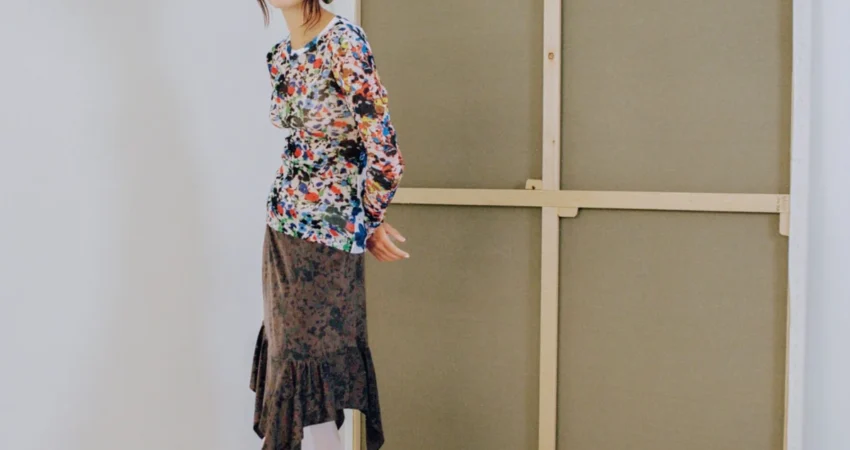
The unveiling of Arthur Arbesser’s Fall 2026 collection marks a significant pivot for the Milan-based designer, who has utilized a "see-now, buy-now" retail model to present a body of work deeply rooted in the Japanese philosophy of kintsugi. This ancient art form, which involves repairing broken pottery with lacquer mixed with powdered gold, silver, or platinum, serves as the primary metaphor for Arbesser’s latest creative output. Following a period of substantial personal and professional transition throughout the early months of 2026, the designer has sought to "put the pieces back together," not by commissioning new materials, but by mining the extensive textile archives of his eponymous label. This strategic decision highlights a growing trend within the luxury fashion sector toward radical sustainability and the recontextualization of brand heritage.
The Philosophical and Strategic Framework of the Fall 2026 Collection
Arbesser’s decision to move away from the traditional procurement of new seasonal textiles reflects a broader industry shift toward circularity. The Fall 2026 collection was born from a rigorous inventory process where the design team spent several weeks auditing every scrap of fabric remaining from the past decade of production. The objective was clear: zero waste. When yardage was insufficient for full garment runs, the materials were redirected into the creation of high-value accessories, most notably a series of scarves inspired by triangular party bunting. This approach ensures that even the smallest fragments of the brand’s history are preserved and monetized.
The designer noted that 2026 served as a catalyst for this change, describing it as a year of "major changes" that necessitated a return to the brand’s core identity. By using only existing fabrics, Arbesser has effectively created a sartorial timeline of his career, blending elements from disparate seasons into a cohesive, contemporary narrative. This "Revival" component of the collection is not merely a retrospective; it is a technical exercise in harmonizing varied weights, textures, and prints that were never originally intended to coexist.
A Chronology of Archival Integration
The Fall 2026 collection functions as a curated anthology of Arbesser’s most recognizable motifs. To understand the depth of this collection, one must look at the specific archival elements that were reintroduced and reimagined:
- Fall 2022 Baroque Prints: The ornate, historical patterns from four years prior were brought back to provide a sense of weight and classical structure to the newer, more fluid silhouettes.
- Spring 2025 Striped Cottons: These lighter, more architectural fabrics from the previous year’s spring collection were utilized for layering, providing a crisp contrast to the heavier fall textiles.
- Fall 2024 Checks and Glass Prints: The multicolored checks and the distinctive photographic print featuring drinking glasses—a hallmark of the brand’s 2024 aesthetic—were repurposed to add a sense of domesticity and wit to the lineup.
- Signature Geometric Patterns: The recurring geometric shapes that have defined the Arthur Arbesser brand since its inception in 2013 acted as the "seams of gold" in this kintsugi-inspired project, binding the various archival pieces together.
This chronological layering creates a visual dialogue between the brand’s past and its present. By integrating these specific references, Arbesser reinforces brand loyalty among long-time collectors while introducing new consumers to the label’s rich visual history.
Technical Innovation in Garment Dyeing and Textile Manipulation
While the collection relies on old fabrics, the finished products feel modern due to advanced garment-dyeing techniques. Arbesser partnered with a specialized, small-scale dye house located on the outskirts of Milan. This facility, known for its artisanal approach, operates with only six washing machines, allowing for a high degree of precision and individualization in the treatment of finished garments.
Garment dyeing—the process of dyeing a piece of clothing after it has been cut and sewn—gives the Fall 2026 collection a lived-in, tonal consistency that masks the disparate origins of the archival fabrics. This process allows fabrics of different compositions, such as jacquard viscose and gingham, to take on a unified color palette. The technical challenge of dyeing mixed-media garments is significant, as different fibers absorb pigment at varying rates. However, this unpredictability is precisely what Arbesser sought, embracing the "clashes" and "unexpected combinations" that define his aesthetic.
The collection’s texture is further enriched through the use of lightweight, sheer fabrics that introduce a sense of movement. Key material combinations observed in the collection include:
- Polka dot and diamond mesh paired with cobra-print satin.
- Striped mesh and multicolored check tulle layered over zigzag crinkle crepe.
- Animal prints juxtaposed with structured jacquards.
This interplay of sheer and opaque, matte and sheen, creates a complex visual language that rewards close inspection—a necessity in the "see-now, buy-now" environment where consumers often make purchasing decisions based on detailed digital imagery.
The Creative Environment: A Multi-Disciplinary Approach
The presentation of the collection took place within the brand’s central creative hub, an environment that emphasizes the intersection of fashion and fine art. As Arbesser guided observers through the racks, his long-time collaborator and friend, Marcela Gutiérrez, was actively engaged in painting a large-scale canvas in the same space. This performance was not merely for atmosphere; the resulting artwork is slated to be scanned and digitized as the primary print for Arbesser’s next collection.
This continuous loop of creation—where the physical act of painting in one season informs the textile design of the next—underscores the brand’s commitment to an organic, non-linear design process. The studio atmosphere was further characterized by the juxtaposition of classical music played on an aging boom box, a choice Arbesser jokingly compared to a "horror movie" soundtrack. This preference for "something that clashes" is a recurring theme in Arbesser’s work, suggesting that beauty is often found in tension and dissonance rather than perfect harmony.
Economic and Industry Implications of the See-Now, Buy-Now Model
Arthur Arbesser’s adherence to the "see-now, buy-now" format is a strategic response to the changing cadence of global fashion consumption. By aligning the runway presentation with immediate product availability, the brand bypasses the traditional six-month lead time, thereby reducing the risk of trend fatigue and unauthorized "fast fashion" replications.
From a data perspective, the "see-now, buy-now" model has shown varied success across the industry, but for independent labels like Arbesser, it offers a distinct advantage in inventory management. By utilizing archival fabrics, the brand reduces its upfront capital expenditure on raw materials, significantly improving the profit margins on the Fall 2026 collection. In an era where the luxury market is facing increased scrutiny over its environmental footprint, Arbesser’s model provides a blueprint for how smaller houses can maintain a high-fashion output while operating within the constraints of a circular economy.
Furthermore, the focus on "Revival" pieces and accessories made from scraps taps into the growing "upcycled luxury" market. According to recent industry reports, the resale and upcycled fashion sectors are projected to grow significantly by the late 2020s, as consumers increasingly prioritize the provenance and sustainability of their purchases. Arbesser’s transparency regarding his use of old fabrics is a direct appeal to this conscious consumer base.
Analysis of the Brand’s Evolution and Future Outlook
Since launching his label in 2013, Arthur Arbesser has been recognized for his sophisticated use of prints and his ability to translate his Austrian heritage into a Milanese fashion context. His tenure as creative director for various Italian heritage brands has further refined his understanding of textile production and brand storytelling. The Fall 2026 collection represents a maturation of this expertise.
The move toward a kintsugi-inspired methodology suggests that Arbesser is no longer interested in the relentless pursuit of the "new" for the sake of novelty. Instead, he is focused on the "repair" and "recomposition" of his brand’s identity. This approach is likely to resonate in a market that is increasingly weary of overproduction. By treating his archives as a living resource rather than a static history, Arbesser ensures that his brand remains dynamic without contributing to the industry’s waste problem.
As the fashion world moves toward 2027, the success of this collection will likely be measured not just by sales figures, but by its influence on how other designers view their own archival "piles of old fabrics." Arbesser has demonstrated that with the right technical treatments—such as garment dyeing and thoughtful layering—yesterday’s materials can be transformed into tomorrow’s luxury.
The Fall 2026 collection stands as a testament to the idea that change, even when born from difficulty, can result in a more resilient and beautiful whole. In the words of the designer, the realization that he was "sitting on a pile of old fabrics that could become something new" was a moment of creative liberation. It is a sentiment that may well define the next decade of his career.

0 Comments