
When Sesame Street debuted the character of Mr. Snuffleupagus in 1971, the program established a specific narrative conceit: only Big Bird could see the large, woolly creature. For fourteen years, "Snuffy" was characterized as an imaginary friend, a creative outlet for Big Bird’s whimsy that often left the adult human characters on the show skeptical or dismissive of Big Bird’s claims. However, by 1985, the cultural landscape regarding child safety and domestic transparency had shifted significantly. Following a series of high-profile reports on child sexual abuse and the growing realization that children often struggle to be believed by authority figures, the creators of Sesame Street made a landmark decision. They revealed Snuffy to the adults of the neighborhood, ensuring that child viewers would not receive a subtextual message that their "imaginary" or "unseen" concerns would be ignored by the adults in their lives.
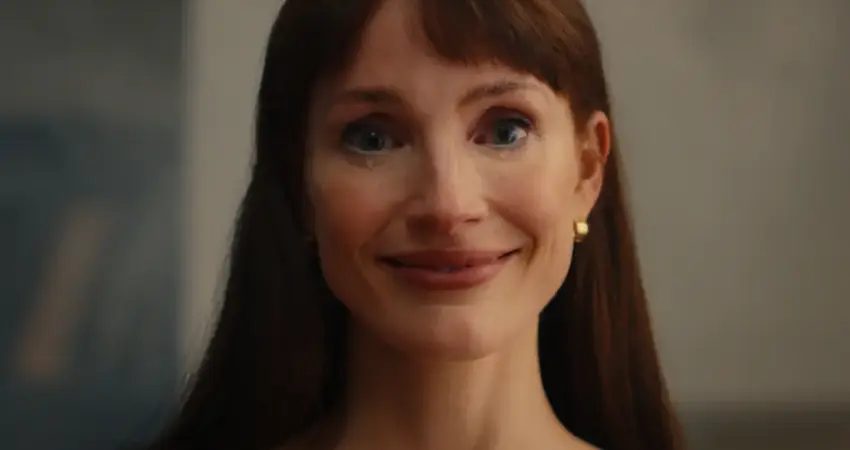
The new horror film Other Mommy, directed by Rob Savage and starring Academy Award winner Jessica Chastain, serves as a modern cinematic exploration of this same psychological territory. While Sesame Street took over a decade to rectify its "invisible friend" misstep, Other Mommy avoids the pitfall of adult skepticism entirely. Based on Josh Malerman’s 2024 novel Incidents Around the House, the film presents a supernatural entity that haunts seven-year-old Bela, played by Arabella Olivia Clark. In a departure from traditional "haunted child" tropes, Bela’s parents, Ursula (Chastain) and Russ (Jay Duplass), acknowledge the presence of the entity almost immediately. This narrative choice shifts the focus from a struggle for validation to a collective struggle for survival, highlighting a shift in how modern media approaches the agency and honesty of children.
The Evolution of the Believability Standard in Children’s Media
The 1985 revelation of Mr. Snuffleupagus remains one of the most significant pedagogical shifts in the history of educational television. According to historical archives from Sesame Workshop, the decision was spurred by a growing body of psychological research in the late 1970s and early 1980s. Experts at the time were concerned that if Big Bird—a surrogate for the preschool-aged viewer—was consistently told that his friend didn’t exist, children might internalize the idea that they should not report "scary" or "unseen" things to their parents.
This historical context provides a foundation for the thematic weight of Other Mommy. In Savage’s film, the horror is not predicated on the child being gaslit by her protectors. Instead, the terror is amplified because the adults do believe her, and yet they remain powerless against the manifestation. By removing the hurdle of skepticism, the film enters a more complex dialogue about the limits of parental protection and the intuitive nature of children who witness domestic decay.
Narrative Analysis: The "Other Mommy" as a Domestic Allegory
In Incidents Around the House and its cinematic adaptation, the entity known as "Other Mommy" is not a random poltergeist. The narrative suggests it is a manifestation of the fractured environment within the household. Ursula, portrayed by Chastain with a blend of professional exhaustion and maternal guilt, is depicted as a mother grappling with the burdens of her own choices. The story reveals that Ursula is often absent due to late work hours and is engaged in an extramarital affair with Frank (Adrian Moayed), her husband’s best friend.

Bela, the seven-year-old protagonist, acts as a barometer for the household’s hidden tensions. The film utilizes the supernatural to externalize the "discord in the home" that parents often believe they are successfully concealing. When Bela tells Ursula, "You smell like someone else," she is not merely reporting a sensory observation; she is "clocking" the infidelity that threatens the family unit. The entity "Other Mommy" physically adopts Ursula’s appearance, playing on the child’s fear of a mother who is physically present but emotionally or morally compromised.
Linguistic Misunderstandings and the Mechanism of Possession
A central plot point in the film involves a chilling linguistic misunderstanding. The entity repeatedly asks Bela for what the child hears as "carnations." Bela’s parents are initially confused by the request for flowers, but the horror deepens when they realize the entity is actually asking for "incarnation." This request for possession—the desire to go "inside her heart"—serves as a stark metaphor for the violation of a child’s boundaries.
The film meticulously builds a chronology of these requests, showing Bela’s consistent efforts to set boundaries. Despite her age, Bela repeatedly declines the entity’s requests, showcasing a level of autonomy that reflects modern parenting philosophies regarding bodily integrity. This stands in sharp contrast to older horror tropes where children are passive victims; here, Bela is the most "switched-on" character, often guiding her parents, Ursula and Russ, on how to navigate the entity’s presence. This dynamic introduces the concept of the "parentified child," where the minor is forced to provide emotional guidance or protection to the adults who should be protecting her.
Comparative Subtext: The "Creepy Uncle" and the Violation of Trust
Director Rob Savage infuses the film with subtextual references to real-world predators. In one early scene, Frank—the family friend with whom Ursula is having an affair—attempts to coax Bela into a hug. The scene is framed with a tension familiar to those who study the "grooming" behaviors of "friends of the family." This moment is mirrored in the film’s climax, where the "Other Mommy" entity makes a final plea for an embrace, stating, "All it takes is a hug."
The entity’s use of lures further reinforces this subtext. Throughout the film, the apparition attempts to entice Bela with sparkles, glitter, and balloons. In one harrowing sequence, the entity attempts to drown Bela in a ball pit. These brightly colored spheres, common in children’s play areas, are framed as predatory tools, reminiscent of the "stereotypical white van" or lollipops used to lure unsuspecting children. By placing the threat within the home and the family circle, Other Mommy aligns with modern crime statistics which indicate that children are far more likely to be harmed by someone they know than by a stranger.
Psychological Impact and the Corruption of Innocence
The resolution of the film hinges on a brutal "corruption of innocence" that serves as the only weapon against the supernatural entity. The apparition is not defeated by a religious rite or a physical struggle, but by the shattering of Bela’s naive worldview. Ursula is forced to tell Bela the truth: that her biological father is not Russ, but a man from a previous relationship, and that her conception was described by Ursula as a "mistake."

This revelation functions as a metaphor for the way trauma forces children to age prematurely. As Bela’s grandmother (Ursula’s estranged mother) notes in the film, "getting hurt is part of being human." The entity, despite its desire to possess a human body, cannot comprehend the inherent pain of the human experience. For many children who have experienced real-world trauma or abuse, this "knowledge" of pain is an unwanted but permanent acquisition.
Broader Implications and Industry Context
Other Mommy arrives at a time when "elevated horror" is increasingly used to explore social and psychological taboos. Much like The Babadook explored maternal depression or Hereditary examined generational trauma, Savage’s film uses the poltergeist as a lens through which to view the failures of the modern nuclear family.
The film also highlights a significant trend in the casting of high-caliber actors like Jessica Chastain in the genre. Chastain, who has previously explored themes of motherhood and trauma in films like Mama (2013) and The Eyes of Tammy Faye (2021), brings a grounded reality to the supernatural proceedings. Her performance emphasizes the "survival instinct" of a mother who, despite her own moral failings, recognizes that her daughter’s testimony is the only truth that matters.
Conclusion: The Mandate of Belief
The narrative arc from the 1971 debut of Mr. Snuffleupagus to the 2024 release of Other Mommy reflects a profound shift in the cultural contract between adults and children. The "Snuffleupagus Precedent" established that children’s media has a moral obligation to model adult belief in a child’s lived experience. Other Mommy takes this mandate to its logical extreme in the horror genre, suggesting that while believing a child may not immediately solve the problem, it is the essential first step in confronting the "monsters" that reside within the home.
The film concludes with a somber acknowledgment: the world is a place where children are often hurt, sometimes by the very people tasked with their care. However, by validating Bela’s fear and acknowledging her reality from the outset, the characters in Other Mommy provide a template for parental responsibility in the face of the unthinkable. In both fiction and reality, the least a parent can do is take the child’s word as truth. The consequences of doing otherwise, as history and horror cinema suggest, are far more terrifying than any ghost.

0 Comments