
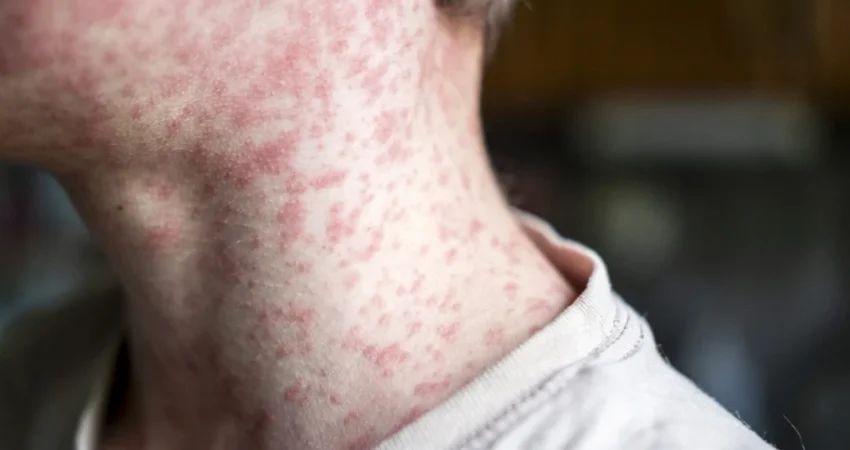
The United States Centers for Disease Control and Prevention (CDC) is currently embroiled in a significant controversy regarding the transparency of its national disease tracking systems. At the heart of the dispute is the agency’s decision to exclude four confirmed measles-related deaths in Pennsylvania from its official national dashboard, despite verification from local coroners and the Pennsylvania Department of Health. As the state grapples with its most severe measles outbreak in decades, public health experts and former federal officials are raising alarms that the omission of these fatalities could dangerously downplay the severity of the crisis to the American public.
The discrepancy stems from a pending administrative shift within the CDC. The agency, in coordination with the Council of State and Territorial Epidemiologists (CSTE), is currently in the process of drafting a new federal definition for what constitutes a “measles death.” Until this new classification is finalized and implemented, the CDC has opted to hold off on updating its official mortality count, leaving the national tally at zero for the year 2026, even as grieving families in Pennsylvania seek acknowledgment of the virus’s toll.
Details of the Pennsylvania Fatalities
The four deaths at the center of this reporting conflict represent a tragic cross-section of the virus’s impact across different age groups and regions within the state. According to records from the Pennsylvania Department of Health and local medical examiners, the fatalities include:
- Mifflin County: An 18-year-old individual who succumbed to a rare and devastating neurological complication. While the CDC has not specified the exact nature of the complication, measles is known to cause subacute sclerosing panencephalitis (SSPE) and acute disseminated encephalomyelitis (ADEM), both of which are often fatal.
- Jefferson County: A 40-year-old woman whose death underscores the significant risk the virus poses to adults, who often experience more severe symptoms than young children.
- Lancaster County: Two unvaccinated infants who died in August. These cases are particularly poignant as infants under 12 months of age are generally too young to receive the first dose of the Measles, Mumps, and Rubella (MMR) vaccine, making them entirely dependent on herd immunity for protection.
Local health officials have been adamant that these deaths were directly caused by the measles virus. However, the CDC’s refusal to include them in the national dataset has created a rift between federal and state health reporting, leading to confusion among the public and healthcare providers who rely on federal data for risk assessment.
The CDC’s Rationale for Redefinition
The decision to delay the reporting of these deaths is rooted in a desire to refine data accuracy, according to CDC Director Erica Schwartz. Speaking on the matter, Schwartz noted that the United States had not recorded a confirmed measles death in over a decade prior to the current 2026 surge. During that interval, the agency relied primarily on the World Health Organization’s (WHO) broader international standards.
Schwartz argued that the agency must ensure that deaths attributed to measles are strictly caused by the virus to prevent the type of data controversies that occurred during the COVID-19 pandemic. “If someone got hit by a bus, and they happened to have Covid, often that was called a Covid-related death,” Schwartz stated in an interview. She emphasized that the new criteria aim to provide a more precise causal link, ensuring that the virus is the primary driver of mortality rather than a secondary or incidental finding.
However, this comparison has drawn sharp criticism from within the public health community. Dr. Debra Houry, the former chief medical officer of the CDC, has been a vocal critic of the current administration’s approach. Houry pointed out that Pennsylvania’s health department already employs rigorous investigative protocols, including autopsies and laboratory confirmation, to ensure that the virus is the direct cause of death before reporting it.
“Dr. Schwartz’s comments are not only not helpful, but contribute to misinformation,” Houry said. She argued that the CDC’s focus should remain on the immediate response to the outbreak rather than bureaucratic reclassifications that obscure the reality of the situation on the ground.
Pennsylvania’s Accelerating Crisis and the "Iceberg" Effect
While the debate over data definitions continues in Washington D.C., healthcare providers in Pennsylvania are managing a rapidly escalating public health emergency. The official state case count has reached 731, a figure that represents the largest localized outbreak in the United States since the virus was declared eliminated in the country in 2000.
Epidemiologists warn that the official count of 731 cases is likely just the "tip of the iceberg." Because measles initially presents with symptoms similar to a severe cold or flu—high fever, cough, and runny eyes—many individuals may not seek formal testing, especially if they manage their symptoms at home. By the time the signature maculopapular rash appears, the individual has already been contagious for several days.
The current outbreak has also presented clinical challenges that many modern American doctors have never seen in their professional lives. This includes cases of congenital measles, where the virus is transmitted from a pregnant person to the fetus in utero or during the birthing process. Congenital measles carries a high risk of neonatal mortality and long-term developmental complications, further straining the resources of neonatal intensive care units (NICUs) across the state.

Historical Context and the Loss of Herd Immunity
The 2026 Pennsylvania outbreak is a stark departure from the public health successes of the early 21st century. In 2000, the CDC declared that measles had been eliminated from the United States, meaning the virus was no longer constantly present (endemic) in the country. This was achieved through a highly effective national vaccination program that maintained MMR vaccination rates above 95%, the threshold required for "herd immunity."
However, in the decades since, vaccination rates have fluctuated and, in some communities, plummeted. The rise of vaccine hesitancy, fueled by misinformation and the erosion of trust in public health institutions, has created pockets of vulnerability. When the virus is introduced to these "under-vaccinated" communities—often by travelers returning from countries where the virus remains endemic—it spreads with alarming speed. Measles is one of the most contagious diseases known to science, with an R0 (basic reproduction number) of 12 to 18, meaning a single infected person can spread the virus to up to 18 unvaccinated individuals.
The decade-long gap in U.S. measles deaths prior to 2026 had led to a degree of complacency. The current fatalities in Pennsylvania serve as a grim reminder that measles is not merely a "childhood rite of passage" but a serious respiratory and systemic disease that can lead to permanent disability or death.
State and Local Response Efforts
In response to the surge, the Pennsylvania Department of Health has launched an aggressive containment strategy. This includes the establishment of more than 100 pop-up vaccination clinics in high-risk areas, particularly in Lancaster and Mifflin counties. State officials are also working to subsidize and accelerate laboratory testing to reduce the turnaround time for diagnoses, allowing for quicker contact tracing and quarantine measures.
Despite these efforts, the outlook for the coming months remains concerning. Public health officials expect case numbers to climb as the weather cools and people spend more time indoors. The start of the school year also poses a significant risk, as unvaccinated students congregate in close quarters.
The state is also facing a logistical challenge in managing the surge. Hospitals in the hardest-hit counties have reported an influx of patients requiring isolation, which requires specialized negative-pressure rooms to prevent the airborne virus from spreading to other parts of the facility.
National Implications and the Risk of Contagion
The CDC’s decision to withhold death data has implications that extend far beyond the borders of Pennsylvania. National tracking serves as an early warning system for neighboring states. When federal data appears to show that an outbreak is non-fatal, state legislatures and local health boards may be less inclined to authorize emergency funding or implement stricter vaccination requirements.
Experts argue that if the CDC does not accurately reflect the lethality of the current strain, neighboring states like Ohio, New Jersey, and Maryland may be caught off guard. An outbreak that begins in a single county can quickly become a regional crisis if the perceived risk does not match the actual clinical reality.
Furthermore, the delay in reporting fatal outcomes can hinder the development of targeted public health messaging. Clear, transparent data is essential for convincing hesitant parents of the importance of the MMR vaccine. When the public perceives a discrepancy between what local officials are reporting and what federal dashboards show, it further erodes trust in the CDC—the very institution responsible for managing the national response.
Conclusion: A Turning Point for Public Health Reporting
The 2026 Pennsylvania measles outbreak is a pivotal moment for the CDC. The agency finds itself at a crossroads between administrative precision and the urgent need for transparent communication during a crisis. While the desire to avoid "COVID-style" data controversies is understandable from a bureaucratic perspective, the real-world consequences of omitting confirmed deaths are significant.
As Pennsylvania continues to fight the spread of the virus, the focus remains on protecting the most vulnerable: infants too young for vaccination, the immunocompromised, and those living in areas with low herd immunity. Whether the CDC updates its dashboard in the coming weeks or waits for a formal redefinition, the reality on the ground in Pennsylvania is clear—the measles virus has returned with a level of severity that the United States has not seen in a generation, and the human cost is already being felt.

0 Comments