

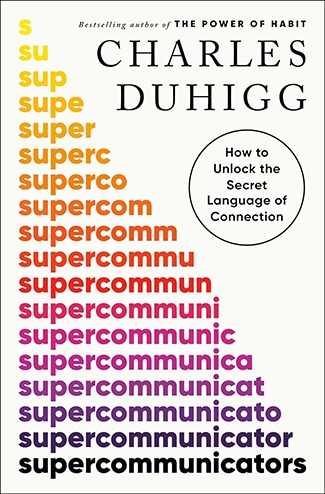
Interpersonal communication has long been regarded as an innate talent—a "soft skill" that some individuals possess while others do not. However, a growing body of research in neuroscience and behavioral psychology suggests that effective communication is a structured, learnable discipline. Charles Duhigg, a Pulitzer Prize-winning journalist and author of The Power of Habit and Smarter Faster Better, has synthesized a decade of this research in his latest work, Supercommunicators: How to Unlock the Secret Language of Connection. Released in February 2024, the book posits that the most effective communicators are not necessarily the most charismatic, but rather those who understand the "matching principle"—the ability to recognize and align with the specific type of conversation occurring at any given moment.
The Evolution of Communication Science
The study of human connection has undergone a paradigm shift over the last decade, largely driven by advancements in neural imaging and data collection. Historically, communication was analyzed through the lens of rhetoric or linguistics. Today, researchers utilize functional Magnetic Resonance Imaging (fMRI) to observe "neural coupling," a phenomenon where the brain activity of a speaker and a listener begins to mirror one another. When this synchronization occurs, comprehension and trust increase significantly.
Duhigg’s investigation into this field was prompted by personal friction in his own life, a common experience for many high-achieving professionals. Despite his expertise in productivity and habit formation, he found himself struggling to navigate emotional conversations with his spouse. This led to a multi-year deep dive into why some conversations fail despite the participants’ best intentions. The findings indicate that the primary cause of communication breakdown is a mismatch in the "bucket" of conversation being held.
The Three Buckets of Conversation
According to the research compiled by Duhigg, almost every human interaction falls into one of three distinct categories. Supercommunicators are those who can identify which bucket a conversation belongs to and pivot their language and energy to match it.

1. The Practical (Decision-Making) Conversation
This is a "What’s This Really About?" discussion. It focuses on problem-solving, logistics, and making plans. In a workplace setting, this is the most common form of interaction. However, conflict arises when one person is in a practical frame of mind while the other is seeking emotional support.
2. The Emotional (Feeling) Conversation
This is a "How Do We Feel?" discussion. In this bucket, the speaker is not looking for solutions or advice; they are seeking empathy and validation. Researchers have found that offering practical solutions to an emotional problem often exacerbates the conflict, as the speaker feels misunderstood or dismissed.
3. The Social (Relational) Conversation
This is a "Who Are We?" discussion. It involves how individuals relate to one another and their social identities. These conversations are often about storytelling, shared values, and the dynamics of a group or society.
The "matching principle" dictates that for effective communication to occur, both parties must be in the same bucket. If one person is complaining about their boss (Emotional) and the other offers a strategy to fix the relationship (Practical), the brains of the two individuals will not synchronize, leading to frustration.
The FBI and the Anatomy of the Supercommunicator
To illustrate these principles in high-stakes environments, Duhigg highlights the work of Felix Sigala, a veteran of the FBI’s Crisis Negotiation Unit. On the surface, Sigala appears unremarkable, lacking the stereotypical bravado of a Hollywood negotiator. Yet, his ability to de-escalate life-and-death situations stems from his mastery of "deep questions" and "reciprocal authenticity."
Deep questions are queries that ask about an individual’s values, beliefs, or experiences rather than just facts. For instance, instead of asking a colleague "What do you do?", a supercommunicator might ask, "How did you decide to enter this field?" or "What do you find most rewarding about your work?" These questions invite the other person to share something meaningful, providing an opening for the listener to reciprocate with their own authentic experiences.
This process creates a feedback loop of vulnerability and trust. Data from social psychology experiments suggests that when people share meaningful information, their heart rates often synchronize, and they report higher levels of satisfaction with the interaction.
Supporting Data: The Impact of Intentionality
The efficacy of intentional communication is supported by several key studies cited in Duhigg’s research:
- The Harvard Business School Study: Professor Alison Wood Brooks conducted experiments where students were asked to write down three topics they might discuss with a stranger before a meeting. Even if the topics never arose, the simple act of preparing a mental list reduced anxiety and significantly improved the perceived quality of the conversation.
- The Investment Bank Conflict Study: Researchers working with a high-stress investment bank instructed employees to write one sentence before every meeting describing their goal and the mood they wanted to establish. This 10-second exercise resulted in an 80% reduction in reported workplace conflict over the following week.
- NASA’s Recruitment Metrics: Dr. Terrance McGuire, who led psychiatric evaluations for NASA, discovered that the most successful astronauts were not those with the highest IQs, but those who demonstrated high emotional intelligence through "mimicry" and energy matching. Candidates who mirrored the laughter and energy levels of their interviewers were found to be better equipped for the psychological rigors of long-term space missions.
Looping for Understanding: A Tool for High-Conflict Scenarios
In environments of high tension, such as political debates or marital disputes, Duhigg recommends a technique called "looping for understanding." This method is designed to prove to the other person that they are being heard, which is often the primary barrier to resolution.
The process consists of three steps:

- Ask a Question: Preferably a deep question that explores the "why" behind a person’s stance.
- Repeat Back: Summarize what the person said in your own words. This demonstrates that the information has been processed, not just heard.
- Confirm Accuracy: Ask, "Did I get that right?" This final step is crucial as it grants the other person the agency to clarify their position and confirms that the listener is acting in good faith.
Research into marital counseling shows that "kitchen sinking"—the tendency to bring up every past grievance during a single fight—is the hallmark of failing relationships. Successful couples, by contrast, use looping and shared control to keep the "boundaries" of a fight narrow, focusing on one issue at a time.
The Digital Divide: Communication in the Age of Slack and AI
As communication increasingly moves to digital platforms, the risk of "mismatching" grows. Duhigg notes that humans have historically adapted to new technologies; when the telephone was first introduced, critics argued it would destroy "real" conversation because visual cues were lost. Over time, humans learned to over-enunciate and project more emotion into their voices to compensate.
Current digital communication—email, Slack, and text—suffers from a similar lack of non-verbal data. A sarcastic remark in an email can easily be interpreted as a serious insult. To counter this, supercommunicators utilize "over-communication" strategies online:
- Expressing Gratitude and Politeness: Using "please" and "thank you" more frequently than in person.
- Hedged Language: Using phrases like "in my opinion" or "I might be wrong, but…" to lower the stakes of a digital assertion.
- Explicit Emojis: Using visual aids to clarify the emotional tone of a message.
A study of Wikipedia editors found that when participants used polite greetings and expressed gratitude, the incidence of "flame wars" and administrative interventions dropped significantly, even when the editors disagreed on the facts of an article.
Broader Implications and Analysis
The implications of Duhigg’s research extend beyond individual success. In an era of increasing social fragmentation and workplace isolation, the "supercommunicator" skill set offers a potential remedy for the "loneliness epidemic" identified by the U.S. Surgeon General. By shifting the focus from what we are saying to how we are connecting, individuals can bridge cultural and political divides that otherwise seem insurmountable.

From a corporate perspective, the "matching principle" has direct ties to productivity. Teams that communicate effectively spend less time navigating misunderstandings and more time on execution. As Artificial Intelligence begins to handle more "practical" tasks and data-driven decisions, the human ability to navigate the "emotional" and "social" buckets of conversation will likely become the most valuable asset in the labor market.
Ultimately, Duhigg’s work suggests that the "secret language of connection" is not a secret at all. It is a series of deliberate choices: the choice to ask a deeper question, the choice to pause before reacting, and the choice to ensure that we are having the same conversation as the person sitting across from us. In doing so, we move from mere talking to true communication.

0 Comments