
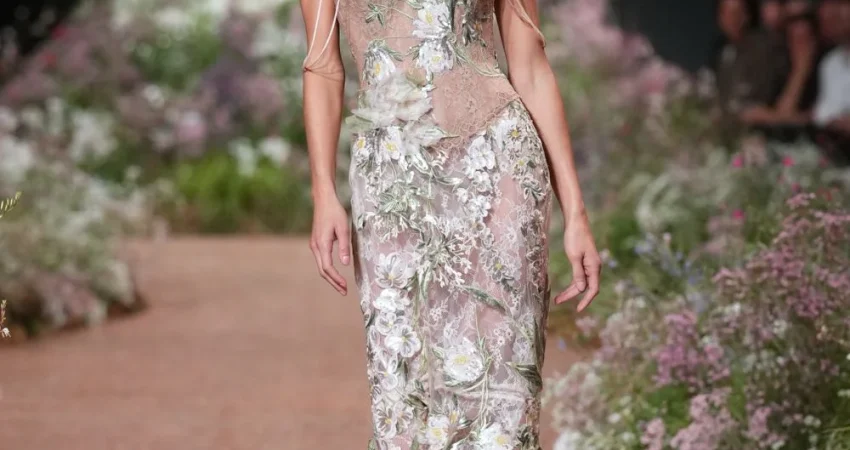
The Spring 2027 Ready-to-Wear presentation by Elie Saab transformed the traditional runway into a botanical sanctuary, signaling a pivot toward a more intimate and nuanced interpretation of luxury. Set against a backdrop of rolling hillocks carpeted in wildflowers, the collection introduced a sophisticated dialogue between the structured glamour of 1930s Hollywood and the contemporary fluidity of lingerie-inspired dressing. This season, the Lebanese couturier moved beyond his signature high-octane evening gowns to explore the "deshabillé" aesthetic—an artful state of undress that maintains the house’s reputation for meticulous craftsmanship while embracing a softer, more approachable femininity.
The Botanical Atmosphere and Aesthetic Innovation
The physical environment of the show served as a primary narrative driver for the collection. Rather than a sterile catwalk, the venue featured organic mounds of flora, creating an immersive experience that blurred the lines between nature and high fashion. This botanical theme extended to the models themselves, whose faces were adorned with "floral piercings"—tiny, real buds applied as delicate facial accents. This stylistic choice bridged the gap between avant-garde beauty and traditional floral motifs, suggesting a modern, almost biological connection to the spring season.
Backstage, the creative team described these accents as a way to modernize the floral trend, moving away from prints alone and toward three-dimensional, tactile applications. This emphasis on texture was mirrored in the garments, where lavish embroideries of bouquets and blossoms were rendered with dimensional depth, making the flowers appear as though they were growing directly from the fabric.
Historical Context: The 1930s and Jean Harlow’s Influence
The core inspiration for the Spring 2027 collection was the silver-screen elegance of the 1930s, specifically the boudoir beauty of actress Jean Harlow. Saab’s objective was to translate the era’s penchant for bias-cut silks and delicate lace into a wardrobe suitable for the 21st-century woman. The 1930s represented a period of transition in fashion, moving from the boxy silhouettes of the 1920s to a more body-conscious, fluid line that celebrated the natural waist and hips.
By revisiting this era, Saab tapped into a historical precedent for "lingerie dressing." The collection’s first six looks established this theme immediately, featuring sophisticated iterations of bustiers, bralettes, and midriff-grazing frills. The designer’s interpretation of the slip dress—a staple of the 1930s—was particularly diverse. Variations included body-grazing silhouettes encrusted with beads, asymmetric cuts that featured high-leg slits, and lace-incrusted versions paired unexpectedly with leather jackets to ground the ethereal fabrics in a modern, urban reality.
Technical Craftsmanship and Materiality
The technical execution of the collection highlighted the atelier’s expertise in handling delicate textiles. Silk charmeuse and chiffon were cut on the bias to ensure the garments draped naturally over the form, a technique famously perfected by Madeleine Vionnet in the 1930s and revitalized here by Saab. The color palette favored "Easter pastels"—soft lavenders, mint greens, and champagne roses—interspersed with more daring choices such as a rose-tinted animal print.
A notable technical detail was the integration of small leather bows, which underscored the bra-like construction of the bodices. This juxtaposition of soft silk and structured leather added a contemporary edge to the vintage-inspired silhouettes. The use of "lingerie layering" also played a significant role, with sheer panels and lace overlays creating a sense of depth that allowed the garments to transition from private spaces to public functions.
Strategic Business Positioning: The H&M Collaboration and Brand Expansion
The Spring 2027 show occurred exactly one month after the global release of the Elie Saab x H&M collaboration. Backstage, Saab expressed significant satisfaction with the consumer response to the partnership, which was designed to democratize the brand’s aesthetic while maintaining its luxury cachet. The success of the H&M collection has provided the house with a broader data set regarding younger consumer preferences, which was evident in the more experimental "90s vibe" seen in certain looks.
Industry analysts suggest that the H&M collaboration served as a strategic "top-of-funnel" marketing move, introducing the brand to a demographic that may not yet be ready for couture but is eager for the Saab lifestyle. This Ready-to-Wear collection bridges that gap, offering high-end, meticulously crafted pieces that reflect the brand’s DNA while being more accessible than the bespoke gowns seen on the red carpets of Cannes or the Oscars.
Runway Sequencing and Presentation Strategy
One of the most discussed aspects of the Spring 2027 show was the randomized order of the looks. Traditional fashion shows often follow a strict progression from daytime casual to evening formal. Saab, however, opted for a non-linear sequence. A diaphanous, ombré gown might be followed by a champagne rose satin jacket and shorts; a black corset paired with tailored pants could precede a lacy lime-green confection.
This randomized approach reflects a shift in how modern luxury consumers assemble their wardrobes. The contemporary client often mixes high-formality pieces with utilitarian staples, and Saab’s sequencing mirrored this reality. By placing a tailored trench coat (Look 31) or a streamlined silhouette (Look 42) in the middle of a parade of bombshell gowns, the designer emphasized the versatility of the collection. It suggested that the "Elie Saab woman" is as likely to require a sophisticated coat for a business meeting as she is a beaded slip dress for a gala.
Celebrity Presence and Cultural Resonance
The front row of the show featured a mix of international fashion editors and cultural icons, most notably Paris Hilton. Her presence was particularly relevant given the collection’s nod to 1990s aesthetics, including the aforementioned rose-tinted animal prints. Hilton’s long-standing association with the "glamorous socialite" archetype aligns with the collection’s target demographic: women who view fashion as a tool for public performance and personal expression.
The inclusion of ’90s-inspired elements within a 1930s framework highlights a broader trend in the fashion industry: the "nostalgia loop." By combining two distinct historical eras, Saab created a collection that appeals to multiple generations—from Gen Xers who remember the original 90s animal print craze to Gen Z consumers who are currently discovering the elegance of Old Hollywood via social media platforms like TikTok and Instagram.
Market Implications and the Future of Evening Wear
The Spring 2027 collection arrives at a time when the luxury market is grappling with shifting consumer priorities. There is an increasing demand for "investment pieces" that offer both aesthetic beauty and functional longevity. Saab’s move toward "lingerie dressing that can be worn beyond the bedroom" addresses this need for versatility. These garments are positioned not just for the red carpet, but for high-end "destination weddings" and exclusive social events where the dress code is "unabashedly flirty" yet sophisticated.
Furthermore, the emphasis on "less (lingerie)-is-more" in the latter half of the show indicates a strategic pivot toward minimalism. While Saab will likely always be synonymous with maximalist embroidery, the introduction of more streamlined, tailored pieces allows the brand to compete in the burgeoning "quiet luxury" space, albeit with a distinctly feminine and decorative twist.
Conclusion: A New Chapter for the House of Saab
Elie Saab’s Spring 2027 Ready-to-Wear collection successfully navigated the delicate balance between heritage and innovation. By drawing from the boudoir aesthetics of the 1930s and the accessible energy of his recent commercial collaborations, Saab has solidified his brand’s relevance in a rapidly changing fashion landscape. The collection proved that the house is capable of evolving its definition of glamour, moving from the rigid structures of traditional couture to a more fluid, "deshabillé" approach that celebrates the modern woman’s multifaceted life.
As the industry moves forward, the success of this collection will likely be measured by its ability to translate runway artistry into retail performance. With its blend of historical romance, technical precision, and strategic market awareness, the Spring 2027 lineup stands as a testament to Elie Saab’s enduring influence as a master of global luxury. The "floral piercings" and wildflower hillocks may have set the stage, but the true achievement was the creation of a wardrobe that feels both timelessly elegant and urgently contemporary.

0 Comments