
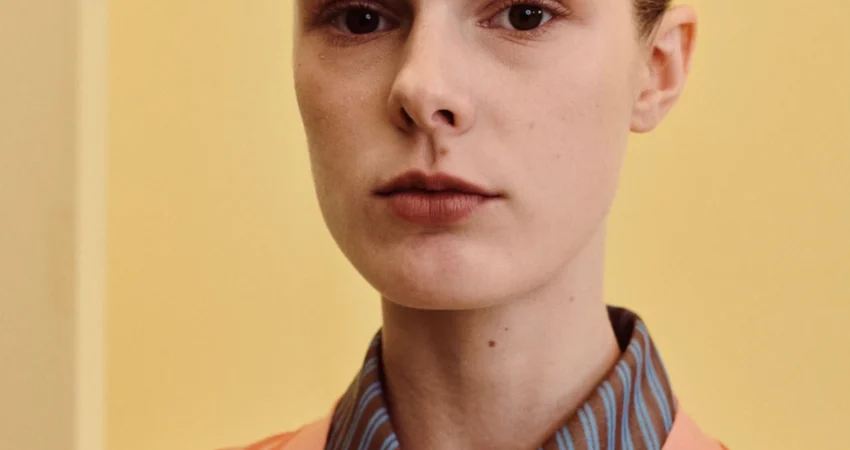
In a significant departure from the traditional high-energy runway format, London-based designer Emilia Wickstead has unveiled her latest collection through an intimate filmic presentation at her Sloane Street flagship store. This strategic shift in medium, born from a desire for creative evolution expressed during her previous season, marks a collaborative milestone with renowned London restaurateur Jeremy King. The presentation, which replaces the standard catwalk, serves as a dual exploration of fashion and environment, utilizing the cinematic lens to contextualize how high-end garments are inhabited and experienced in contemporary life. By centering the collection on the life and work of 1940s American Abstract Expressionist Lee Krasner, Wickstead continues her trajectory of celebrating historically significant women while simultaneously modernizing her signature architectural silhouettes.
A Strategic Shift: From Runway to Cinematic Storytelling
The decision to transition from a live runway show to a digital film was not a sudden pivot but a calculated evolution. During the previous fashion cycle, Wickstead signaled to her internal team and family that the brand was seeking a new method of engagement. The resulting film, screened within the familiar confines of her Sloane Street boutique, offers a controlled, atmospheric narrative that a live show often lacks. By collaborating with Jeremy King—a figure synonymous with the curation of London’s most iconic dining environments—Wickstead sought to bridge the gap between the garment and the setting.
King’s involvement provided a philosophical framework for the presentation. As the film opens, King posits that the intersection of learned experience and observation is what creates something truly "special." This sentiment echoes the broader industry trend where designers are increasingly focusing on the "lifestyle" aspect of luxury, ensuring that clothes are viewed not as static objects on a pedestal, but as functional components of a sophisticated life. To reinforce this connection, King’s latest venture, Simpsons on the Strand, provided hospitality for the screening, grounding the high-concept fashion event in the tangible sensory experience of London’s elite culinary scene.
The Artistic Catalyst: Centering Lee Krasner in the Narrative
The cornerstone of the collection is the influence of Lenore "Lee" Krasner, a pivotal figure in the American Abstract Expressionist movement. While Krasner is frequently identified by her marriage to Jackson Pollock, Wickstead’s collection intentionally decouples her from this secondary status. The designer’s stated goal was to "celebrate women who should have been talked about more," focusing exclusively on Krasner’s artistic output and her penchant for constant reinvention.
Krasner’s career was defined by a refusal to stick to a single "signature" style, a trait Wickstead mirrored in her design process this season. The 1956 painting Prophecy served as a direct color reference, influencing a palette of beige, pink, and yellow. Historically, Krasner was known for her rigorous self-critique, often cutting up her own canvases to create collages—a theme of destruction and rebirth that Wickstead translated into "undone" textures and frayed silk chiffon trims. This artistic "unraveling" serves as a counterpoint to Wickstead’s reputation for pristine, structured elegance, introducing a sense of movement and raw emotion into the garments.
Material Innovation and the Introduction of Spring Tweed
Technological and material advancements were at the forefront of the collection’s construction. For the first time in a spring offering, Wickstead introduced light cotton tweed, a fabric traditionally associated with autumn/winter cycles. To adapt the heavy textile for increasingly warmer global temperatures, the design team employed innovative paneling techniques. Tweed panels were integrated onto black chiffon bases for tops and dresses, while chiffon pleat inlays were added to tweed skirts to ensure breathability and fluid movement.
The collection also marked Wickstead’s debut use of feathers, a material choice that added a dimension of tactile luxury. These were not merely decorative but were utilized with structural intent:
- Removable Trim: A bias-cut tweed minidress featured a thick, detachable feather trim, allowing the wearer to transition from a daytime "tunic" look to a formal evening aesthetic.
- Architectural Accents: A longline yellow dress utilized feathers as a statement border, while a black viscose moiré gown featured intricate, hand-embroidered feather flowers.
This focus on versatility reflects a broader market demand for "investment pieces" that offer multiple styling configurations, a strategy that aligns with Wickstead’s goal of providing "mileage" for her clientele.
Design Technicalities: Modifying the Wickstead Formula
The silhouette remains rooted in the brand’s "fit-and-flare" DNA, yet the Spring/Summer collection introduces a level of modularity previously unseen in Wickstead’s work. Key technical features include:
- Asymmetrical Bibs: Several long dresses in pink silk and black chiffon featured adjustable fabric bibs. These can be folded down for a more conservative look or tied up to reveal more of the décolletage, catering to a diverse range of social settings.
- Functional Detailing: In a whimsical yet practical nod to Krasner’s studio life, floral and striped gowns were equipped with deep pockets described by Wickstead as "for paintbrushes." While the brand’s core demographic—which includes members of the British Royal Family and international high society—may not utilize them for art supplies, the inclusion of pockets reflects a modern shift toward utility in luxury evening wear.
- Layering and Proportion: The collection balanced formal gowns with casual, studio-inspired pieces. Oversized knits were layered over loose-fit striped cotton "artist shirts," and apron dresses were designed to be worn either loose for a relaxed silhouette or cinched at the waist for a traditional feminine profile.
The Visual Narrative: A Chronology of the Film
The presentation film itself serves as a meta-commentary on the creation of fashion. It begins with scenes of artisans and painters finalizing a set composed of multiple rooms, each rendered in a different pastel hue—lavender, powder blue, pale green, and lemon yellow. This shifting backdrop serves to recontextualize the colors of the clothing as the models move through the spaces.
The first model appears in an understated pink striped shirt and knit skirt, walking with a sense of purpose and urgency. This "woman on the move" aesthetic is a departure from the slow, deliberate pace of traditional couture shows. As the film progresses, the complexity of the garments increases, culminating in the peppermint strapless fit-and-flare gown with a delicate floral print and tulle overlay. The chronological flow of the film mimics the progression of a day in the life of a modern woman, moving from studio-ready separates to evening-appropriate architectural gowns.
Market Positioning and Broader Industry Implications
Emilia Wickstead’s move toward a filmic presentation reflects a growing sentiment within London Fashion Week: the need to balance global digital reach with localized, intimate physical experiences. By hosting the screening in her Sloane Street store, Wickstead strengthened her direct-to-consumer relationship, allowing her most loyal clients to see the clothes in the same environment where they will eventually purchase them.
The collection’s emphasis on "reinvention" and "unraveling" also speaks to a post-pandemic fashion landscape where consumers are seeking more than just aesthetic beauty; they are looking for narrative depth and historical connection. Wickstead’s decision to highlight Lee Krasner aligns with the industry’s broader movement toward gender-focused historical revisionism, where female artists and thinkers are finally receiving the spotlight they were denied during their lifetimes.
From a commercial perspective, the introduction of lighter tweeds and modular necklines addresses the practicalities of a globalized climate. As summers become hotter, the luxury sector must innovate with fabrics that maintain the appearance of structure without the weight of traditional tailoring. Wickstead’s use of viscose moiré and silk chiffon, combined with the strategic "breezy" inlays, positions the brand as a leader in "smart" luxury—clothing that is as climatically responsive as it is visually striking.
Conclusion: The Evolution of the Wickstead Legacy
The Spring/Summer collection represents a maturing of the Emilia Wickstead brand. By stepping away from the runway, Wickstead has not diminished her impact; rather, she has deepened it. Through the collaboration with Jeremy King and the inspiration drawn from Lee Krasner, the designer has created a collection that is both a tribute to the past and a blueprint for the future of functional luxury.
The "Wickstead Woman" of the new season is one who values the history of her garments, the utility of their design, and the environment in which they are worn. As the film concludes, the message is clear: fashion is not merely a spectacle to be watched, but a lived experience to be curated. By modifying her familiar formulas with feather trims, "paintbrush" pockets, and artistic textures, Wickstead has ensured that her clientele can find both beauty and purpose in her designs, solidifying her place as a mainstay of British fashion innovation.

0 Comments