
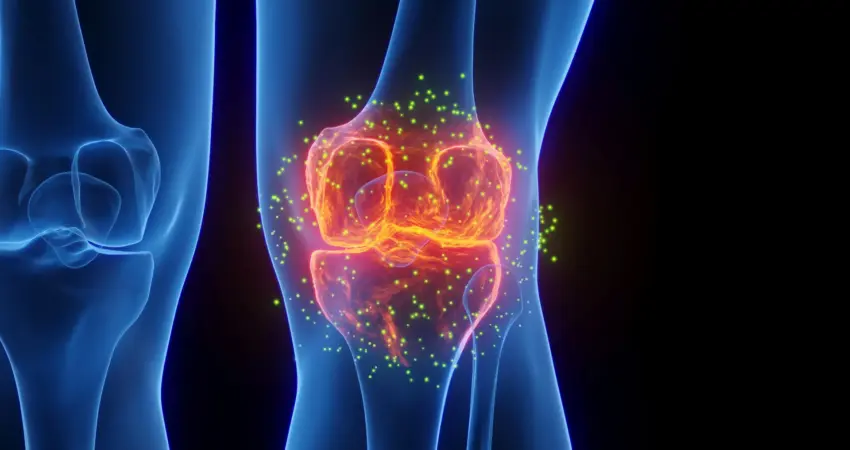
Millions worldwide grappling with the debilitating effects of osteoarthritis, a chronic condition characterized by persistent pain and debilitating stiffness, may soon have a beacon of hope. Current treatment paradigms, while offering temporary symptom relief, often fall short of addressing the root cause of the disease: the progressive and irreversible damage to joint cartilage. However, groundbreaking research emerging from Yale University suggests a paradigm shift, with a repurposed epilepsy medication, lacosamide, demonstrating a remarkable dual capability to not only alleviate joint pain but also reverse existing cartilage damage. This innovative strategy, detailed in a recent publication in the esteemed journal Bioactive Materials, leverages a sophisticated hydrogel delivery system to maximize the drug’s localized efficacy within the affected joint.
The Silent Erosion: Understanding Osteoarthritis and Its Impact
Osteoarthritis, often colloquially referred to as "wear and tear," is a far more complex biological process. In a healthy joint, a delicate equilibrium exists within the cartilage. Specialized cells called chondrocytes diligently maintain this crucial tissue by orchestrating a continuous cycle of new tissue creation and old material removal. Osteoarthritis disrupts this vital balance, leading to a cascade of destructive events. The rate of cartilage breakdown accelerates exponentially, outpacing the body’s ability to regenerate it. This unchecked deterioration eventually exposes bone, leading to the characteristic friction and pain associated with the condition. For many, the advanced stages of osteoarthritis necessitate invasive surgical interventions, such as total knee or hip replacements, underscoring the profound unmet medical need.
Dr. Chuan-Ju Liu, the principal investigator of the study and the Charles W. Ohse Professor of Orthopaedics & Rehabilitation at Yale, articulated this critical gap in current therapies. "There is a major unmet need in osteoarthritis," Dr. Liu stated. "We need therapies that don’t just mask pain but actually change how the disease progresses." This sentiment resonates deeply within the medical community, as the U.S. Food and Drug Administration (FDA) currently lacks any approved medication capable of simultaneously halting osteoarthritis pain and preventing the structural deterioration of cartilage. The Yale team’s pioneering work offers a tangible pathway toward achieving this dual therapeutic goal through a singular, integrated strategy.
A Dual-Action Target: The Role of Nav1.7 in Joint Health
The core of this novel therapeutic approach lies in targeting a specific protein: Nav1.7. This protein functions as a sodium channel, acting as a microscopic gatekeeper within cell membranes that plays a pivotal role in electrical signaling. Traditionally, Nav1.7 was primarily recognized for its activity in specialized nerve cells responsible for transmitting pain signals to the brain. However, Dr. Liu and his team’s prior research unveiled a surprising and significant finding: Nav1.7 is also highly active within chondrocytes, the very cells tasked with maintaining healthy cartilage.
In healthy joints, Nav1.7 exhibits relatively low activity. However, the onset and progression of osteoarthritis trigger a substantial surge in its activity. The researchers discovered that this heightened Nav1.7 activity not only amplifies pain signaling to the brain but also drives chondrocytes to accelerate cartilage breakdown, the very tissue they are meant to preserve. This dual functionality makes Nav1.7 an exceptionally compelling therapeutic target, as modulating its activity could simultaneously address both the symptomatic pain and the underlying pathological process of joint degeneration.
"When Nav1.7 becomes dysregulated, it contributes to both joint degeneration and pain," Dr. Liu explained. "Our findings suggest that Nav1.7 is a dual-acting target. By blocking this single protein, we can potentially quiet the pain nerves and tell the cartilage cells to not only stop breaking down but start repairing as well." This insight represents a significant conceptual leap, shifting the focus from symptom management to genuine disease modification.
Repurposing an Epilepsy Drug: Lacosamide’s Unexpected Potential
Rather than embarking on the lengthy and expensive process of developing an entirely new drug, Dr. Liu’s team strategically explored existing medications known to inhibit sodium channels. Among the candidates, lacosamide emerged as a frontrunner, exhibiting potent biological effects at remarkably low concentrations and demonstrating a more favorable safety profile compared to older drugs within the same class. Lacosamide is already an established and FDA-approved treatment for epilepsy, a testament to its established safety and efficacy in human patients for a different neurological condition.
The researchers’ investigations revealed that lacosamide’s beneficial effects on cartilage were highly dose-dependent. Crucially, excessive concentrations proved counterproductive. At an optimal, low concentration, lacosamide demonstrated a remarkable ability to stimulate chondrocytes to produce proteins essential for cartilage synthesis while simultaneously suppressing the cellular pathways responsible for tissue degradation. This finely tuned response highlighted the delicate biological balance at play.
"This tells us the system is finely tuned," Dr. Liu remarked. "There is an optimal range where the drug helps restore balance without overcorrecting. What stood out was not just its effectiveness, but how little of a dose was needed." This precision in dosage further bolsters the potential for a targeted and safe therapeutic intervention.
Beyond its direct impact on cartilage synthesis and breakdown pathways, further analysis revealed that lacosamide also influences cellular communication. The drug was found to stimulate the release of two critical signaling proteins: HSP70 and midkine. HSP70 plays a vital role in cellular stress response and promotes tissue repair, while midkine is instrumental in regulating inflammation and shielding joint tissue from further degenerative processes. In synergy, these proteins appear to create an environment conducive to cartilage maintenance and repair, extending the drug’s positive influence beyond individual cells to the entire joint tissue.
The Smart Hydrogel: A Reservoir for Targeted Delivery
While oral administration of lacosamide proved effective in preclinical studies, a significant challenge remained: systemic circulation. Drugs taken by mouth distribute throughout the entire body, increasing the likelihood of unintended side effects in non-target tissues. To overcome this, the researchers focused on intra-articular injection, a method that delivers medication directly into the affected joint.
However, even direct injection posed its own hurdles. "The knee joint, which is also the most common location for osteoarthritis, naturally acts like a leaky bucket," Dr. Liu explained. "The body’s drainage system can clear out liquids injected into the knee within hours." This rapid clearance necessitates frequent dosing, diminishing the long-term benefits of the treatment.
To address this issue of drug retention, the team engineered a specialized hydrogel. This advanced material, derived from Collagen II, possesses a unique temperature-responsive property. It remains in a liquid state within a cool syringe, transforming into a firm, jelly-like substance upon contact with the warmer environment of the body. Once injected into the joint, this hydrogel acts as a localized reservoir, encapsulating lacosamide and releasing it gradually over several weeks.
"The hydrogel acts as a local reservoir," Dr. Liu elaborated. "It holds the drug in place in the location it is needed most and releases it slowly over time. It transforms a daily pill into a long-lasting, local treatment that stays active for a month or longer." This sustained release mechanism is crucial for providing continuous therapeutic benefit and preventing the rapid washout of the drug. Preclinical studies demonstrated that a single intra-articular injection of the lacosamide-infused hydrogel every four weeks was significantly more effective at preventing cartilage loss than daily oral administration of the drug.
Accelerating Clinical Translation: The Advantage of an Existing Drug
A significant advantage of this innovative approach is the use of lacosamide, a medication already approved by the FDA for human use. This existing regulatory status has the potential to considerably expedite the transition from preclinical research to human clinical trials in osteoarthritis patients. Furthermore, lacosamide has undergone testing in human subjects for certain nerve-related pain conditions linked to Nav1.7 mutations. These prior human data provide researchers with a higher degree of confidence that the beneficial effects observed in laboratory settings can indeed translate into meaningful pain relief for patients suffering from osteoarthritis.
This research also signifies a broader trend in modern medicine: the synergistic combination of pharmaceutical agents with advanced biomaterials to achieve precise control over drug delivery. If this lacosamide-hydrogel system proves successful in human trials, it could usher in an era of more effective osteoarthritis management. Potential benefits include a reduction in the need for frequent dosing, a significant decrease in systemic side effects, and enhanced, long-lasting protection against progressive joint damage.
"We are not just developing a treatment," Dr. Liu concluded, emphasizing the comprehensive nature of their endeavor. "We are developing a system that allows the medicine to work more effectively where it matters most. Our goal is to move beyond symptom control and towards true disease modification. This effort brings us closer to that reality." This ambitious vision promises a future where osteoarthritis is not merely managed but actively reversed, offering renewed hope for improved quality of life for millions.

0 Comments