
The concept of human purpose is frequently framed as a singular, monumental achievement—a "Big P" purpose that defines an individual’s existence and leaves a lasting mark on history. However, emerging perspectives in psychology and end-of-life care suggest that this narrow focus can lead to significant psychological distress, often termed "purpose anxiety." Dr. Jordan Grumet, a hospice physician and author of The Purpose Code, argues for a shift in perspective toward "little p" purposes: the smaller, intrinsically rewarding activities that provide direction and joy without the existential weight of a grand calling. This paradigm shift is exemplified by the life and legacy of William "Bill" Hurst, a career forester whose century-long life was built not on one single mission, but on a "stack" of smaller, meaningful pursuits that collectively created a profound impact on his community and the environment.
The Psychological Framework of Purpose
In contemporary discourse, the search for a life’s "why" has become a source of stress for many. Dr. Grumet’s distinction between "Big P" and "little p" purpose addresses the friction between societal expectations and psychological reality. Big P purpose represents the "change-the-world" project, the one true calling that people feel obligated to discover. When individuals fail to identify this singular path, they often experience "purpose anxiety," a state characterized by feelings of inadequacy, aimlessness, and existential dread.
Conversely, researchers in the field of positive psychology define purpose more broadly as a sense of action, direction, and goal-orientation. These qualities do not require a global scale to be effective. "Little p" purposes are activities pursued for their own sake—fixing machinery, collecting items, volunteering, or engaging in physical fitness. These pursuits are intrinsically pleasurable and provide a sense of agency. According to Grumet, these smaller purposes are more accessible and can be "stacked" to create a life of significant meaning, often resulting in a legacy that is more authentic and enduring than those built through the pursuit of a singular, high-pressure goal.
The Professional Foundation: A Career in Conservation
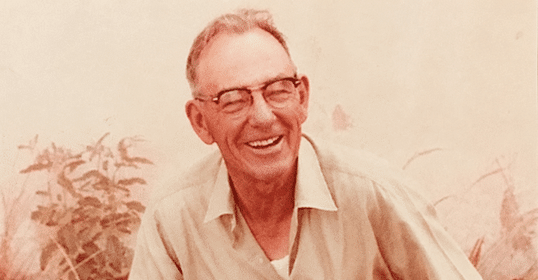
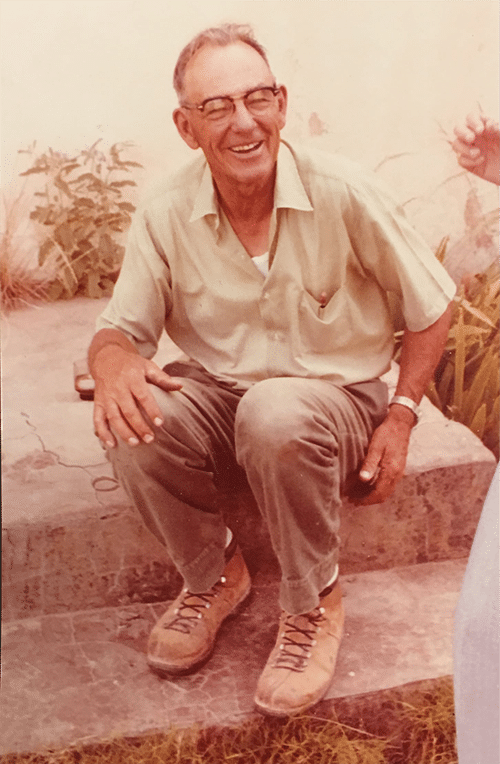
To understand how "little p" purposes function over a lifetime, one must examine the trajectory of those who have successfully integrated them. William D. Hurst, a third-generation forester, provides a clear chronological example of this integration. Hurst’s professional life was rooted in the U.S. Forest Service, a career spanning nearly 40 years. He eventually rose to the position of Regional Forester of the Southwestern Region, overseeing millions of acres of national forests and grasslands across New Mexico, Arizona, Texas, and Oklahoma.
While his career in the Forest Service could be classified as a "Big P" purpose—managing vital natural resources for the federal government—Hurst did not allow his identity to be consumed entirely by his professional title. Instead, he utilized the skills gained in his career, such as self-reliance and mechanical improvisation, to fuel a variety of "little p" purposes that flourished both during his tenure and throughout his four decades of retirement.
Chronology of a Multi-Faceted Legacy
The Era of Restoration (1950s–1980s)
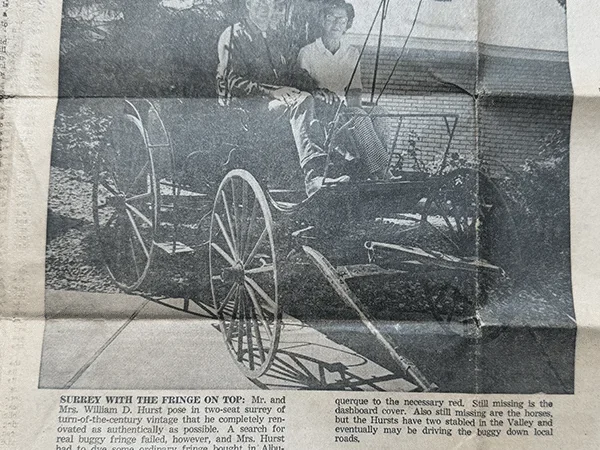
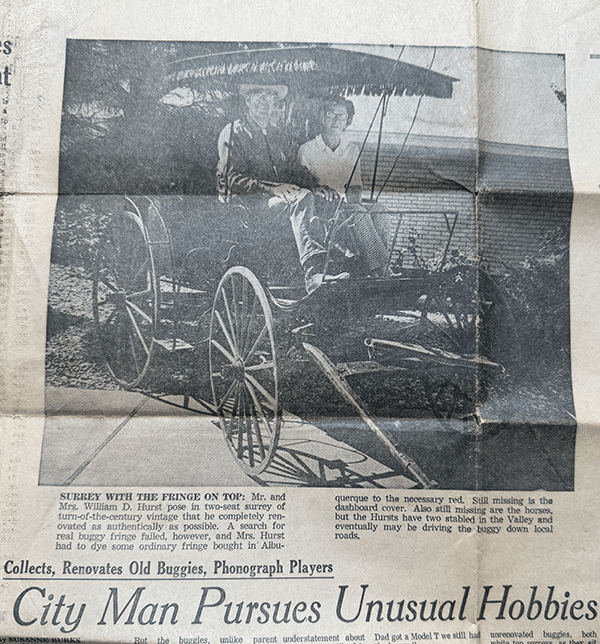
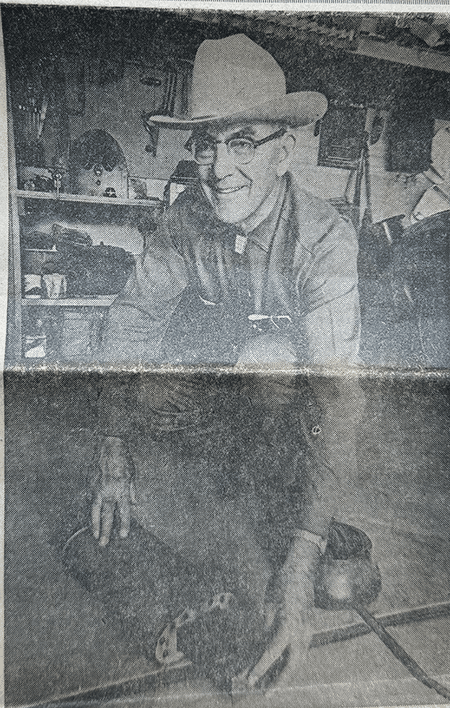
During his 40s, Hurst began a hobby that combined historical nostalgia with technical skill: the restoration of antique horse-drawn buggies. Growing up in southern Utah, Hurst’s early life was defined by horse-and-buggy transportation, a mode of travel he continued to use during his early years as a forester. By collecting and restoring vehicles from the 1880s to the 1910s, Hurst preserved a disappearing segment of American history.
The process of restoration in the pre-internet era required a high degree of investigative work and manual dexterity. Hurst often had to machine his own parts or adapt modern materials to fit 19th-century specifications. This "little p" purpose was not about financial gain; it was about the intrinsic satisfaction of solving complex mechanical puzzles.
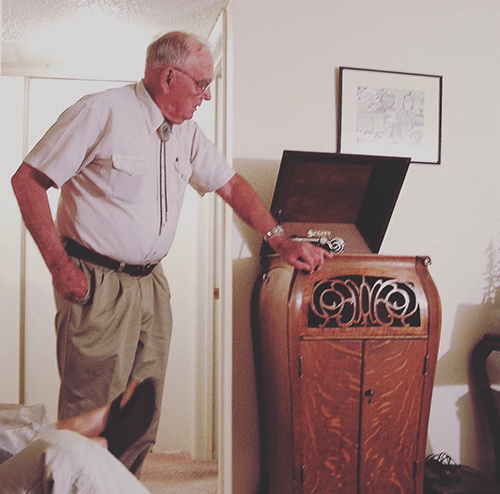
Simultaneously, Hurst applied these skills to the restoration of antique phonograph players. This interest was sparked by the inheritance of a broken 1920s Sonora player. Unable to find a repairman, Hurst undertook the repair himself, eventually becoming a local expert. His work included intricate wood carving and sourcing parts through a network of specialized dealers, demonstrating how a small interest can lead to the development of a unique expertise and a social network of fellow enthusiasts.
The Retirement Transition and Outdoor Exploration (1970s–1990s)
Upon retiring from the U.S. Forest Service, Hurst did not retreat into passivity. Instead, he expanded his "little p" purposes to include extensive horse and mule pack trips. These expeditions took him through the wilderness of the American West, including New Mexico and Oregon. Hurst continued these strenuous trips well into his 80s, maintaining a physical connection to the land he had spent his career protecting. These trips provided not only physical activity but also a continued sense of adventure and environmental connection.
The Rise of the "Clubman" and Community Service
Hurst also exemplified the mid-20th-century archetype of the "clubman," an individual deeply involved in fraternal and service organizations. He held active memberships in the Rotary Club, the Lions Club, the Society of American Foresters, and the Society for Range Management.
These affiliations were not merely social; they were vehicles for service. Through the Rotary Club, Hurst volunteered for Meals on Wheels, delivering food to homebound seniors well into his 80s. This role highlighted a vital aspect of "little p" purpose: the social outlet. By serving his peers, Hurst countered the isolation often associated with aging, reinforcing the psychological finding that community involvement is a primary driver of longevity and life satisfaction.
Environmental Advocacy in the Final Decades
Even as Hurst entered his late 90s, his commitment to "little p" purposes remained active. His most notable late-life project was the protection of the Kaibab squirrel, a subspecies found exclusively on the Kaibab Plateau in Northern Arizona. Hurst had been fascinated by the creature since an encounter at age nine.
As he approached his 100th birthday, Hurst founded the "Friends of the Kaibab Squirrel," an advocacy group dedicated to educating the public and government agencies about the species’ habitat. This initiative demonstrated that "little p" purposes are not limited by age; they can be initiated and maintained as long as an individual possesses curiosity and a desire to be useful.
Analysis: The Impact of Purpose Stacking
The life of William Hurst serves as a practical application of the theories proposed by Dr. Grumet. The "stacking" of these small purposes resulted in several measurable benefits that are relevant to modern sociological and psychological study:
- Community Building: Hurst’s hobbies and service work acted as "social magnets." His restoration work connected him with craftsmen and collectors nationwide, while his club memberships provided a consistent social fabric. This aligns with research suggesting that shared interests are the most effective way to build "social capital" in adulthood.
- Cognitive and Physical Resilience: The technical demands of restoring 19th-century machinery and the physical demands of mountain pack trips likely contributed to Hurst’s cognitive sharpness and physical health into his second century of life.
- Legacy through Action: While many seek legacy through a single grand monument, Hurst’s legacy was distributed across the people he served, the machinery he preserved, and the species he advocated for. This "distributed legacy" is often more resilient than a singular achievement.
Broader Implications for Modern Society
The shift from "Big P" to "little p" purpose has significant implications for mental health and retirement planning. In an era where "hustle culture" often demands that every hobby be monetized or serve a grander vision, the validation of intrinsically motivated, "small" activities offers a path to reducing burnout and anxiety.
Dr. Grumet suggests that individuals looking for their "little p" purposes should reflect on their childhood interests—much like Hurst’s return to the buggies and squirrels of his youth. This "back-to-basics" approach to meaning-making suggests that the components of a purposeful life are often already present in an individual’s history, waiting to be rediscovered.
Ultimately, the case of William Hurst illustrates that a "big" life is not necessarily the result of a "big" purpose. Rather, it is the cumulative effect of pursuing small interests with consistency, curiosity, and a spirit of service. By de-escalating the search for a singular calling, individuals may find that they are freer to engage in the very activities that make life worth living. For those struggling with "purpose anxiety," the message is clear: the small things are, in fact, the big things.

0 Comments