
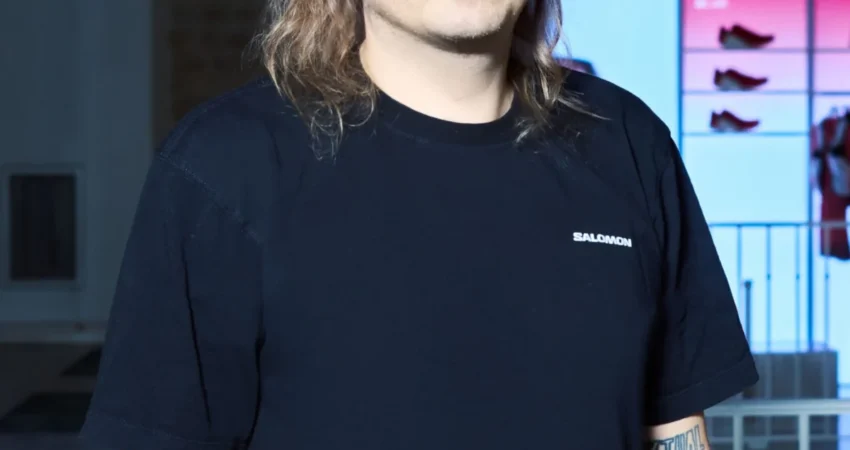
The French outdoor brand Salomon, once regarded primarily as a niche provider of technical equipment for alpine enthusiasts, is currently undergoing a significant strategic transformation. Under the leadership of Heikki Salonen, who was appointed as the brand’s first official creative director in early 2024, the company is attempting to reconcile its newfound status as a fashion powerhouse with its heritage of rigorous, performance-driven engineering. Salonen’s mission is not to lean further into the "fashion" label, but rather to restore and celebrate the "geekiness" and technical eccentricity that originally attracted a trendier, urban demographic. By focusing on what he describes as "performance in a non-traditional way," Salonen aims to unify the brand’s fragmented identity into a single, cohesive entity known as "One Salomon."
This shift comes at a time of unprecedented financial success for Salomon and its parent company, Amer Sports. As the brand navigates a landscape where trail runners have become as common on city streets as they are on mountain paths, the leadership team is focused on ensuring that Salomon remains a best-in-class performance brand rather than a mere heritage or lifestyle label. The strategy involves a delicate balance: leveraging the brand’s popularity in the "gorpcore" fashion movement while doubling down on the technical innovations that serve ultramarathon runners, Nordic skiers, and outdoor professionals.
A Historical Trajectory: From Alpine Specialist to Hypebeast Staple
Founded nearly 80 years ago in Annecy, in the heart of the French Alps, Salomon began as a family-owned workshop specializing in wood saws and ski edges. For decades, the brand’s reputation was built on its technical prowess in winter sports. It was a brand for the "committed"—those who prioritized function over form and required gear that could withstand the extreme conditions of high-altitude environments. This "technical and male-driven" focus, as described by CEO Guillaume Meyzenq, defined Salomon for most of its history.

The transition from a "dad brand" to a centerpiece of the global sneaker culture began in the mid-2010s. This shift was largely organic, driven by a growing consumer interest in "gorpcore"—a fashion trend characterized by the use of functional outdoor wear in urban settings. The term, derived from the hiker’s snack "Good Old Raisins and Peanuts," reflected a broader cultural move toward wellness, utility, and authenticity.
In 2016, Salomon’s "Sportstyle" category was born as a direct response to this emerging demand. The brand began collaborating with influential retailers and designers, including the Parisian boutique The Broken Arm, the Japanese brand Beams, and the London-based skate label Palace. These partnerships introduced Salomon’s technical silhouettes, such as the XT-6, to a new audience. The XT-6, originally designed for world-class ultramarathoners, eventually became a viral sensation, serving as a symbol of contemporary style for urbanites across Europe and North America.
The Appointment of Heikki Salonen and the Vision for Unification
Heikki Salonen’s arrival at Salomon marks a pivotal moment in the brand’s creative history. A Finnish designer with a pedigree in high fashion, Salonen previously spent six years as the anonymous creative director of MM6 Maison Margiela. His background also includes a tenure as head of womenswear at Diesel and the launch of his own eponymous label supported by Fashion East. Despite his fashion credentials, Salonen has been vocal about his desire to move away from the traditional "fashion brand" model.
Upon joining Salomon, Salonen questioned the existing siloing of the business into sub-labels like "Sportstyle" and "Advanced." He argued that the value of the brand lies in its singular identity. "I think there’s great value in the idea of just being Salomon," Salonen noted, suggesting that the company should focus on inventing new technical solutions rather than simply following fashion cycles. His philosophy is that innovation in the technical space—creating what he calls "weird" gear like hydration vests or specialized ski equipment—is what ultimately drives lifestyle trends.

Under this "One Salomon" approach, the brand intends to use its high-performance products as the primary source of inspiration for its lifestyle offerings. Salonen’s strategy involves allowing new iconic designs to prove themselves in the performance arena before they eventually transition into the lifestyle segment. This ensures that every product, whether worn for a 100-mile race or a commute to the office, retains the brand’s core DNA of functional excellence.
Financial Growth and Market Share Analysis
The strategic realignment is backed by robust financial performance. Amer Sports—the conglomerate that owns Salomon alongside other major brands such as Arc’teryx and Wilson—reported total revenues of $6.57 billion in 2025, representing a 26% year-on-year increase. Salomon has emerged as a standout performer within this portfolio, contributing more than $2 billion in sales during the fourth quarter of fiscal 2025 alone.
This growth has continued into 2026. In the first quarter, Amer Sports saw a 26% year-on-year increase to $1.95 billion, with Salomon’s "soft goods"—which include footwear, apparel, and bags—driving much of the outdoor performance growth. By the second quarter of 2026, revenues reached $1.63 billion, a 30% increase, with Salomon once again proving to be a primary engine of expansion.
Despite this rapid growth, Salomon remains a specialized player in the broader footwear market. The brand holds a double-digit market share in niche sectors such as winter sports, outdoor footwear, and trail running. However, its share of the global sneaker and general running shoe markets remains in the low single digits. This disparity highlights the brand’s "startup mode" in the mainstream market and underscores the potential for further expansion if it can successfully bridge the gap between technical niche and mass-market lifestyle.

Demographics and Regional Expansion: The Rise of the Female Consumer
A key component of Salomon’s current strategy is the diversification of its consumer base. Historically, the brand’s audience was approximately 65% male. In recent years, this has shifted significantly, with women now accounting for 45% of the customer base. This change has been driven by targeted launches such as the XT-Whisper, which was promoted by rising artists like TikTok-breakthrough rapper Dina Ayada.
Salonen’s extensive experience in womenswear is seen as a critical asset in this regard. As the brand expands its apparel and footwear lines, it is focusing on silhouettes that resonate with a younger, more gender-balanced audience. This demographic shift is also reflected in the brand’s retail strategy. Salomon has increased its direct-to-consumer footprint, opening flagship stores in major global fashion capitals including Paris, New York, and London.
Regionally, Asia has become Salomon’s fastest-growing market. China, in particular, has seen explosive growth following the 2019 acquisition of a majority stake in Amer Sports by a consortium led by the Chinese sportswear giant Anta Sports Products. This partnership has allowed Salomon to optimize its retail presence in Asia and leverage Anta’s extensive distribution networks. The brand is currently using China as a testing ground for its expanded apparel line, with plans to use the insights gained there to inform global investment in soft goods.
Broader Implications: The Future of Technical Performance
The evolution of Salomon serves as a case study for the modern luxury and performance markets. It demonstrates how a brand can maintain its soul while scaling to meet global demand. By refusing to abandon its "weird" technical roots, Salomon is betting that authenticity is the most valuable currency in a crowded market.

The "One Salomon" strategy also reflects a broader shift in how consumers interact with their environments. As CEO Guillaume Meyzenq observed, the boundary between the "outdoors" and the "city" has blurred. Modern consumers view the urban environment as a space for activity and movement, requiring footwear and apparel that can perform across multiple contexts.
Looking ahead, Salomon’s success will depend on its ability to maintain local relevancy while presenting a unified global vision. The brand’s commitment to product innovation—treating the wearer’s journey as a conversation—suggests a move toward a more emotive and personal relationship with its customers. As Salonen continues to distill the brand’s essence, the focus will remain on elevating what is already there: a legacy of alpine excellence transformed for a new, global era. In the words of both its CEO and Creative Director, the ultimate goal is simple yet challenging: to keep Salomon as Salomon.

0 Comments