
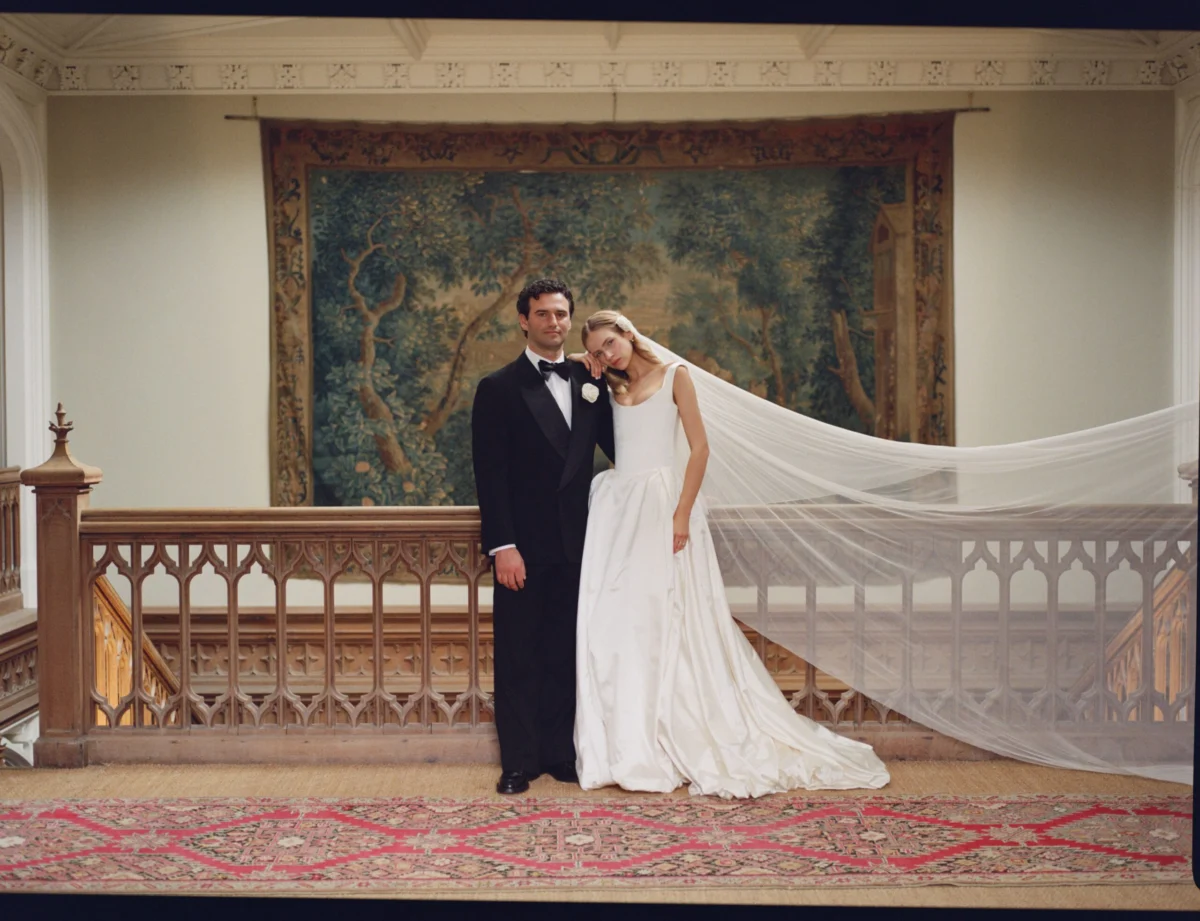
The intersection of the Australian hospitality industry and the international arts scene reached a milestone in June 2026 as Serena Wardell and Casper Ettelson celebrated their marriage at Crom Castle in Northern Ireland. The event, which drew guests from across the globe, served as the culmination of a six-year relationship that began in Sydney and survived the complexities of the global pandemic. Wardell, a prominent model and artist with ancestral ties to the Irish aristocracy, and Ettelson, a co-founder of the successful fast-casual chain Fishbowl, hosted a multi-day celebration that emphasized heritage, personal creativity, and the "weird and wonderful" aesthetics of their shared life.
The Genesis of a Modern Partnership
The relationship between Wardell and Ettelson began in March 2020, just as the global landscape was on the precipice of unprecedented change. The pair first met at a social gathering in Sydney, Australia, shortly after Wardell had returned to the city. Ettelson, known in the business community for his proactive leadership at Fishbowl, approached Wardell with a direct invitation for a date. While Wardell initially offered a non-committal response, the following weeks saw the pair building a foundation through group activities at local beaches and casual dinners.
The timing of their meeting coincided with the onset of the COVID-19 pandemic and the subsequent implementation of strict lockdowns across Australia. This period served as a critical test for the fledgling relationship. As Wardell moved to live with her parents during the height of the restrictions, the couple transitioned into a long-distance arrangement. The commitment demonstrated by Ettelson during this period—specifically his persistent efforts to coordinate travel logistics amid shifting border policies—was cited by Wardell as a defining moment in the seriousness of their courtship.
The Mallorca Proposal: A Study in Logistical Pivot
After four years of dating, the couple’s engagement took place in June 2024 during a vacation in Mallorca, Spain. The proposal, orchestrated by Ettelson, required significant behind-the-scenes coordination with local venues. Despite Wardell having made the initial restaurant reservation in the village of Deià, Ettelson had contacted the establishment privately to arrange a specific setting.
The original plan to dine at an outdoor table overlooking the sunset was thwarted by high winds, a common meteorological challenge in the Balearic Islands. However, the venue staff facilitated a move to a secluded courtyard, providing the necessary privacy and shelter for the proposal. The event was characterized by high emotion, with Wardell noting the "spectacular" nature of the sunset and the subsequent celebratory atmosphere that lasted throughout the evening. This event marked the beginning of a two-year planning phase for what would become a high-profile international wedding.
Ancestral Heritage and the Choice of Crom Castle
The selection of Crom Castle as the wedding venue was rooted in Wardell’s deep familial connections to the region. As a cousin of the current Earl of Erne, Wardell spent significant portions of her youth visiting the ancestral estate in County Fermanagh. The castle, situated on the shores of Upper Lough Erne, is a cornerstone of Irish architectural heritage, featuring a neo-Tudor style designed by architect Edward Blore in the 1830s.
For Wardell, the choice of Ireland was a reflection of personal values, associating the country with family, hospitality, and a specific "abundance of love." Ettelson’s introduction to the estate occurred in 2022, during his first trip to Ireland. Reports indicate that Ettelson’s immediate affinity for the Irish landscape and the hospitality of Lord and Lady Erne solidified the couple’s decision to host their eventual nuptials on the grounds.
The estate itself offers a sprawling 1,900-acre backdrop, managed in part by the National Trust, which provides a unique blend of private aristocratic history and preserved natural beauty. This setting provided the "green grass fields" and historic gravitas that the couple sought for their "out of normality" weekend.
Professional Backgrounds and Industry Impact
The union brings together two individuals with significant footprints in their respective fields. Casper Ettelson is a recognized figure in the Australian "fast-casual" dining sector. As a co-founder of Fishbowl, he helped revolutionize the healthy take-away market in Australia, expanding the brand to dozens of locations before launching in the United States under the name "Thisbowl." Industry analysts point to the success of Fishbowl as a testament to Ettelson’s ability to scale lifestyle-oriented brands—a skill that seemingly translated into the meticulous planning of the wedding’s aesthetic and logistical framework.
Serena Wardell’s professional life as a model and artist heavily influenced the wedding’s visual identity. Eschewing traditional, mass-produced wedding stationery, Wardell utilized her artistic background to hand-draw the suite of materials used for the event. This included:
- Customized wedding stationery and invitations.
- Personalized name cards and drink menus.
- Bespoke matchboxes and postcards.
- Thematic playing cards for guest entertainment.
This "DIY" approach at a high-luxury level reflects a growing trend in the wedding industry where couples prioritize "bespoke authenticity" over standardized luxury packages.
The "Weird and Wonderful" Theme and Logistical Challenges
The overarching theme of the wedding was described by Ettelson as an expression of the couple’s private life and shared humor. The objective was to create a "playful" atmosphere that encouraged guests to "step outside of normality." This involved a curated selection of the couple’s favorite foods, wines, and music, designed to reflect their personalities "behind closed doors."
However, the logistics of planning a destination wedding from Australia presented significant hurdles. One notable incident involved the transportation of 150 customized matchboxes. Due to aviation safety regulations regarding flammable materials, the couple was forced to transport empty boxes from Australia with the intent of filling them upon arrival in Ireland. In the final preparations on the morning of the wedding, the task was overlooked.
Wardell later reflected on this as a quintessential lesson in international event planning, stating that "things will go wrong, you just have to embrace it." This sentiment echoes a broader reality for the destination wedding market, which in Ireland is estimated to be worth hundreds of millions of Euros annually, driven by the North American and Australian diaspora.
Chronology of Events
- March 2020: Initial meeting at a party in Sydney, Australia.
- 2020–2021: Relationship develops under COVID-19 lockdown constraints; transition to long-distance.
- 2022: Ettelson’s first visit to Ireland and Crom Castle; the couple jokingly discusses a future wedding at the site.
- June 2024: Ettelson proposes to Wardell in Deià, Mallorca.
- 2024–2026: Two-year planning period involving international logistics and custom artistic design.
- June 2026: Wedding ceremony and celebration held at Crom Castle, Northern Ireland.
Broader Implications and Industry Trends
The Wardell-Ettelson wedding serves as a case study for several prevailing trends in the luxury event sector. First, it highlights the enduring appeal of "heritage tourism" and the "return to roots" movement among successful young professionals. The choice of an ancestral home over a commercial hotel signifies a desire for historical continuity and personal narrative.
Second, the event underscores the globalization of the hospitality and creative industries. With Ettelson’s business roots in Sydney and New York, and Wardell’s artistic influence, the wedding was a cross-continental production. This reflects the lifestyle of a "global elite" whose personal and professional lives are no longer tethered to a single geographic location.
Finally, the economic impact of such events on local Irish economies is substantial. Destination weddings of this scale involve the hiring of local vendors, from catering and floral arrangements to transportation and hospitality services. According to tourism data, high-end destination weddings in Northern Ireland contribute significantly to the local economy, particularly in rural areas where historic estates like Crom Castle are located.
The celebration concluded with a focus on the couple’s shared future, having successfully bridged the distance between their Australian beginnings and their Irish heritage. The event remains a notable example of how modern couples are blending professional success with deep-seated traditional values to create unique, culturally rich celebrations.

0 Comments