
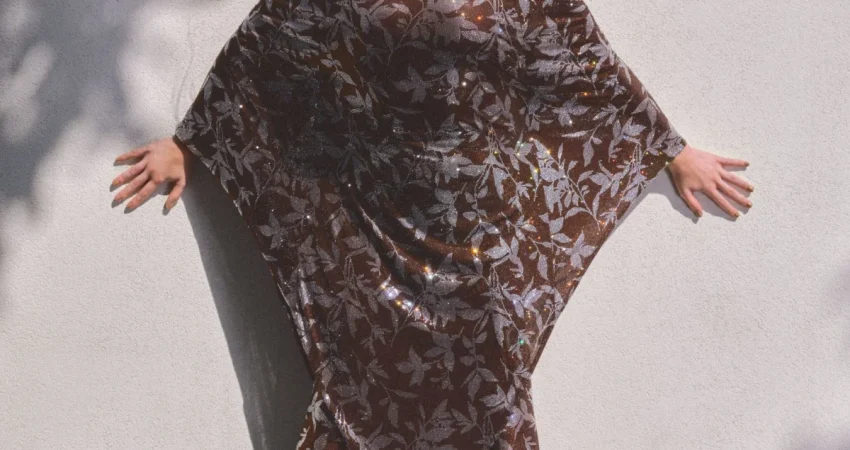
The Spring 2027 collection from Giuseppe di Morabito marks a significant departure from traditional mythological interpretations, choosing to focus on the internal narrative of Penelope rather than the external odyssey of her husband. Presented during the height of the international fashion season, the collection, titled "Penelope," serves as a meditation on patience, transformation, and the psychological complexity of the feminine experience. By shifting the perspective from the sea-faring hero to the woman who remained in Ithaca, Di Morabito has introduced a wardrobe that balances historical reverence with contemporary technical innovation, signaling a new chapter for the Milan-based label.
The Narrative Pivot: From External Travel to Inner Transformation
Greek mythology has seen a resurgence in global pop culture, influenced by literature, television, and cinema. However, Giuseppe di Morabito’s approach for Spring 2027 seeks to subvert the standard "hero’s journey" archetype. In his studio notes and subsequent press briefings, Di Morabito emphasized that while Odysseus’s journey was defined by physical distance and external conflict, Penelope’s journey was one of endurance and internal evolution.
"We always think about Odysseus’s journey: he gets shipwrecked, travels for years, loses himself, then comes home transformed," Di Morabito stated during the collection’s debut. "But we never really think about Penelope. Her waiting wasn’t static; she had to go through an even more important, inner journey."
This conceptual framework informed every aspect of the collection, from the choice of fabrics to the structural engineering of the garments. The designer’s intent was to illustrate that "staying still" does not equate to a lack of movement, but rather a different form of progression. This theme of transformation is a recurring motif in Di Morabito’s work, but for Spring 2027, it has been refined through a more literary and philosophical lens.
Material Innovation and the "Fabrics That Don’t Exist"
A hallmark of the Spring 2027 collection is the experimentation with surface textures and material manipulation. Di Morabito has long been associated with high-octane glamour, but this season, he pushed the boundaries of textile engineering to create what he describes as "fabrics that don’t exist."
One of the most technically demanding elements of the collection involved the treatment of lace and animal prints. Lace, a staple of Italian craftsmanship, was coated in a fine gold foil, giving it a metallic rigidity that still allowed for fluid movement. Simultaneously, python prints were reimagined through a modern lens; the designer covered the animalier pattern with transparent crystals. This technique created a "wet" appearance, a direct nod to the maritime themes of The Odyssey, while ensuring the underlying pattern remained visible.
"I had worked with animal prints before, but never python in this way," Di Morabito explained. "It’s also the first time we’ve covered it with transparent crystals."
The collection also featured:
- Bucolic Motifs: Intricate designs drawn directly onto fabric using topaz, silver, and aquamarine stones.
- Architectural Lace: Bands of lace in varying widths were assembled over layers of organza, creating entirely new composite surfaces.
- Elevated Linen: For the first time in the brand’s history, linen was introduced. However, it was stripped of its traditional rustic connotations, treated instead with the same glitz and high-shine finishes as the evening wear.
- Mixed Media: The integration of macramé, satin, feathers, and oversized crystals served to bridge the gap between ancient mythological aesthetics and the minimalist "cool" of the 1990s.
Evolution of Silhouette: Between Body-Consciousness and Historical Volume
The Spring 2027 collection demonstrates a broadening of Di Morabito’s design vocabulary regarding silhouette. While the brand remains rooted in a distinct body-conscious aesthetic that celebrates the female form, this season introduced newer, more experimental propositions.
The runway saw a juxtaposition of narrow, sharp tailoring and expansive, historical volumes. Cigarette trousers and flared pants were paired with structured bras, maintaining the label’s signature provocative edge. In contrast, the introduction of corsets and crinolines invoked a sense of historical weight, grounding the collection in the era of its mythological inspiration.
A standout piece in the collection—a cape dress—suggested a shift toward looser, more relaxed shapes. This caftan-like silhouette offered a departure from the restrictive nature of traditional evening wear, providing a sense of freedom and movement that aligned with the collection’s theme of "finding oneself."
Chronology of the Collection’s Development
The development of the "Penelope" collection followed a rigorous twelve-month timeline, beginning shortly after the presentation of the Autumn/Winter 2026 line.
- Conceptual Phase (May – July 2026): Di Morabito and his creative team began researching the "female presences" in Homer’s Odyssey. The focus shifted from the sirens as obstacles to the sirens as symbols of instinct and power.
- Material Sourcing and R&D (August – October 2026): The studio worked closely with Italian textile mills to develop the gold-foiled lace and the crystal-encrusted python. This period involved multiple rounds of testing to ensure the crystals would adhere to the leather without compromising its flexibility.
- Prototyping and Fitting (November 2026 – January 2027): The integration of linen into the luxury segment required new cutting techniques to ensure the fabric held the weight of the topaz and aquamarine embellishments.
- Final Production and Styling (February 2027): The final looks were curated to reflect a transition from the "solitude" of Ithaca to the "power" of the transformed woman.
- Runway Debut (Spring 2027): The collection was unveiled to a global audience, accompanied by a press release that reframed the female characters of the Odyssey—Circe, Calypso, and the Sirens—as "different possibilities of female identity."
Supporting Data: The Growth of the Giuseppe di Morabito Brand
Since its founding in Milan in 2015, Giuseppe di Morabito has seen consistent growth in the contemporary luxury market. Industry data indicates that the brand has expanded its global footprint by 25% over the last three fiscal years, with a particular surge in the North American and Middle Eastern markets.
The decision to incorporate more diverse silhouettes and materials like linen is seen by market analysts as a strategic move to appeal to a broader demographic. By diversifying the product range to include both "red carpet" volumes and "day-to-night" separates like flared trousers and capes, the brand is positioning itself to capture a larger share of the luxury ready-to-wear segment.
Furthermore, the brand’s commitment to "Made in Italy" production remains a core selling point. The use of specialized techniques, such as the hand-application of aquamarine stones and the custom assembly of lace on organza, reinforces the brand’s status as a purveyor of high-craft fashion.
Official Responses and Creative Philosophy
The press release accompanying the Spring 2027 show provided further insight into the philosophical underpinnings of the collection. It rejected the traditional view of the women in The Odyssey as mere "temptations" or "distractions" for the male protagonist. Instead, Circe, Calypso, and the Sirens were presented as embodiments of desire, instinct, freedom, knowledge, solitude, and power.
"The idea is to lose yourself in order to find yourself again, and to return transformed," Di Morabito stated. This sentiment was echoed by fashion critics who noted that the collection felt like a "maturation" of the designer’s style.
Industry insiders have reacted positively to the collection’s narrative depth. "Di Morabito has successfully moved beyond the surface level of glamour to offer a collection that has something to say about the current cultural moment," said one prominent fashion consultant following the show. "The technical execution of the ‘wet-look’ python and the gold lace proves that the brand is investing heavily in innovation."
Broader Impact and Industry Implications
The "Penelope" collection arrives at a time when the fashion industry is grappling with the balance between heritage and modernity. Di Morabito’s ability to take a 3,000-year-old text and translate it into a 90s-inspired, crystal-laden wardrobe speaks to the enduring power of myth in shaping aesthetic trends.
The collection’s impact is expected to be felt in several areas:
- Trend Forecasting: The "wet-look" texture and the use of transparent crystals over traditional prints are likely to influence the high-street market in the coming seasons.
- Cultural Dialogue: By centering the narrative on Penelope, Di Morabito contributes to a larger movement in the arts that seeks to reclaim and retell classic stories from a female perspective.
- Material Standards: The successful elevation of linen into the realm of high-glitz evening wear may encourage other designers to experiment with sustainable, natural fibers in unconventional ways.
In conclusion, Giuseppe di Morabito’s Spring 2027 collection is more than a display of seasonal trends; it is a sophisticated exploration of identity and transformation. By focusing on the "inner journey" of Penelope, Di Morabito has created a collection that is as intellectually grounded as it is visually striking. As the brand continues to evolve, "Penelope" will likely be remembered as the moment the designer fully integrated narrative depth with technical mastery, solidifying his place in the landscape of modern Italian fashion. Though the character of Penelope never left the shores of Ithaca, Di Morabito’s interpretation ensures that her presence is felt across the global fashion stage, transformed and more powerful than ever.

0 Comments