
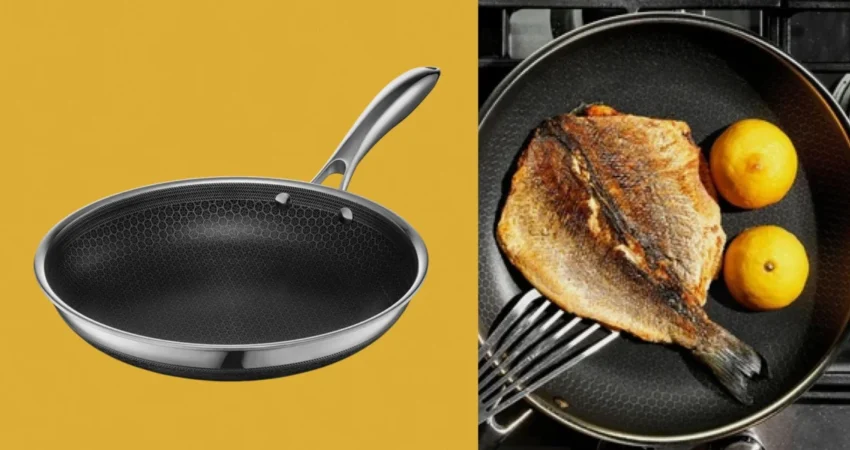
The ubiquity of HexClad cookware is undeniable. Even before its significant endorsement, a reported $100 million strategic investment in 2024 from Studio Ramsay Global, the brand had meticulously cultivated a strong online presence. Through targeted digital advertising campaigns, strategic partnerships with prominent food influencers, and even recent appearances in unexpected settings like the Love Island villa, HexClad has become a familiar name in kitchens worldwide. For those who professionally test cookware, HexClad garners an extraordinary volume of inquiries, far exceeding any other product category. This article aims to provide a comprehensive review, addressing the brand’s claims and performance against industry standards and consumer expectations.
A Personal Stance on Nonstick Cookware
It is important to preface this review with a candid acknowledgment of personal biases regarding nonstick cookware. As a professional cookware tester, a significant portion of my work involves scrutinizing nonstick products. My evaluations are often accompanied by addenda detailing my reservations about this category. These concerns include the inherent limitations of nonstick surfaces, such as their relatively short lifespan and the potential for their convenience to inadvertently hinder the development of fundamental cooking techniques. Consequently, I frequently advocate for alternative cookware materials that offer greater durability and foster a deeper understanding of culinary processes.
However, the objective of this analysis is not to dissuade consumers from purchasing nonstick cookware entirely, but rather to evaluate products within this category relative to one another. For individuals who are determined to acquire a nonstick pan, this review seeks to identify the best options available, assessing their performance and longevity.
HexClad’s Unique Proposition: Hybrid Cookware Explained
HexClad positions itself within a rapidly growing segment of the cookware market known as "hybrid cookware." Unlike conventional, smooth nonstick pans, HexClad features a distinctive textured surface. This design comprises raised stainless steel "peaks" interspersed with nonstick "valleys." According to HexClad’s own technical explanations, this innovative pattern is engineered to provide a "durable surface" that safeguards the nonstick coating within the depressions. The raised peaks, it is argued, offer a protective barrier, preventing metal utensils – often considered a cardinal sin in nonstick cookware care – from directly contacting and damaging the nonstick surface.
The nonstick surfaces employed by HexClad are generally consistent with other ceramic nonstick cookware lines. While manufacturers often highlight proprietary formulations, the underlying technology for most ceramic nonstick coatings relies on the well-established "sol-gel process." This method involves creating a solution of microscopic silica particles that, when applied to the pan’s surface, form a smoother, more non-reactive layer.
HexClad’s ambitious claims, as stated on their website, include integrating "the performance of stainless steel, the durability of cast iron, and the convenience of nonstick." The company also backs its products with a lifetime warranty, although this typically covers manufacturing defects rather than wear and tear. Furthermore, HexClad asserts that its products are "made to last a lifetime." These assertions warrant careful examination, particularly when contrasted with the fundamental scientific realities governing the lifespan and performance of ceramic nonstick surfaces.
Initial Performance: A Slippery Start
Nonstick pans are often lauded for their impressive initial performance, and HexClad is no exception. Fresh out of the box, the pans deliver on their promise of a slick cooking surface. In standardized testing procedures, both a HexClad skillet and saucepan demonstrated adequate performance.
From a design perspective, the pans are commendably balanced in weight, and their handles are ergonomically designed for comfortable use. An interesting design choice is the inclusion of nonstick coating on the exterior base of the pan, the part that comes into direct contact with the heat source. The rationale behind this application is not immediately apparent and raises questions regarding its functional benefit and long-term durability.
In comparative terms with other nonstick cookware, HexClad performs adequately. However, significant concerns arise when evaluating the brand’s claims regarding the longevity of its products.
Longevity Under Scrutiny: The Real-World Performance of HexClad
A thorough examination of online forums and consumer feedback reveals a consistent pattern of dissatisfaction among some HexClad users. Numerous complaints detail a rapid degradation of the pans’ nonstick properties, with food, including eggs and other common ingredients, beginning to stick after mere months, and sometimes even weeks, of regular use. This issue was also observed during testing with a HexClad set that had been in use for approximately one year, exhibiting a notable degree of sticking.
It is crucial to emphasize that this phenomenon is not exclusive to HexClad; it is an intrinsic characteristic of all ceramic nonstick coatings. As articulated by Professor Rob Macfarlane, a leading expert in metallurgy and materials science at MIT, ceramic nonstick coatings, often silica-based sol-gels, are inherently brittle. The repeated cycles of heating and cooling inherent in the cooking process induce thermal expansion and contraction. This constant stress leads to the development of micro-fractures within the coating. Over time, the accumulation of these fractures increases surface friction, progressively diminishing the pan’s nonstick capabilities. This scientific reality dictates that consistently used nonstick pans typically have a functional lifespan of one to two years. While they may remain usable, the ongoing deterioration of the coating will inevitably lead to chipping and a noticeable decline in performance. In essence, the very act of cooking contributes to the degradation of any ceramic nonstick pan.
Beyond the inherent limitations of ceramic nonstick, HexClad’s specific care instructions introduce another layer of complexity. The brand advises that HexClad pans require "seasoning" with neutral oil and moderate heat to maintain their nonstick qualities. This recommendation is particularly counterintuitive, as the primary motivation for many consumers to opt for nonstick cookware is precisely to avoid the maintenance procedures associated with materials like cast iron and carbon steel, which do require seasoning.
The Implication of "Seasoning" Nonstick Cookware
The instruction to season a nonstick pan presents several issues. Firstly, it fundamentally undermines the low-maintenance appeal that draws consumers to nonstick cookware in the first place. Secondly, and more critically, true seasoning, as understood in the context of cast iron and carbon steel, is not achievable on a HexClad pan. The process of seasoning involves the polymerization of fats, which creates a molecularly bonded, non-stick layer on porous metal surfaces. This process cannot occur on a ceramic nonstick surface, whether it comprises stainless steel peaks or ceramic valleys.
While it is technically possible to create a temporary layer of polymerized fat on stainless steel, this layer is not durable or sustainable. Stainless steel’s inherently smoother surface makes it difficult for polymerized fat to adhere effectively. Furthermore, the presence of a chromium oxide layer on stainless steel, which provides its non-reactive properties, further impedes the strong chemical bond necessary for genuine seasoning. Accumulated unpolymerized fats and food residues on stainless steel pans can, in fact, increase stickiness rather than reduce it.
HexClad’s care instructions further complicate matters by stating that "over the first few weeks of use, your HexClad Hybrid cookware will perform better as it re-seasons from the fats in the food you are cooking." This statement, while avoiding the direct term "seasoning" in this context, still implies a necessary pretreatment with fat, mirroring the preparation required for stainless steel. If a HexClad pan demands the same level of preparation and maintenance as traditional materials like stainless steel, cast iron, or carbon steel, the rationale for choosing HexClad over these more durable and inherently long-lasting alternatives is significantly diminished.
Consumer Expectations and the Reality of Nonstick Cookware
It is essential to acknowledge that many consumers may harbor unrealistic expectations regarding the performance and lifespan of nonstick cookware. Sticking is often a consequence of suboptimal cooking techniques, including improper pan temperature, insufficient oil, or incorrect timing. Even the most advanced nonstick surfaces have their limits, and mindful cooking practices are paramount to prevent food from adhering.
Value Proposition: Is HexClad Worth the Investment?
HexClad pans are marketed as premium products and are priced accordingly. A 12-inch HexClad fry pan, without a lid, retails for approximately $179. For comparison, a comparable All-Clad pan, a long-standing benchmark for professional-grade stainless steel cookware with a proven track record of durability, typically costs around $160. This price disparity, coupled with the inherent limitations of nonstick technology, raises questions about HexClad’s value proposition.
For consumers seeking a textured cooking surface, alternative brands such as Oxo, Greenpan, and Zwilling offer less expensive hybrid or ceramic nonstick options. These brands provide comparable functionality at a more accessible price point.
Conclusion: A Critical Look at HexClad’s Longevity and Value
The central argument against HexClad, and indeed many nonstick cookware brands, rests on the fundamental disparity between their marketed longevity and the scientific realities of nonstick coatings. Investing heavily in pans with a limited functional lifespan is a financially imprudent decision for most consumers.
A more pragmatic approach to cooking involves embracing the learning curve and accepting that occasional sticking is a natural part of culinary development. For those who prioritize the convenience of a nonstick surface, it is advisable to select products that do not necessitate the maintenance and preparation routines typically associated with more traditional, durable cookware materials. While this review focuses on HexClad, the broader principle applies to the nonstick category as a whole. The long-term advantages of cookware that improves with age and use, such as cast iron, carbon steel, and high-quality stainless steel, remain unparalleled for those seeking enduring culinary tools.
Cookware that truly stands the test of time and enhances the cooking experience, rather than merely simplifying it, offers a more sustainable and rewarding investment for any kitchen.

0 Comments