
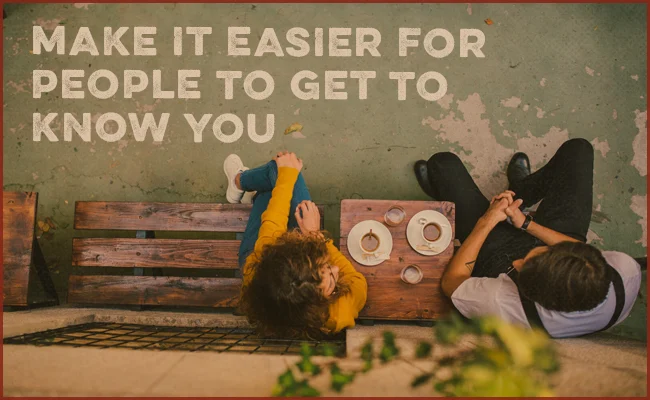
The mechanics of human social interaction are often compared to a complex dance where both participants share equal responsibility for the rhythm and flow of the exchange. While significant emphasis is traditionally placed on individual performance—such as maintaining eye contact, mastering the art of the handshake, and active listening—a critical yet overlooked component of social intelligence is the concept of social facilitation. This involves proactively reducing the cognitive and emotional burden on the other person, thereby allowing them to engage more effectively. By acting as a facilitator rather than merely a participant, an individual can transform potentially awkward encounters into seamless, productive interactions.
The Psychological Framework of Social Facilitation
In the contemporary social landscape, the "burden of initiation" often acts as a significant barrier to networking and relationship building. According to data from the Anxiety and Depression Association of America (ADAA), social anxiety disorder affects approximately 15 million adults in the United States, or roughly 7% of the population. For these individuals, and even for those without clinical anxiety, the first few minutes of a new encounter are fraught with the "spotlight effect," a psychological phenomenon where people tend to believe they are being noticed more than they actually are.
When an individual takes steps to facilitate a conversation, they effectively lower the "activation energy" required for the other person to respond. This shift from a self-centered performance to a partner-centered facilitation creates a psychological safety net. This approach is not merely a matter of politeness; it is a strategic tool in professional and personal development that fosters faster rapport and reduces the likelihood of conversational "dead zones."
A Chronology of the Social Encounter: From Preparation to Professional Contextualization
The process of facilitating a social exchange begins long before the first word is spoken and follows a logical progression through the life cycle of an introduction. By analyzing the chronology of a standard meeting, communication experts have identified specific intervention points where a facilitator can improve the outcome.
- The Pre-Interaction Phase (The Visual Cue): Utilizing external markers to invite approach.
- The Identification Phase (The Name Exchange): Ensuring the most basic unit of identity is transmitted and retained.
- The Exploration Phase (The Question-Answer Loop): Providing enough "conversational hooks" to sustain the dialogue.
- The Contextualization Phase (The Professional Identity): Explaining one’s role in a way that invites further inquiry rather than confusion.
The Strategic Use of Visual Conversation Starters
The first barrier in any social setting is the "ice-breaking" moment. Behavioral studies suggest that humans make split-second judgments based on visual cues. A study conducted by researchers at the University of Kansas found that observers could accurately determine a person’s personality traits—such as extroversion or openness—simply by looking at their choice of footwear.
To facilitate this, experts recommend wearing a "conversation piece." This is not an invitation to wear novelty or "kitschy" items, which can undermine professional credibility and lead to being perceived as a "clown" figure. Instead, the goal is subtle distinction. A unique watch, a specific lapel pin, or a tie with a subtle pattern can serve as a low-risk topic for a stranger to mention. For example, a t-shirt representing a specific local sports team or a niche musical group provides an immediate commonality for others to latch onto. By providing this visual "hook," the facilitator removes the need for the other person to search for an abstract opening line, allowing the conversation to begin with a concrete observation.
Optimizing Name Retention and the "Next-in-Line" Effect
The most common failure in social interactions occurs during the name exchange. Cognitive psychologists refer to the "next-in-line effect," where people fail to encode information (like a name) because they are too focused on what they are about to say next. This creates a cycle of awkwardness; once a name is forgotten, the participant becomes distracted by their own lapse in memory, leading to a decrease in conversational quality.
To combat this, a facilitator must prioritize clarity and context. Communication expert Dr. Carol Fleming suggests several techniques to ensure a name "sticks." First, the use of the phrase "My name is…" is preferred over "I’m…" because the former provides a linguistic "alert" that a piece of vital information is coming. This allows the listener’s brain to prepare for the data transfer.
Furthermore, if a name is unusual or foreign, the facilitator should acknowledge this by saying, "My name is a bit difficult for many people," which encourages the listener to focus more intently. Pairing a name with a rhyme or a piece of personal context—such as "My name is Gower, like a tower," or "I’m David, I just moved here from Chicago"—provides the "mental scaffolding" necessary for the listener to store the information. By providing a secondary fact alongside the name, the facilitator gives the listener an immediate follow-up question, such as "What prompted the move from Chicago?"
Engineering Expansive Responses to Closed-Ended Questions
A primary cause of conversational stagnation is the "one-word answer." In many cases, individuals are asked closed-ended questions: "Are you enjoying the conference?" or "Is this your first time here?" Answering with a simple "Yes" or "No" effectively ends the conversational thread, forcing the other person to exert significant effort to find a new topic.
Journalistic and social experts advocate for the "plus-one" rule of answering. Even when asked a closed-ended question, the facilitator provides a full sentence or two filled with specific details. For instance, instead of saying "Yes" to a question about a class, one might say, "Yes, I’m finding the ethics portion fascinating, especially since it relates to my background in healthcare."
This technique provides "fodder" for the other person. By mentioning "ethics" and "healthcare," the facilitator has offered two distinct paths for the conversation to follow. This reduces the cognitive load on the partner, making them feel more "socially smooth" because the answers they receive are easy to work with.
The "Three-Question Rule" for Professional Identity
In professional networking, the question "What do you do?" is ubiquitous. However, responses are frequently bogged down by industry jargon or overly vague descriptions. Describing oneself as being "in finance" or "a consultant" provides almost no actionable information for a layperson.
To facilitate a better exchange, a professional description should answer three core questions:
- What do you do? (The action)
- For whom? (The target audience)
- How? (The method or value proposition)
By framing a job in these terms, the facilitator makes their professional life accessible. For example, a venture capitalist might say, "I work for a firm that finds family-owned businesses in traditional industries and helps the owners transition into retirement while we expand the company." This description is far more "sticky" than simply saying "I’m in private equity." It allows the listener to understand the human element of the work, which in turn leads to more organic and interesting follow-up questions.
Expert Analysis and Broader Implications
Communication specialists argue that the ability to facilitate social interactions is a hallmark of high-level leadership. In a corporate environment, a leader who makes it easy for subordinates or clients to speak with them is more likely to receive honest feedback and build stronger alliances.
The broader impact of these techniques extends to mental health and community cohesion. In an era where digital communication has, for many, eroded face-to-face social skills, the "awkwardness" of physical interaction has become a deterrent to community involvement. By adopting the role of a facilitator, individuals can mitigate the social friction that prevents meaningful connection.
Furthermore, from a productivity standpoint, "smooth" social interactions save time. In business, the "trust gap" is the period between meeting someone and feeling comfortable enough to do business with them. Facilitation techniques shorten this gap by accelerating the rapport-building process. When information—names, roles, and interests—is exchanged clearly and without stress, the path to collaboration is cleared of unnecessary obstacles.
Conclusion: The Altruism of Social Smoothness
Ultimately, being a conversational facilitator is an act of social altruism. It involves recognizing that the person across from you may be just as nervous, distracted, or uncertain as you are. By taking responsibility for the "ease of use" of the interaction, the facilitator ensures that both parties leave the exchange feeling successful.
The implementation of these strategies—wearing a subtle conversation piece, optimizing name delivery, providing detail-rich answers, and clarifying professional roles—creates a ripple effect. It not only improves the immediate interaction but also boosts the confidence of the other person, potentially making them more likely to engage in future social exchanges with others. In a world increasingly defined by isolation, the skill of making it easy for others to connect is a vital contribution to the social fabric.

0 Comments