
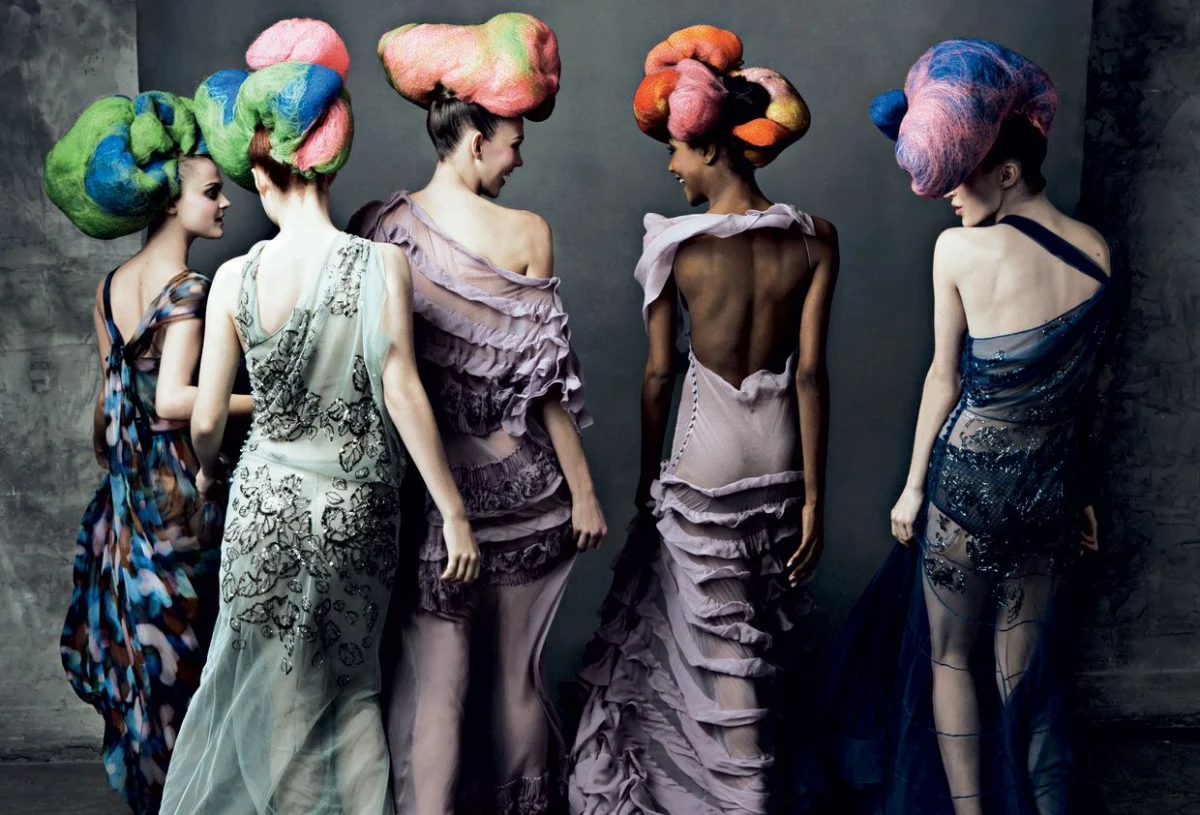
The Metropolitan Museum of Art’s Costume Institute has officially announced that its Spring 2027 exhibition will be dedicated to the life and work of British fashion designer John Galliano. Titled "John Galliano: Horizons," the retrospective marks a significant milestone in the history of the institution, as Galliano becomes only the third living designer to be honored with a solo monograph exhibition at The Met. This rare distinction places him in the company of Yves Saint Laurent, who was the subject of a Diana Vreeland-organized exhibition in 1983, and Rei Kawakubo of Comme des Garçons, whose work was celebrated in 2017. Organized by Andrew Bolton, the Wendy Yu Curator in Charge of the Costume Institute, the exhibition aims to provide a comprehensive analysis of Galliano’s four-decade career, tracing his trajectory from a revolutionary student in London to his current role as the creative visionary behind Maison Margiela.
A Career Defined by Narrative and Technical Mastery
The exhibition will draw extensively from the Costume Institute’s own permanent collection, supplemented by key loans from international archives and private collectors. The narrative arc begins with Galliano’s 1984 graduation collection from Central Saint Martins, titled "Les Incroyables." Inspired by the French Revolution and the New Romantic movement of the 1980s, the collection was immediately recognized as a masterwork of historical pastiche and technical innovation. Its commercial success was cemented when the entire collection was purchased by the prestigious London boutique Browns, launching Galliano’s career as the "enfant terrible" of British fashion.
Throughout the late 1980s and early 1990s, Galliano established a reputation for "sartorial magic," often working with limited resources to create high-drama, narrative-driven collections. His work during this period was characterized by a deep engagement with history, a penchant for the bias cut—a technique he famously revitalized—and an ability to transform humble materials into evocative garments. This era of "scrappy" brilliance led to his historic appointment at Givenchy in 1995, where he became the first British designer to head a French haute couture house. His tenure there was brief but impactful, serving as a prelude to his definitive era at Christian Dior.
The Dior Years and the Peak of Haute Couture
In 1996, Galliano was appointed Creative Director of Christian Dior, a role that would redefine the boundaries of global luxury fashion. Over the course of fifteen years, he transformed the house into a powerhouse of theatricality and commercial success. His collections for Dior were legendary for their scale, often staged as cinematic odysseys that traveled through time and geography—from the Russian Empire and the Belle Époque to the streets of modern-day Paris.
The exhibition "Horizons" will examine the dual nature of Galliano’s Dior era: his unparalleled ability to honor the heritage of Monsieur Dior while injecting a provocative, modern energy. Key pieces from the Spring/Summer 2000 "Clochards" (Homeless) collection will be featured, illustrating Galliano’s willingness to court controversy by elevating marginalized aesthetics to the level of haute couture. While the collection was polarizing at the time, it is now viewed as a pivotal moment in fashion history, reflecting the designer’s interest in the intersection of high and low culture.
Exile, Rehabilitation, and the Margiela Renaissance
The Met’s retrospective will not shy away from the darker chapters of Galliano’s biography. In 2011, the designer’s career faced a dramatic collapse following a series of antisemitic remarks made at a Paris bar, which led to his arrest and subsequent dismissal from Christian Dior. The incident resulted in a period of creative exile and public condemnation. Anna Wintour, Chief Content Officer of Condé Nast and a long-time supporter of Galliano, noted that the exhibition will "grapple with all of it," acknowledging that his conduct and its consequences are inseparable from his legacy.
Galliano’s return to fashion in 2014 as the Creative Director of Maison Margiela marked one of the most successful "second acts" in the industry’s history. At Margiela, he pivoted from the overt theatricality of Dior to a more cerebral, deconstructive approach that honored the house’s founder, Martin Margiela, while introducing his own signature "Artisanal" craftsmanship. This period culminated in the Spring 2024 Artisanal show, a viral phenomenon held under the Pont d’Alexandre III in Paris, which was hailed by critics as a return to the "pure soul" of fashion. Glenn Martens, Creative Director of Diesel and Y/Project, observed that Galliano’s work at Margiela successfully turned a "designer’s brand into a house," solidifying his status as a master couturier for the 21st century.
Thematic Framework: Fashion as Cartography
Andrew Bolton has conceptualized "Horizons" as a study in "cartography." Rather than a purely chronological progression, the exhibition will map the "affinities, tensions, and transformations" that define Galliano’s creative process. According to Bolton, every Galliano collection begins as a journey between disparate elements: memory and material, silhouette and story, portrait and posture.

The exhibition will utilize various media to illustrate this process, including:
- Original Sketches and Toiles: Providing insight into the structural development of his garments.
- Research Books: Documenting the historical and cultural references that inform his narratives.
- Archival Materials: Offering a behind-the-scenes look at the staging of his world-renowned runway shows.
- Final Garments: Showcasing the pinnacle of his technical achievements in bias-cutting and embroidery.
The title "Horizons" suggests both a look backward at the territory Galliano has covered and a look forward at the evolving values of the fashion industry. Bolton emphasized that the show will consider how Galliano has remapped the world through his lens, while also reflecting on how "changing cultural values have reshaped our understanding of his work."
Market Value and Cultural Impact
The announcement of the exhibition comes at a time when Galliano’s archival work is reaching record-breaking prices on the secondary market. In January 2024, an auction of "Dior Masterpieces" formerly owned by socialite Mouna Al Ayoub saw unprecedented results. A painted silk evening gown from the Spring/Summer 2000 "Clochards" collection sold for €510,000, while a black taffeta gown from the same season fetched €420,000. These figures underscore the enduring relevance of his work and its status as a high-value asset for collectors and institutions alike.
Beyond the world of haute couture, Galliano is set to expand his influence into the mass market. In September 2024, the designer will launch a two-year creative partnership with the Spanish retail giant Zara. This project, which Galliano has described as a "reauthoring" of the Zara archives, represents a significant shift in his career, moving from the exclusivity of the atelier to the global accessibility of high-street fashion. Max Hollein, The Met’s Marina Kellen French Director and CEO, noted that Galliano’s influence on fashion has been "profound" for four decades, and this new venture suggests that his impact is only continuing to grow.
Institutional Reactions and Industry Implications
The decision to honor Galliano with a solo exhibition at The Met is seen as a definitive institutional endorsement of his artistic merit, separate from his personal history. Within the fashion industry, the reaction has been largely positive, with many viewing the retrospective as a necessary examination of a talent that has shaped the aesthetic of multiple generations.
Critics have pointed out that the exhibition serves as a litmus test for how cultural institutions navigate the "cancel culture" era. By addressing Galliano’s downfall directly, The Met is attempting to balance the celebration of artistic genius with a responsible reckoning of human fallibility. This approach reflects a broader trend in museum curation, where the "full arc" of a subject’s life—both the triumphs and the transgressions—is deemed essential for a complete historical record.
The "John Galliano: Horizons" exhibition is expected to be one of the most attended shows in the Costume Institute’s history, given the designer’s name recognition and the high-drama nature of his work. It will likely spark renewed debates regarding the intersection of biography and art, the ethics of the fashion industry, and the enduring power of high-level craftsmanship in an increasingly digital and fast-paced world.
As the Spring 2027 opening approaches, the fashion world anticipates a show that will not only display beautiful clothes but will also serve as a complex portrait of a man who has lived several lifetimes within the span of one career. From the "Les Incroyables" of 1984 to the viral "Artisanal" porcelain dolls of 2024, Galliano’s horizons remain as expansive and provocative as ever.

0 Comments