
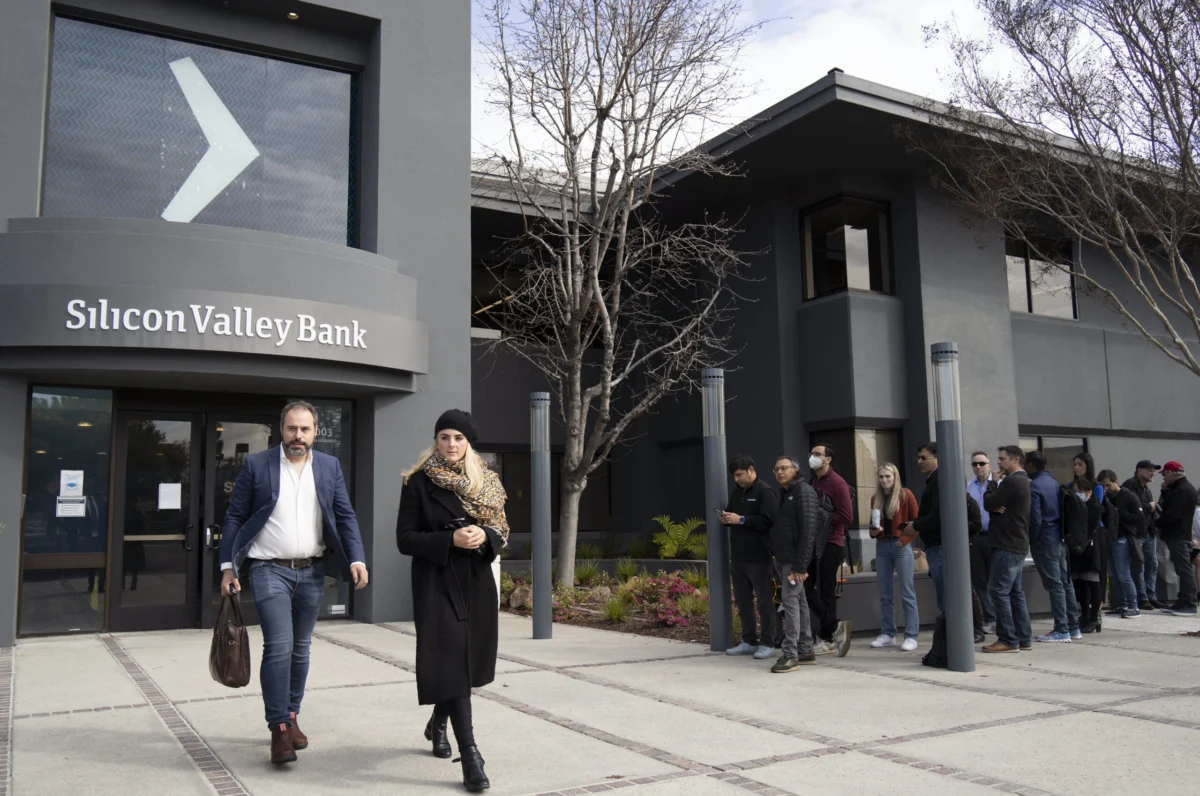
In the turbulent aftermath of the Silicon Valley Bank (SVB) collapse in March 2023, a seismic shift occurred in the specialized world of startup banking, with financial behemoth JPMorgan Chase emerging as an unexpected and aggressive new dominant force. What began as a crisis call to consider acquiring the failing institution quickly transformed into a strategic blueprint for JPMorgan to build its own formidable competitor, fundamentally reshaping its approach to a crucial segment of the innovation economy. This strategic pivot, fueled by an unprecedented influx of new clients seeking stability, has seen the banking giant not only double its startup banking revenue in 2023 but also quadrupling its client base to nearly 12,000, signifying a profound realignment of power within the venture capital and tech startup ecosystem.
The Genesis of a Crisis: SVB’s Sudden Downfall
The events of March 2023 sent shockwaves through the financial world, particularly within the tightly-knit tech and venture capital communities. For decades, Silicon Valley Bank had been the quintessential financial partner for startups, venture capitalists, and private equity firms, offering specialized services, a deep understanding of the tech lifecycle, and a network that fostered innovation. Its collapse, sudden and dramatic, began to unfold with alarming speed.
On March 9, 2023, as customers initiated a frantic withdrawal of deposits, SVB found itself in a liquidity crisis exacerbated by rising interest rates that had devalued its bond portfolio. The bank had invested heavily in long-dated, low-yield U.S. Treasury bonds during a period of ultra-low interest rates. When the Federal Reserve began aggressively raising rates to combat inflation, the market value of these bonds plummeted. Simultaneously, venture capital funding began to slow, leading many startups to draw down their deposits, putting pressure on SVB’s balance sheet. When the bank announced a significant loss from selling bonds and a plan to raise capital, it triggered a classic bank run. Within hours, over $42 billion in deposits were requested for withdrawal.
It was against this backdrop that Doug Petno, co-head of JPMorgan’s commercial and investment bank, received an urgent call from his CEO, Jamie Dimon. Petno, at a retirement party in New York City, was instructed by Dimon to "Get on this call" with regulators. The question posed to JPMorgan was stark: Was the nation’s largest bank interested in acquiring the rapidly failing Silicon Valley Bank?
JPMorgan’s Initial Hesitation and the Flight to Safety
The next day, March 10, 2023, California’s Department of Financial Protection and Innovation seized SVB, appointing the Federal Deposit Insurance Corporation (FDIC) as receiver. This marked the second-largest bank failure in U.S. history at the time, surpassed only by Washington Mutual in 2008. Over that critical weekend, Dimon, Petno, and other JPMorgan leaders meticulously weighed the pros and cons of purchasing SVB. The bank had just seen a staggering $42 billion in deposits evaporate, and the full extent of its liabilities and operational complexities was still unfolding.
Ultimately, JPMorgan decided against acquiring SVB. This decision was influenced not only by the immediate risks associated with the troubled institution but also by an unexpected development: a massive "flight to safety" by SVB’s panicked clientele. Startups and venture capital firms, desperate to protect their funds, began opening accounts with larger, more stable financial institutions. JPMorgan, perceived as a bastion of financial strength, became a primary destination. "We had three years’ worth of incoming clients in a weekend," Petno recounted in an exclusive interview with CNBC. "Onboarding teams were opening up accounts around the clock." This unprecedented surge in new business, driven by the sheer scale and perceived stability of JPMorgan Chase, provided a clear signal: there was an enormous, underserved market segment clamoring for a reliable banking partner.
The federal government’s swift intervention also played a critical role in stabilizing the broader financial system. On March 12, the Treasury Department, Federal Reserve, and FDIC announced that all depositors at SVB (and Signature Bank, which also failed that weekend) would be fully protected, even beyond the standard $250,000 FDIC insurance limit. This unprecedented move, invoked under the "systemic risk exception," aimed to prevent a wider banking panic and reassure the market. While this calmed fears, it did not diminish the desire among startups and VCs for banking relationships with institutions seen as "too big to fail."
Seizing the Opportunity: Building a New Empire
Emboldened by this organic growth and the visible market vacuum, Petno presented a bold vision to JPMorgan’s board: rather than acquiring a distressed asset, the bank should aggressively build its own competitor to the likes of SVB, and increasingly, to newer fintech players such as Brex, Ramp, and Mercury, which had carved out profitable niches serving founders and venture capital investors. "We went to our board and said, ‘there’s a vacuum in the market,’" Petno explained. "At that very moment, everybody saw the opportunity."
JPMorgan’s interest in the startup ecosystem was not entirely new. The bank had initiated a startup banking business in 2016, recognizing the potential of the tech sector. However, its initial approach was cautious, focusing primarily on larger, more mature startups. The bank’s traditional operational model, often requiring physical branch visits and longer onboarding times, proved less appealing to younger, digitally-native founders who expected seamless online experiences. Petno acknowledged this prior limitation, stating, "They want to go to the website to open an account, and if it’s more than 15 minutes, they’re done."
The SVB collapse, however, served as a powerful accelerant. JPMorgan swiftly moved to address its prior shortcomings. A critical step was the recruitment of key talent from SVB itself. John China, then-President of SVB Capital, was brought on board to co-lead JPMorgan’s innovation economy business alongside Andrew Kresse. China’s deep industry knowledge and extensive network within the venture capital community were invaluable assets in building out JPMorgan’s specialized offering.
The momentum continued. By late April 2023, just weeks after the SVB crisis, JPMorgan found itself in another acquisition scenario, this time for First Republic Bank. First Republic, another California-based institution, had also catered to the tech community and high-net-worth individuals, experiencing its own run on deposits in the wake of SVB’s failure. This time, JPMorgan placed the winning bid, acquiring First Republic and its valuable client base and banking operations. This acquisition provided JPMorgan with a significant boost, consolidating its gains in the tech and wealth management sectors and further integrating specialized services into its broader platform.
With fresh learnings from the SVB aftermath and the strategic integration of First Republic’s operations, JPMorgan’s startup banking division experienced explosive growth. The company reported doubling its revenue from startup banking in 2023. The client base quadrupled to nearly 12,000, supported by a dedicated team of 550 bankers across both U.S. coasts. These bankers leverage resources from various parts of the vast JPMorgan Chase enterprise, offering comprehensive services that span private banking for founders and VC investors, commercial banking for the startups themselves, and specialized services for venture capital funds.
Beyond Deposits: A Strategic Imperative for Tech Insights
For a financial giant like JPMorgan Chase, with over $180 billion in revenue last year and a tech budget approaching $20 billion this year, expanding into startup banking is about more than just gaining deposits or generating fees. It’s a critical element of its long-term growth strategy and, more profoundly, a means to stay intimately connected to the cutting edge of technological development.
JPMorgan aims not only to serve startup clients and VC investors better but also to learn from them. The firm maintains a keen eye on Silicon Valley startups for innovative solutions to its own complex challenges, ranging from advanced cybersecurity protocols to the nascent field of quantum computing. This symbiotic relationship allows JPMorgan to identify emerging technologies and business models that could either disrupt or enhance its own operations.
Petno illustrated this point by describing how JPMorgan proactively investigates when a client announces AI-related cutbacks. Teams of bankers are dispatched to understand how these clients are implementing new AI agents and optimizing operations. While the headline often points to AI-driven layoffs, Petno noted that often, other factors like prior over-hiring and inefficient processes account for a significant portion of the changes. This direct engagement provides JPMorgan with real-time, practical insights into the evolving landscape of enterprise technology adoption and its impact on workforce dynamics.
The Vision: A One-Stop Shop for the Innovation Economy
JPMorgan’s ultimate vision is to become the indispensable "one-stop shop" for founders throughout their entire entrepreneurial journey. This encompasses everything from providing core bank accounts and treasury services to offering lucrative investment banking advice, facilitating international expansion, and supporting them from the initial seed funding rounds all the way through to an initial public offering (IPO) and beyond. "Once you’re onboarded, you can never outgrow JPMorgan, from unicorn all the way to a Magnificent 7," Petno asserted, highlighting the bank’s ambition to cultivate lifelong relationships with the most successful tech ventures.
This comprehensive approach addresses a key pain point for many startups: the need to consolidate their financial relationships as they scale. By offering a full suite of services – private banking for founders, commercial banking for the company, and fund administration for VCs – JPMorgan seeks to simplify complex financial management for the innovation economy. The bank is also heavily investing in advanced digital banking solutions tailored specifically for startups, recognizing that while the "flight to safety" brought clients in, retention will depend on providing the intuitive, efficient digital tools that modern founders demand. Petno admitted that despite the rapid progress, the firm isn’t fully satisfied with its current digital offerings and is working on a project to "leapfrog competitors."
The competitive landscape in startup banking remains dynamic. While SVB, now owned by First Citizens Bank, continues to operate, other players like Mercury and Ramp (fintech startups themselves) offer agile digital solutions. More traditional banks such as Stifel and Customers Bank also vie for market share. Notably, Capital One acquired Brex’s credit card business for $5.15 billion in January, further underscoring the strategic value financial institutions place on tapping into the startup ecosystem. JPMorgan’s strategy involves identifying promising companies early in their life cycle, mimicking SVB’s original model, to build deep relationships that can evolve into highly profitable partnerships for investment banking and other services as the companies mature.
Broader Implications and Future Outlook
JPMorgan’s aggressive expansion into startup banking has significant implications for both the financial industry and the innovation economy. For the banking sector, it represents a further consolidation of market share among the largest players, particularly in specialized, high-growth segments. The crisis of March 2023 highlighted the importance of scale and stability, leading many startups to reconsider their reliance on smaller, niche banks. This trend could accelerate the shift of valuable tech sector deposits and relationships towards institutions like JPMorgan, which benefit from implicit government backing and robust balance sheets.
For the startup ecosystem, this means greater access to the vast resources and global reach of a megabank. While some in the VC community might lament the loss of SVB’s unique, founder-centric culture, the trade-off is often perceived as enhanced security, broader product offerings, and greater international capabilities. The challenge for JPMorgan will be to maintain the agility and specialized understanding that made SVB so popular, while integrating it into its corporate structure. The hiring of industry veterans like John China is a clear attempt to bridge this cultural gap.
The move also signals JPMorgan’s unwavering commitment to technological leadership. By embedding itself at the heart of the innovation economy, the bank ensures it remains at the forefront of emerging trends, allowing it to adapt its own operations and develop new products and services for a rapidly changing world. The interplay between serving tech clients and leveraging tech insights for its own internal operations creates a powerful virtuous cycle.
In conclusion, the collapse of Silicon Valley Bank was not merely a financial disaster but a pivotal moment that catalyzed a significant strategic reorientation for JPMorgan Chase. What began as an urgent regulatory inquiry transformed into a deliberate, aggressive expansion into the startup banking sector. By leveraging its inherent stability, strategically acquiring assets, and attracting top talent, JPMorgan has rapidly built a formidable presence, positioning itself as the go-to financial partner for the innovation economy. This bold gambit underscores the bank’s long-term vision to not only serve but also deeply integrate with the very companies shaping the future of technology and global commerce. The landscape of startup banking has undeniably been redrawn, with JPMorgan Chase now a central, powerful player.

0 Comments