
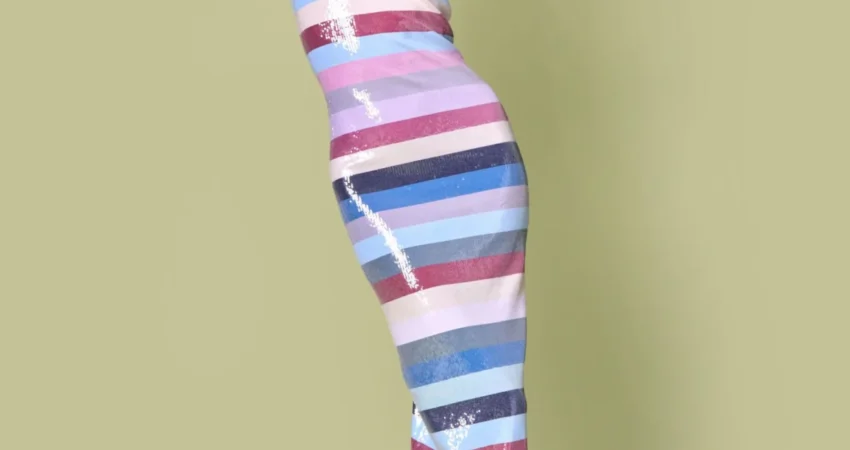
The unveiling of Kate Barton’s Spring 2027 collection marks a pivotal transition for the emerging designer, as she pivots from avant-garde sculptural experimentation toward a more grounded, commercially viable interpretation of contemporary luxury. Traditionally recognized for her high-concept silhouettes and technical ingenuity, Barton’s latest offering reflects a deliberate immersion into the lifestyles of her target demographic. This season, the designer traded the isolation of the studio for the social landscape of Montauk, specifically the Surf Lodge, conducting ethnographic market research to bridge the gap between high-fashion theory and the practical demands of modern women. The result is a collection that retains Barton’s signature technical edge while embracing a new level of approachability, versatility, and wearability that aligns with the current shifts in the global luxury market.
The Montauk Influence and Market Research Methodology
The genesis of the Spring 2027 collection was rooted in direct observation. Barton spent the summer months in Montauk, New York, a location that has evolved into a central hub for influential young professionals and the creative class. By documenting the sartorial choices of women in this high-energy coastal environment, Barton sought to identify the intersection of comfort and confidence. This "boots-on-the-ground" approach allowed the designer to move beyond abstract inspiration and toward a data-driven understanding of consumer behavior.
"I took a lot of photos of people out there, because it’s really helpful to see what women are actually wearing," Barton noted during the collection’s presentation. She emphasized that being a peer to her target audience provides a unique advantage in gauging the emotional resonance of a garment. This self-referential design process—testing what she herself would feel confident wearing—served as the primary filter for the Spring 2027 lineup. The influence of the seaside is not literal or nautical; rather, it manifests in the ease of the silhouettes and the lightness of the textiles, reflecting a lifestyle that demands transitions from casual daytime settings to upscale evening events.
Evolution of the Signature "Liquid Look"
A hallmark of Kate Barton’s design identity has been the "liquid look," a visual effect achieved through innovative textile manipulation and resin-based finishes. In previous seasons, this aesthetic often leaned toward the sculptural and rigid, prioritizing form over movement. However, for Spring 2027, Barton has successfully translated this signature into a more fluid and adaptable format.
The opening look of the show—a multi-colored striped gown—served as the manifesto for this evolution. While the garment featured the high-shine finish that has become Barton’s calling card, it was achieved through the application of clear sequins over a vibrant striped pattern. This technical choice allowed the garment to maintain a "liquid" sheen while offering the flexibility and movement of traditional knitwear or silk. The strategic use of sequins provides a reflective quality that mimics the surface of water, a subtle nod to her Montauk research, without sacrificing the comfort required for a ready-to-wear piece. This shift indicates a sophisticated understanding of how to maintain brand DNA while increasing the commercial viability of high-concept designs.
Strategic Expansion into Outerwear and Versatile Separates
The most significant growth in Barton’s Spring 2027 collection is found in the outerwear and separates categories. Industry analysts have noted that the contemporary luxury sector is increasingly driven by "investment pieces"—garments that offer high utility and can be styled in multiple ways. Barton addressed this demand with a series of light but highly structured jackets characterized by exceptionally sharp collars and precision tailoring.
These jackets are engineered to function as standalone tops when zipped up, or as layering pieces over basic staples like T-shirts. This dual-purpose design reflects a broader industry trend toward "modular dressing," where consumers seek to maximize the utility of high-end purchases. The structural integrity of these pieces suggests a deep investment in pattern-making, ensuring that the garments hold their shape despite their lightweight construction.
Furthermore, the collection saw an expansion of the "Delia" trouser, a silhouette that has become a staple for the brand. For Spring 2027, Barton introduced the Delia in denim and shortened lengths, signaling an entry into the premium denim market. By applying her architectural approach to denim—a fabric typically associated with casual wear—Barton is carving out a niche in the "elevated everyday" space. The inclusion of shorts also suggests a diversification of the product line to accommodate different climates and seasonal needs, a necessary step for any brand looking to scale globally.
Chronology of Development and Brand Growth
The trajectory of the Spring 2027 collection follows a disciplined development timeline that began in the early summer of 2026.
- Phase I: Field Research (June – August 2026): Barton conducted her observational research in Montauk, focusing on the "Surf Lodge" demographic. This period was dedicated to photography, trend mapping, and consumer interviews.
- Phase II: Textile Innovation (September – October 2026): The design team worked on softening the "liquid look." This involved sourcing clear sequins and developing printing techniques for the multi-colored stripes to ensure the visual depth Barton is known for.
- Phase III: Prototyping (November 2026 – January 2027): Focus shifted to the structure of the outerwear and the re-engineering of the Delia trouser. Multiple iterations were produced to find the balance between sharp tailoring and wearable comfort.
- Phase IV: Production and Presentation (February 2027): The final collection was prepared for the Spring 2027 runway, reflecting a more cohesive and market-ready brand identity than previous years.
This timeline illustrates a shift from a purely creative process to a more integrated business model that prioritizes market feedback and product-market fit.
Market Analysis: The Contemporary Luxury Landscape in 2027
Barton’s pivot comes at a time when the contemporary luxury market—defined by price points between mass-market and heritage couture—is experiencing a period of recalibration. In 2027, consumer data indicates a preference for "quiet innovation," where technical prowess is hidden within seemingly simple garments. The global demand for versatile luxury apparel is projected to grow by 5.4% annually through 2030, driven by younger affluent consumers who value craftsmanship but reject the stiffness of traditional formalwear.
By moving outside her comfort zone and embracing a more accessible ready-to-wear format, Barton is positioning her brand to capture this growing segment. The "influenced" state Barton describes herself in suggests a designer who is no longer working in a vacuum but is instead responding to the socio-economic realities of her clientele. The ability to offer a "liquid look" that can be worn to a dinner party or a structured jacket that works in a professional setting allows the brand to compete with established contemporary powerhouses.
Industry Response and Implications
While official retail orders are still being finalized, early reactions from fashion buyers and industry consultants have been positive. The consensus is that Barton has successfully "humanized" her brand. Where previous collections were often viewed as editorial or "museum pieces," the Spring 2027 collection is seen as a wardrobe-builder.
The implication for the Kate Barton brand is a broader reach. The introduction of denim and versatile outerwear lowers the barrier to entry for new customers who may have found her previous sculptural work too intimidating. Furthermore, the emphasis on "confidence" and "wearability" aligns the brand with the current cultural emphasis on authentic self-expression. By proving that she can apply her rigorous technical standards to a T-shirt and jacket ensemble as effectively as a gala gown, Barton has demonstrated the range necessary for long-term survival in a volatile industry.
Conclusion: A New Chapter for Kate Barton
The Spring 2027 collection represents more than just a seasonal update; it is a strategic realignment of the Kate Barton brand. By synthesizing high-tech craftsmanship with the relaxed, influential aesthetic of the American coast, Barton has created a blueprint for modern luxury. The designer’s willingness to step into the role of a researcher and consumer advocate has resulted in her most cohesive and refreshing collection to date.
As the fashion industry continues to grapple with the balance between art and commerce, Kate Barton’s latest work provides a compelling case study on how to evolve without losing one’s soul. Whether through a clear-sequined gown that catches the light of a seaside sunset or a sharp-collared jacket designed for the rigors of city life, Barton is proving that inspiration can indeed be found in the most practical of places—if one is willing to look. The journey from the studio to the shore has not only influenced the designer; it has fundamentally strengthened the brand’s foundation for the years to come.

0 Comments