
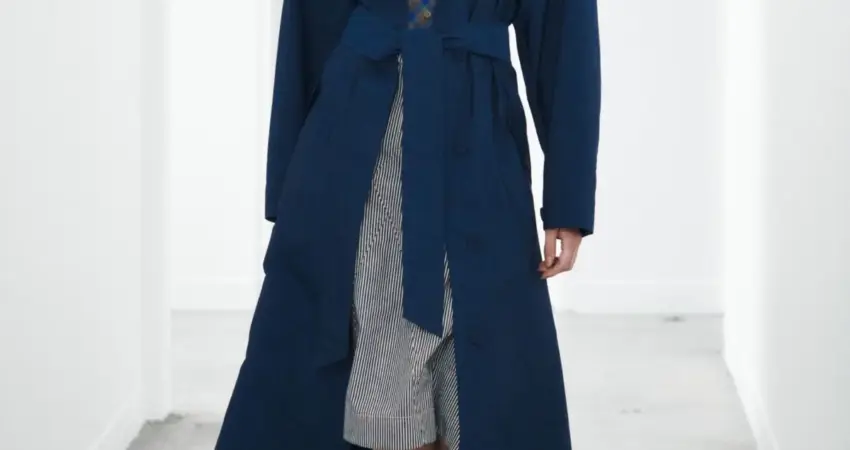
Australian designer Lee Mathews has unveiled her Spring 2027 collection through a conceptual "runway" lookbook, a strategic departure from traditional static photography that emphasizes the fluid movement of garments on the human form. Staged within the industrial confines of a warehouse near her inner-Sydney studio, the presentation serves as a response to the perennial design challenge of bridging the gap between how a garment appears on a hanger and how it functions in motion. Scheduled for a retail launch in January, the collection arrives at a pivotal moment for the Australian fashion industry, which is increasingly navigating the dual pressures of environmental change and a shifting consumer appetite for archival-inspired, long-lasting investment pieces.
The decision to utilize a warehouse space to simulate a runway environment reflects Mathews’ career-long contemplation of garment utility. By capturing models walking in her signature breezy summer silhouettes, the designer aims to provide a more authentic representation of the "lived-in" experience of her clothing. This move away from the high-gloss, static lookbook format aligns with a broader industry trend toward transparency and realism, where consumers seek to understand the drape and breathability of fabrics before committing to high-value purchases.
The Archival Influence and the SWOP Partnership
The genesis of the Spring 2027 collection is deeply rooted in a recent period of retrospection for Mathews, who has spent 27 years at the helm of her eponymous label. A significant catalyst for this nostalgic direction was a collaboration with SWOP, a prominent Australian recycled fashion chain. During a visit to the chain’s Brisbane location, Mathews encountered a curated selection of her own designs spanning two decades. The experience of seeing pieces from the late 1990s and early 2000s integrated seamlessly into a contemporary retail environment served as a profound realization for the designer regarding the cyclical nature of style and the inherent longevity of her aesthetic.
"It was such a shock, because SWOP is such a contemporary environment, a cool store, and all that stuff looked like it could be in any collection we did now," Mathews noted during the presentation. This encounter prompted a shift in her creative philosophy for the season, leading her to question the necessity of total reinvention. Instead of "erasing" the past to facilitate the new, Mathews opted to revisit and refine successful archival silhouettes, acknowledging that many well-crafted designs deserve more than a single seasonal outing.
Design Philosophy: Refinement Over Reinvention
The Spring 2027 collection is characterized by what Mathews describes as a "consistent source," ensuring that new pieces can be effortlessly integrated with items from previous years. This approach champions the concept of the "modular wardrobe," a sustainable alternative to the rapid turnover of trend-based fashion. The palette for this season is notably more restrained than recent collections, favoring understated tones of soft blue and buttery yellow over vibrant, high-saturation hues.
Despite the focus on nostalgia, the collection is not a mere reproduction of past work. Mathews has applied the benefit of hindsight to improve upon historical designs. This iterative process involves technical updates such as modifying sleeve proportions, updating collar shapes, and enhancing the structural integrity of lace slips—a category specifically requested by her long-term clientele. By blending the charm of the past with modern technical improvements, the designer addresses the specific needs of a customer base that values both sentimentality and functional excellence.
Climate Context and Market Demand for Summer Staples
The timing of the collection’s release in January coincides with the peak of the Australian summer, a period that is increasingly defined by extreme heat and humidity. Meteorologists and environmental analysts have noted a globally concerning pattern of rising temperatures, which has direct implications for the textile and apparel sectors. Mathews’ expertise in creating "airy, investment summer dresses" positions her brand to meet a growing demand for garments that offer thermal comfort without sacrificing professional or social elegance.
Data from the Australian Bureau of Meteorology indicates a consistent upward trend in summer mean temperatures over the last decade, leading to a measurable shift in consumer behavior. Retail analysts suggest that shoppers are increasingly prioritizing natural fibers like cotton and linen—materials that feature prominently in Mathews’ latest work—due to their superior moisture-wicking and breathability properties. The Spring 2027 collection’s focus on lightweight cottons and delicate lace is a strategic response to these environmental realities.
Economic Implications of the Circular Fashion Movement
The success of Mathews’ archival pieces in the resale market, as evidenced by the SWOP partnership, highlights the growing economic significance of the circular economy in Australia. According to industry reports, the global secondhand apparel market is projected to grow significantly faster than the broader retail clothing sector over the next five years. For established designers like Mathews, high resale value serves as a testament to brand equity and manufacturing quality.
When garments retain their relevance and physical integrity for over 20 years, they transition from "disposable fashion" to "assets." This shift is particularly important for the Australian mid-to-high-end market, where local designers must compete with international luxury houses. By leaning into her brand’s history, Mathews is reinforcing the idea that her clothing is a durable investment, a narrative that resonates with the current "quiet luxury" movement which prioritizes craftsmanship and timelessness over conspicuous branding.
Chronology of the Brand’s Evolution
To understand the significance of the Spring 2027 collection, it is essential to view it within the timeline of Lee Mathews’ nearly three-decade career:
- 1997-1998: Lee Mathews founds her label in Sydney, focusing on natural fibers and artistic prints.
- Early 2000s: The brand gains a reputation for its "slip dress" aesthetic and becomes a staple of the Australian boutique scene.
- 2010s: Expansion into international markets, including partnerships with major global luxury e-commerce platforms.
- 2023-2025: A period of experimentation with more vibrant colors and voluminous silhouettes.
- 2026: The partnership with SWOP triggers a return to archival study.
- January 2027: The scheduled release of the Spring 2027 collection, marking a full-circle return to the brand’s core identity of utility and understated elegance.
Industry Reactions and Analyst Perspectives
While official statements from retail partners are pending the January launch, fashion historians and industry analysts have praised the "warehouse runway" approach as a pragmatic solution to the limitations of digital lookbooks. Analysts point out that for a brand whose value proposition is based on the "feel" and "flow" of fabric, static imagery often fails to communicate the technical merit of the design.
"Lee Mathews has always been a designer’s designer," says one Sydney-based fashion consultant. "Her decision to revisit the past isn’t a sign of creative exhaustion; it’s a sign of maturity. In an era where we are overwhelmed by ‘newness,’ there is something incredibly radical about a designer saying, ‘we did this right the first time, let’s just make it better.’"
Furthermore, the emphasis on utility—specifically the ability to mix new pieces with items purchased a decade ago—is being viewed as a masterclass in brand loyalty. By ensuring compatibility across collections, Mathews creates a closed-loop ecosystem for her customers, encouraging them to remain within the brand’s universe rather than seeking out fleeting trends elsewhere.
Broader Impact on the Australian Fashion Landscape
The Spring 2027 collection by Lee Mathews serves as a case study for the future of the Australian fashion industry. As the sector faces increasing scrutiny regarding its environmental footprint, the "design for longevity" model championed by Mathews provides a viable path forward. It suggests that the future of fashion may not lie in the constant production of the "new," but in the thoughtful curation and refinement of the "enduring."
The collection also underscores the importance of the local Sydney creative ecosystem. By staging her presentation in a warehouse near her studio and drawing inspiration from local resale culture, Mathews maintains a strong connection to her roots. This localized approach, combined with a global perspective on quality and sustainability, ensures that the brand remains a lighthouse for Australian design on the international stage.
As January approaches, the industry will be watching closely to see how consumers respond to this blend of nostalgia and utility. If the success of the SWOP partnership is any indication, the hip cognoscenti and long-time devotees alike are ready to embrace the return of the lace slip and the timeless cotton dress, proving that in the world of Lee Mathews, the past is never truly behind us—it is simply waiting for its next outing.

0 Comments