
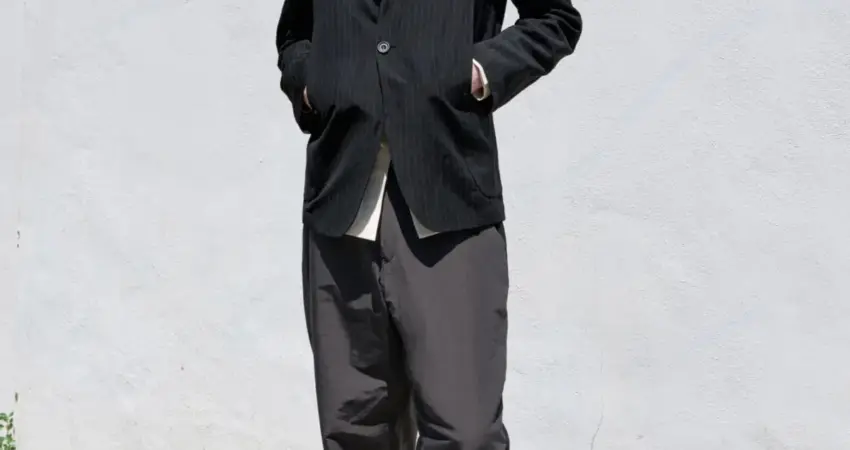
The emergence of Luke Derrick as a pivotal figure in the contemporary London fashion scene marks a significant shift in how British heritage is interpreted for a global audience. Operating from his studio in East London, Derrick has developed a design language that reconciles the rigid traditions of Savile Row with the fluid, often chaotic reality of modern British life. His latest Spring 2027 collection serves as a sophisticated exploration of this dichotomy, moving beyond the binary of "heritage" versus "subversion" to find a middle ground that he describes as "reactive" to the current state of the nation. By drawing on his personal history and professional background at prestigious houses such as Brioni and Dunhill, Derrick has crafted a narrative that is as much about sociology as it is about garment construction.
The Evolution of the Derrick Aesthetic: From Savile Row to East London
Luke Derrick’s career trajectory provides the necessary context for his unique approach to tailoring. Having spent formative years at Brioni, an Italian house synonymous with power suiting, and Dunhill, the quintessential British luxury brand, Derrick acquired a deep technical understanding of what he calls "Capital H Heritage." These institutions represent a version of Britain that is often frozen in time—a "time machine worship," as the designer notes—which caters to a specific, often international, idea of Britishness.
However, Derrick’s move to establish his own label in East London allowed him to pivot toward a more observational style. His work seeks to answer a fundamental question: how do people actually wear clothes in Britain today? The result is a brand that rejects the "shred it to bits" mentality of hyper-experimental avant-garde designers in favor of a shrewd, subtle subversion. This "improvisational" approach to luxury has become his signature, characterized by high-level construction applied to garments that feel lived-in and authentic.
Spring 2027: An Observational Study of Oxford and Urban Life
The Spring 2027 collection represents Derrick’s most playful and personal output to date. The primary inspiration stems from his upbringing in Oxford, a city defined by the stark contrast between its elite university culture and its everyday urban reality. Derrick observed the way students and residents moved through the city’s parks—often in a state of partial dress, blending formal academic or athletic wear with casual staples.
This "disheveled city slicker" aesthetic is realized through a series of unconventional pairings. One standout look features a buttercup-yellow mandarin collar jacket paired with a pale yellow neckerchief, jersey shorts, and bright yellow cycling shorts layered underneath. Another ensemble pairs a structured, purple double-breasted jacket with slate-gray wide-leg trousers. The trousers themselves are a feat of technical design, featuring a liquid-like drape with seams that have been spun around to the front of the leg, creating a silhouette that feels both intentional and accidental.
The collection’s lookbook further emphasizes this "everyday" quality. Shot during a peak summer heatwave in June, the images capture models squinting in the sun and adjusting their layers. This choice of art direction reinforces Derrick’s commitment to realism, moving away from the sterilized environment of the traditional runway to showcase how clothes react to the environment and the wearer’s movements.
The Sociological Underpinnings: Class, Masculinity, and Improvisation
At the heart of Derrick’s work is an interrogation of British social paradigms, specifically the concept of class. In previous seasons, the designer drew inspiration from the multiculturalism of East London, but for Spring 2027, he turned his attention to the "thorniest" of British subjects. The collection features what Derrick calls "things borrowed, things shared, things appropriated"—a reference to the way clothing is passed down or repurposed across social strata.
A key example is the use of rugby shorts styled against formal suit jackets, or oversized tuxedo shirts that appear as if they were "inherited from a father." This "high-low" energy is perhaps best encapsulated in a pair of powder-pink sweatpants featuring a hoodie-style pocket positioned above the waistband. This detail, inspired by the formal cummerbund, transforms a piece of loungewear into a garment that speaks to what Derrick describes as an "arrogant, ‘I didn’t even try’ culture." This specific type of nonchalance is a hallmark of British style, where the appearance of effortlessness is often a carefully constructed social signal.
Furthermore, the collection explores the evolving state of masculinity through the use of hyper-short layered shorts. Derrick’s fascination with this garment lies in its dual identity; he notes that short shorts have become "both the straightest and queerest thing ever," equally at home on a rugby pitch in the shires as they are on a high-fashion runway. This exploration of gender and social performance highlights Derrick’s ability to use fashion as a tool for cultural commentary.
Technical Innovation and the "Adaptive Mindset"
Despite the casual appearance of many pieces, the technical execution remains rooted in the standards of luxury tailoring. Derrick’s "adaptive mindset" is reflected in the way he handles proportions and patterns. For instance, the pattern for the collection’s shorts was adapted from a pair borrowed from a friend, while a T-shirt design was based on an old training top that the designer had outgrown, resulting in sleeves that sit at an intentional half-length.
This focus on improvisation over traditional luxury is a deliberate choice. "I don’t think we’re a country of luxury; I think we’re a country of improvisation," Derrick stated. This philosophy manifests in garments that look as though they have been modified to fit a specific moment or weather condition—a reflection of the British tendency to "remove one thing too many" when the sun finally emerges.
Market Positioning and Global Expansion
While Derrick’s inspirations are deeply rooted in British culture, his business is finding significant resonance in international markets, particularly Japan. The Japanese market has a long-standing fascination with "skewed Britishisms" and the "Ametora" (American Traditional) style, which often involves a meticulous reinterpretation of Western heritage. Derrick’s ability to provide an authentic, yet slightly subversive, take on British tailoring has made his brand a core interest for Japanese retailers and consumers who value both craftsmanship and narrative.
The growth of the Luke Derrick brand comes at a time when the global menswear market is undergoing a transition. According to industry data, the men’s luxury apparel segment is projected to grow steadily, with an increasing consumer preference for "versatile luxury"—pieces that can transition between formal and casual settings. Derrick’s Spring 2027 collection, with its blend of structured tailoring and athletic elements, is perfectly positioned to capitalize on this trend.
Timeline of the Luke Derrick Brand Evolution
- Early Career: Luke Derrick hones his skills at Savile Row-adjacent houses, including Brioni and Dunhill, developing a mastery of traditional tailoring.
- Brand Launch: Derrick establishes his eponymous label in East London, focusing on an "observational" approach to menswear.
- Early Collections: Focus on the multicultural identity of East London and the intersection of streetwear and tailoring.
- Spring 2027 Collection: A pivot toward Oxford-inspired aesthetics and a deeper exploration of British class dynamics and "improvisational" style.
- International Growth: Establishment of a strong foothold in the Japanese market, serving as a primary engine for business expansion.
Industry Implications and Future Outlook
The success of Luke Derrick’s Spring 2027 collection suggests a growing appetite for fashion that feels "lived-in" and intellectually grounded. By moving away from the "time machine worship" of traditional heritage brands, Derrick is offering a new template for British menswear—one that is pragmatic, reactive, and unapologetically observant of the country’s social complexities.
Analysts suggest that Derrick’s approach may influence larger heritage brands to rethink their own relationship with history. As consumers increasingly seek authenticity over artifice, the "alchemical ability" to blend high-end construction with a "puckish," improvisational note becomes a significant competitive advantage. For Derrick, the goal remains clear: to continue creating a uniform for the modern individual that is as functional as it is culturally resonant.
As the fashion industry continues to navigate the balance between tradition and innovation, Luke Derrick stands as a testament to the power of observation. His Spring 2027 collection is not just a display of clothing, but a reflection of a nation in flux, captured through the lens of a designer who has finally "gotten over himself" to embrace the beauty of the everyday. With his business expanding and his creative voice becoming more distinct, Derrick is poised to remain a central figure in the evolution of British style for years to come.

0 Comments