
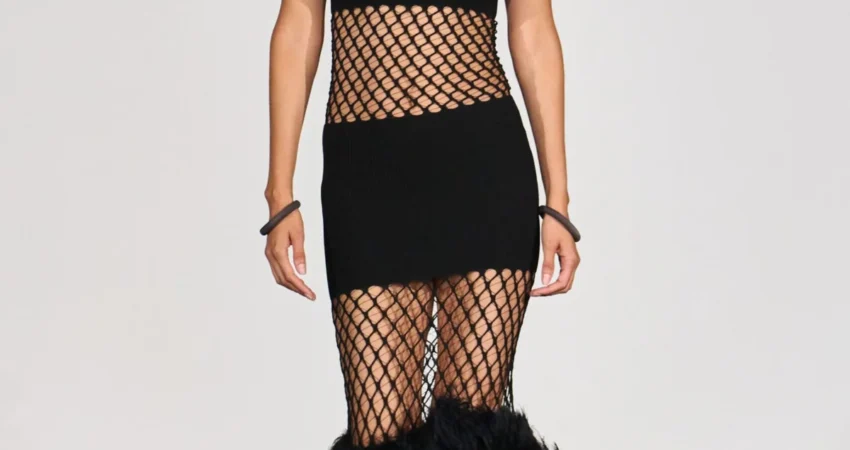
The fashion industry is currently witnessing a definitive pivot away from the voluminous, oversized silhouettes that dominated the previous decade, moving instead toward a refined emphasis on the human form. While many contemporary designers are navigating this "figure-skimming" territory for the first time, Mark Fast continues to operate within a realm he has pioneered since his professional debut. At a recent preview of his latest spring collection, the London-based designer revisited the foundational principles of his brand, citing the enduring influence of his late mentor at Central Saint Martins, Professor Louise Wilson. Fast recounted a pivotal moment in his education when Wilson encouraged him to embrace his natural inclination toward the body-conscious aesthetic, famously predicting that the industry would consistently seek him out for the definitive "bodycon dress." Nearly twenty years after that initial guidance, Fast’s latest offering serves as a sophisticated reaffirmation of that original passion, blending high-concept knitwear engineering with a modern, commercial sensibility.
Historical Context and the Legacy of the Bodycon Silhouette
To understand the significance of Mark Fast’s latest collection, one must examine the trajectory of the body-conscious movement within the broader history of Western fashion. The term "bodycon"—a portmanteau of "body-conscious"—gained prominence in the late 1980s and early 1990s through the work of designers like Azzedine Alaïa and Hervé Léger. These designers utilized stretch fabrics and bandage-style construction to celebrate and accentuate the female form, moving away from the padded shoulders and boxy structures of the mid-century.
Mark Fast entered this landscape in the late 2000s, bringing a unique, craft-based approach to the genre. Unlike his predecessors who often relied on synthetic stretch fabrics, Fast utilized intricate knitwear techniques to create tension and support. His debut at London Fashion Week in 2008 was a watershed moment, showcasing that knitwear could be both avant-garde and intensely provocative. The influence of Louise Wilson, the legendary director of the MA Fashion course at Central Saint Martins, cannot be overstated in this context. Wilson was known for pushing students to find their singular "voice" and to commit to it with unwavering technical precision. By adhering to her advice to "stay true to what he loves," Fast has maintained a consistent brand identity throughout various market shifts, from the minimalism of the 2010s to the current resurgence of Y2K-inspired aesthetics.
Artistic Inspiration: The Desert Palette and Veruschka
The aesthetic foundation of the Spring collection draws heavily from the archives of 1960s and 70s fashion photography, specifically the work of Franco Rubartelli. Fast cited Rubartelli’s iconic photographs of the model Veruschka as the primary inspiration for the collection’s visual language. These images, often set against stark, arid desert landscapes, are characterized by a sense of raw, uninhibited elegance and a palette of "dusty" hues.
Reflecting this inspiration, the collection utilizes a sophisticated array of powdered tones. The color story moves through shades of terracotta, sand, muted ochre, and sun-bleached pastels. These colors are not merely applied to the surface but are integrated into the very yarns used for the knitwear. Fast’s choice of a "desert-hued palette" serves to soften the inherent intensity of the bodycon silhouette, providing a naturalistic counterpoint to the precision of the construction. The use of these tones also aligns with current consumer preferences for earthy, versatile neutrals that transition easily between different lighting environments and social settings.
Technical Innovation in Knitwear Engineering
The core of the Mark Fast brand lies in the technical complexity of its production. For the Spring collection, the designer showcased a variety of knitting techniques that range from delicate, web-like structures to dense, structural weaves.
- Caged and Knotted Webs: Many of the signature pieces featured yarns that were knotted and knitted into expansive "webs." These designs splayed across the décolletages and torsos of models, creating a visual interplay between the garment and the skin. These "caged" knits represent a high level of manual dexterity and machine programming, requiring precise tension control to ensure the garment maintains its shape while under the stress of being worn.
- Intricate Miniatures: More tightly woven techniques were applied to minidresses and miniskirts. A notable feature of these pieces was the "splicing" at the sides, a design choice that adds a sense of movement and ventilation. The hemlines often featured oscillating, fringed edges, a detail that references the nomadic, desert-inspired theme while providing a tactile, rhythmic quality to the garments as the wearer moves.
- Beaded Armor: A standout technical development in this collection was the introduction of a new threading technique. Fast and his team meticulously threaded beads onto individual rows of the knit. This addition serves a dual purpose: it adds a significant weight to the otherwise "barely-there" stretch knits and provides a structural rigidity that Fast likened to "armor." This evolution from "second skin" to "armor" signifies a shift in the brand’s narrative, moving from pure sensuality to a sense of protective empowerment.
Commercial Diversification and Market Positioning
While the avant-garde knitwear remains the focal point, Mark Fast has strategically expanded the collection to include more accessible, "down-to-earth" elements. This commercial pivot is essential for maintaining a sustainable business model in the modern luxury market.
The Spring collection introduced a range of jersey pieces and low-slung denim "jorts" (denim shorts). These items are designed to appeal to the "commercial customer" who may admire the brand’s high-fashion knitwear but requires more practical options for daily wear. The inclusion of denim—a staple of street style—bridges the gap between the runway and the reality of contemporary urban wardrobes. By pairing high-concept knits with casual denim, Fast creates a "high-low" aesthetic that is currently trending among Gen Z and Millennial luxury consumers.
During the preview, Fast summarized the collection with a succinct observation: "Everything is tight." This clarity of vision is a deliberate move to capitalize on the "New Sexy" trend that has dominated the runways of Milan, Paris, and London over the last two seasons. Brands like Nensi Dojaka and Mugler have paved the way for a renewed interest in transparency and tight silhouettes, and Fast’s established expertise in this area positions him as a veteran leader rather than a follower of the trend.
Industry Data and the Global Knitwear Market
The strategic focus on high-quality knitwear is supported by robust market data. According to industry reports, the global knitwear market was valued at approximately $644.29 billion in 2021 and is projected to reach over $1.6 trillion by 2030, growing at a compound annual growth rate (CAGR) of 12.10%. This growth is driven by a consumer shift toward garments that offer both comfort and aesthetic appeal—a niche that Mark Fast’s stretch-knit technology fills perfectly.
Furthermore, the "body-positive" movement has evolved into a "body-celebratory" phase in fashion. While the industry was once criticized for a narrow definition of the body, contemporary bodycon designers are increasingly showcasing their work on a diverse range of body types. Although Fast’s runway presentations traditionally feature high-fashion models, the inherent stretch and adaptability of his knitwear allow the brand to cater to a wider demographic than traditional, non-stretch couture.
Chronology of the Collection’s Development
The development of the Spring collection followed a rigorous timeline, beginning approximately six months prior to the showcase:
- Phase 1: Research and Conceptualization: Fast revisited the works of Franco Rubartelli and studied the structural properties of desert flora and fauna. This period involved selecting the specific "powdered-tone" yarns.
- Phase 2: Technical Prototyping: The studio worked on the "beaded armor" technique, experimenting with the weight of various beads and how they interacted with the tension of the stretch yarns.
- Phase 3: Sample Production: The "caged" knits and "second skin" panels were produced. This stage required intensive quality control to ensure the "carefully-placed panels" provided the necessary coverage while maintaining the intended aesthetic.
- Phase 4: Commercial Integration: The design team developed the denim and jersey components, ensuring they complemented the color palette and "tight" fit of the primary knitwear line.
- Phase 5: The Preview and Showcase: The collection was presented to critics and buyers, emphasizing the "craft" behind the garments.
Broader Implications for the Fashion Landscape
Mark Fast’s commitment to his original vision carries significant implications for the future of British fashion. In an era characterized by rapid trend cycles and "fast fashion" mimicry, Fast’s emphasis on "the craft" acts as a bulwark against the homogenization of design. His work demonstrates that the bodycon silhouette is not merely a passing trend but a technical discipline that requires years of mastery.
The collection also highlights the ongoing relevance of the "London School" of fashion design—a pedagogical approach championed by Louise Wilson that prioritizes individual identity and technical rigor. As London continues to compete with Paris and Milan, designers like Fast, who maintain a clear, recognizable signature while adapting to commercial realities, are vital to the city’s reputation as a hub of innovation.
The move toward "second skin" dressing also reflects a broader cultural shift. As digital and physical realities continue to blur, there is a growing desire for clothing that feels like an extension of the self. Fast’s description of his knits as "armor" suggests a psychological component to modern dressing—clothing that not only reveals the body but also protects and empowers the wearer in an increasingly complex social environment.
In conclusion, Mark Fast’s Spring collection is more than a seasonal update; it is a testament to the power of artistic consistency and technical excellence. By staying true to the advice given to him at the start of his career, Fast has built a brand that remains at the forefront of the body-conscious movement, proving that in the world of high fashion, some things—like the allure of a perfectly engineered knit—never go out of style. As the industry moves further into this era of figure-skimming silhouettes, Fast’s role as a pioneer and master of the craft is more secure than ever.

0 Comments