
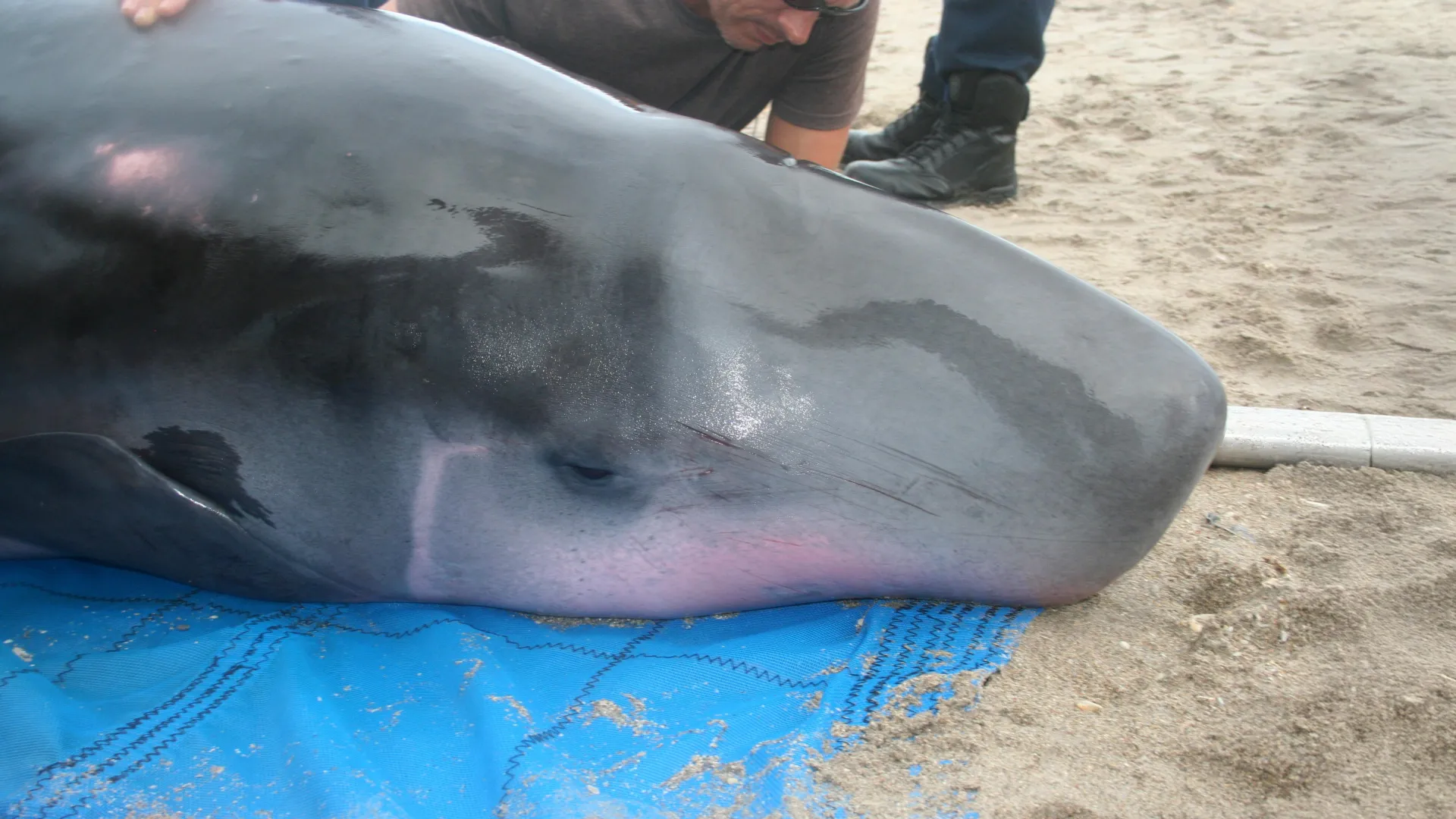
Pygmy sperm whales (Kogia breviceps) are among the ocean’s most enigmatic inhabitants, their lives largely shrouded in mystery due to their deep-sea dwelling habits, small group formations, and shy nature. These elusive marine mammals spend their existence far from the coast, venturing into the abyss to hunt squid and fish. Their quiet, secretive demeanor and infrequent appearances at the surface have historically presented scientists with significant challenges in observing them in their natural habitat. Consequently, much of our understanding of these fascinating creatures has been pieced together from unfortunate encounters: the carcasses of whales that have washed ashore. Strandings are particularly common along the southeastern United States coastline, where this species appears with a greater frequency than almost any other large marine mammal, offering a somber yet invaluable window into their biology and health.
Stranded Whales Offer Crucial Insights into Hidden Health Threats
The examination of stranded pygmy sperm whales has consistently revealed a recurring set of medical issues, with stomach ulcers emerging as a particularly prevalent concern. These ulcers have, in many instances, been linked to Helicobacter, a diverse group of bacteria known to colonize the stomachs and intestines of a wide array of animals, including humans and, as this recent research highlights, marine mammals.
A comprehensive, multi-year investigation conducted by researchers at Florida Atlantic University’s Harbor Branch Oceanographic Institute, in collaboration with other esteemed institutions, has shed new light on this phenomenon. By meticulously reviewing over two decades of stranding records and analyzing preserved tissue samples, scientists have identified three distinct Helicobacter genotypes that had never been documented in scientific literature before.
This groundbreaking study, published in the prestigious Journal of Wildlife Diseases, marks the first confirmed discovery of these novel bacterial genotypes specifically within pygmy sperm whales. The researchers have aptly named these new entities Kogia Helicobacter 1, Kogia Helicobacter 2, and Kogia Helicobacter 3. Beyond providing crucial new insights into the health of this elusive whale species, these findings prompt broader, more profound questions regarding the prevalence and impact of bacterial infections on marine wildlife and the overall health of our oceans.
"Helicobacter bacteria have long been recognized for their association with gastrointestinal disorders in humans and other animals, including chronic gastritis, ulcers, and even the development of gastric cancer," stated Dr. Annie Page, the study’s senior author, an associate research professor, and a clinical veterinarian at FAU Harbor Branch. "To uncover novel strains of these bacteria within a deep-diving whale species is not only intriguing but also underscores the vast unknown biodiversity within marine ecosystems."
Unveiling Three Novel Bacterial Genotypes
The extensive research project, spanning from 1999 through 2020, saw Florida Atlantic University’s Harbor Branch Oceanographic Institute respond to a total of 59 pygmy sperm whale strandings. Rigorous post-mortem examinations were successfully completed on approximately 80% of these stranded animals, providing a substantial dataset for scientific analysis.
During these examinations, scientists identified spiral-shaped, or "spirilliform," bacteria within the stomach tissues of four individual whales. Subsequent, in-depth reexamination of these preserved samples was undertaken using advanced techniques, including histopathology (the study of microscopic tissue changes), molecular testing, and DNA sequencing. This meticulous analysis ultimately revealed the presence of several previously unknown Helicobacter genotypes.
"Two of the newly identified genotypes, Kogia Helicobacter 1 and Kogia Helicobacter 2, exhibit genetic similarities to known Helicobacter species that have been previously identified in other cetacean species, such as dolphins and porpoises, as well as in humans," explained Wendy Marks, the corresponding author of the study and a research coordinator within the marine wildlife veterinary medicine and research lab at FAU Harbor Branch. "However, Kogia Helicobacter 3 represents a more divergent lineage, which strongly suggests that the ocean harbors a far greater number of undiscovered bacteria than we currently realize."
Further analysis revealed that both Kogia Helicobacter 1 and Kogia Helicobacter 3 were found concurrently within the forestomach tissue of a single whale, indicating the potential for co-infection.
Evidence of Gastrointestinal Damage in Infected Whales
Crucially, each of the four whales that tested positive for the presence of these novel Helicobacter genotypes also exhibited clear and significant signs of gastrointestinal disease. This correlation provides a compelling link between the bacterial presence and the observable health problems in these animals.
"All four whales that tested positive for Helicobacter displayed clear indications of gastric pathology," Dr. Page confirmed. "We observed evidence of gastritis, gastric ulcers, fibrosis – which is the scarring of tissue – and nematode infestations. In one particular case, colitis, an inflammation of the colon, was also present, suggesting that the bacterial infection may not be confined solely to the stomach. While Helicobacter was not definitively identified as the direct cause of death in any of these individual whales, the presence of these lesions raises significant questions about its role in contributing to gastrointestinal disease."
The research team was careful not to definitively conclude that Helicobacter was the sole or primary cause of death for these whales. However, the consistent observation of inflammation, ulceration, tissue scarring, and other digestive abnormalities across multiple infected individuals strongly suggests that these bacteria could play a significant role in the development of chronic illness, potentially weakening the animals and making them more susceptible to other stressors or fatal conditions.
Helicobacter bacteria were first reported in marine mammals in the year 2000. Since that initial discovery, related bacterial species have been identified in a growing number of cetacean species across the globe. In some affected animals, infection has been associated with a range of debilitating symptoms, including lethargy, loss of appetite, regurgitation, stomach ulcers, and chronic inflammation. Notably, many of these symptoms mirror those observed in humans suffering from Helicobacter-related gastrointestinal ailments, highlighting a potential shared vulnerability across species.
Potential Implications for Vulnerable Whale Populations
The discovery of these novel Helicobacter genotypes and their association with gastrointestinal pathology in pygmy sperm whales carries significant implications for the health and conservation of these and potentially other marine mammal populations.
"Whales, much like humans, appear to be susceptible to certain microbial infections that we are only beginning to understand," emphasized Marks. "If chronic Helicobacter infections are indeed contributing to health issues in these animals, it could have profound implications not only for the well-being of individual whales but also for the long-term viability of entire populations. This is particularly concerning for species that are already considered vulnerable due to other environmental pressures or limited population sizes."
Given the inherent difficulties in studying pygmy sperm whales at sea, researchers still face considerable challenges in determining the widespread prevalence of these newly identified bacteria. Furthermore, understanding the long-term effects of these infections on the animals’ health and behavior remains an ongoing research question. Additional, more extensive testing will be essential to definitively ascertain whether these infections contribute significantly to illness, increase the likelihood of strandings, or impact the overall health and stability of pygmy sperm whale populations.
This complex and crucial research project represented a significant collaborative effort, bringing together a diverse team of experts from Florida Atlantic University’s Harbor Branch Oceanographic Institute, the University of Florida’s College of Veterinary Medicine, Colorado State University, and Marine Mammal Pathology Services. Such interdisciplinary cooperation is vital for tackling the multifaceted challenges of marine mammal health research.
Decades of Stranding Data Prove Invaluable
The findings of this study serve as a powerful testament to the enduring value of long-term marine mammal stranding response programs. These programs, often operating with limited resources, provide an indispensable, albeit tragic, source of scientific data.
"This research powerfully underscores the critical importance of sustained marine mammal stranding response programs," reiterated Dr. Page. "Without the ability to systematically study these stranded animals over decades, the discovery of these novel bacteria would simply not have been possible. Each whale that washes ashore carries a story, and sometimes, uncovering that story leads us into entirely new and scientifically significant territories."
The collaborative study’s co-authors include Dr. Jessy Castellanos-Gell, Dr. Steven Tillis, Dr. James F.X. Wellehan (DACZM), and April Childress, all affiliated with the College of Veterinary Medicine at the University of Florida. Additionally, Nicole Pegg from FAU Harbor Branch, Dr. David Rotstein from Marine Mammal Pathology Services, Dr. Sushan Han from the Diagnostic Medicine Center at Colorado State University, and Steve Burton, the director of stranding and population assessment at FAU Harbor Branch, were integral to the research.
This vital research was made possible through the generous support of the Florida State Specialty License Plate Program, specifically through the "Protect Florida Whales" grant, which is administered by the Harbor Branch Oceanographic Institute Foundation. Such dedicated funding streams are essential for supporting critical, long-term scientific endeavors aimed at understanding and protecting vulnerable marine ecosystems and their inhabitants.

0 Comments