
The culinary and political landscapes have been abuzz with a series of intriguing and, at times, unsettling developments. From the unexpected domestic struggles of a disgraced Silicon Valley titan to the escalating global protests over food affordability and the clandestine shifts in our beloved confectionery, this week’s open tabs reveal a complex tapestry of societal concerns.
Elizabeth Holmes: A Question of Culinary Competence and Control
A recent documentary, "You Can See Everything," has unexpectedly thrust Theranos founder Elizabeth Holmes into the spotlight for a rather unconventional reason: her apparent inability to scramble an egg. The film captures a moment where Holmes is seen struggling to beat an egg with a fork, a task so rudimentary that her fiancé, Billy Evans, intervenes and takes over. This seemingly minor domestic scene has sparked widespread discussion and speculation.
While the immediate reaction might be amusement or disbelief, the incident raises deeper questions about perception and control. Could Holmes, a figure once lauded as a visionary, genuinely lack such basic kitchen skills? Or was this a calculated performance, an attempt to subtly portray Evans as the more dominant figure in their relationship? The lack of a direct statement from Holmes on this matter leaves these interpretations open, fueling further conjecture. This episode, however trivial it may seem, taps into a public fascination with the personal lives of high-profile figures, particularly those who have experienced dramatic falls from grace. The stark contrast between Holmes’s former image as a revolutionary disruptor and her depiction in this domestic scene adds another layer to the ongoing narrative surrounding her post-Theranos life.
Political Detainment and Olive Harvesting: Brad Lander’s West Bank Experience
In a more politically charged development, New York Congressional candidate Brad Lander found himself detained by the Israel Defense Forces (IDF) earlier this week while participating in an olive harvest in the West Bank. Lander was engaged in the activity alongside Palestinian activists and farmers, a common practice in the region often aimed at fostering solidarity and supporting Palestinian livelihoods.
The incident, which occurred on Wednesday, saw Lander taken into custody. He has since been released. However, according to a statement posted on X (formerly Twitter) by Lander himself, a significant number of other participants, including several dozen rabbis, remain detained. This event underscores the complex and often volatile political climate in the West Bank. Olive harvesting, while seemingly a peaceful agricultural pursuit, can become a focal point for political expression and tension, particularly when juxtaposed with land disputes and ongoing Israeli-Palestinian conflict.
On Thursday, Lander shared an update on X, indicating his return to the fields to continue the olive harvest. This act suggests a commitment to the cause he was supporting and a refusal to be deterred by his previous detainment. The continued detention of other participants highlights the ongoing concerns regarding freedom of assembly and the treatment of individuals involved in such activities in the region. The situation has drawn attention to the broader context of agricultural work in contested territories and the political implications that can arise from it.
A Global Tide of Unrest: Food and Fuel Affordability at the Forefront
The localized disruptions in the West Bank are symptomatic of a much larger global trend: widespread protests fueled by concerns over the rising cost of living, particularly the affordability of food and fuel. Italy has become a focal point for this discontent, with significant disruptions occurring this week.
Looming Food Shortages and Economic Discontent in Italy
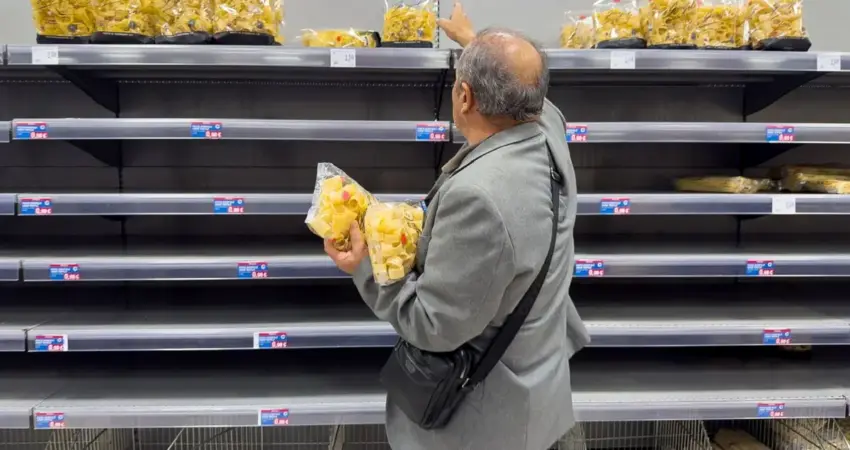
In Southern Italy, strikes and blockades by truckers have led to depleted shelves in many supermarkets, creating a tangible sense of scarcity. This situation is mirrored by protests and, in some instances, riots that have erupted in the north. The common thread uniting these disparate movements is a deep-seated frustration with economic conditions.
In the northern regions, students have been vocal in their opposition to what they perceive as low wages, excessive taxation, and the rapid escalation of grocery and fuel prices. Simultaneously, in the south, farmers and truckers have resorted to blockading ports and highways, directly protesting the prohibitive costs of fuel, which significantly impacts their ability to operate and transport goods.
The current fuel shortages are intrinsically linked to the ongoing geopolitical conflict in Iran, which has disrupted global energy markets. In response to the mounting pressure, the Italian government, under Prime Minister Giorgia Meloni, announced on Thursday the allocation of approximately $200 million to help mitigate gas prices. This comes on the heels of substantial previous government spending, with an estimated $3 billion already having been invested this year to lower or offset fuel costs. Despite these efforts, the underlying economic pressures continue to drive public discontent.
Echoes of Discontent Across Continents
Italy’s experience is not an isolated incident; it is part of a global wave of protest movements. In France, similar concerns have prompted significant government intervention. Albania has witnessed its own wave of protests, with students demonstrating against governmental corruption and the escalating cost of living. Further south, Bolivia has been grappling with longstanding protests driven by rising fuel costs.
These interconnected events suggest a global economic malaise where governmental corruption exacerbates the impact of rising global commodity prices. The confluence of factors, including geopolitical instability and systemic economic issues, is creating a volatile environment where citizens are increasingly taking to the streets to demand change. The younger generations, in particular, appear to be at the forefront of these movements, articulating a strong desire for economic fairness and accountability from their governments. This global phenomenon highlights the fragility of economic stability and the immediate impact of external shocks on everyday life.
The Deceptive Taste of Chocolate: A Conspiracy of Cost-Cutting?
Beyond the pressing issues of food security and economic hardship, a more subtle, yet widely felt, concern has emerged regarding the quality of our food: the perceived decline in the taste of chocolate. This sentiment, long simmering among consumers, gained significant traction earlier this year when Brad Reese, a descendant of the founder of Reese’s Peanut Butter Cup, publicly addressed changes to the candy’s formula.
This week, a deeply researched cover story in New York magazine by Rachel Handler has lent considerable weight to these consumer observations, providing a comprehensive exposé on the subject. Handler’s investigation suggests that major confectionery companies have been systematically altering their chocolate formulations for decades, driven primarily by economic considerations. The relentless pursuit of profit under the umbrella of "late-stage capitalism," as Handler describes it, has led to the incorporation of different ingredients and additives, often at the expense of the traditional, richer flavor profile consumers have come to expect.
The implications of this revelation are significant. It suggests a deliberate strategy by "Big Candy" to reduce costs, thereby impacting the sensory experience of a widely beloved product. Interestingly, Reese himself noted that Hershey’s stock price has reportedly been in decline since his initial whistleblowing, suggesting a potential market reaction to the perceived compromise in product quality. This phenomenon raises questions about consumer trust and the long-term sustainability of business models that prioritize short-term cost savings over product integrity. The erosion of a familiar taste could symbolize a broader trend of compromise in consumer goods, leaving many to question what other everyday products might be undergoing similar, albeit less publicized, transformations.
The Dawn of 3D-Printed Meats: Innovation in Food Technology
Amidst these challenges, the realm of food technology is presenting innovative solutions. Perfecta, a subsidiary of the Israeli company Steakholder Foods Ltd., is set to launch its 3D-printed plant-based meats in grocery stores across the northeastern United States. This expansion marks a significant step forward in the accessibility of alternative protein sources.
The initial rollout will feature plant-based imitations of poultry, steak, and seafood. This initiative is part of a broader strategy by Steakholder Foods, which also owns the Belgian company Peace of Meat. Peace of Meat has been instrumental in developing stem-cell-based technology for cultivating animal fats, a process often referred to as "grown in a lab." These cultivated fats are designed to deliver authentic meaty flavors, a crucial element in making plant-based alternatives more palatable and appealing to a wider consumer base.
The advent of 3D-printed meats represents a potential paradigm shift in food production. It offers the promise of more sustainable and ethically sourced protein options, addressing some of the environmental concerns associated with traditional animal agriculture. The ability to precisely control the texture and composition of these products through 3D printing also opens up new avenues for culinary innovation. As these products become more readily available, consumers will have greater choice in their dietary options, potentially influencing the broader food market and encouraging further investment in sustainable food technologies.
Abdul El-Sayed: A Voice on Food Affordability and Michigan’s Culinary Identity
In the political sphere, Michigan Senatorial candidate Abdul El-Sayed has been actively engaging with issues pertinent to food affordability and the rich culinary heritage of his home state. In an interview with Bon Appétit contributor Serena Maria Daniels, El-Sayed delved into Detroit’s dynamic food culture and the critical importance of ensuring access to affordable groceries, a concern that transcends political divides as the November 3rd election approaches.
El-Sayed’s perspective highlights the intersection of politics and food, emphasizing how policy decisions directly impact the availability and affordability of food for communities. His focus on Michigan’s food landscape, including the cultural significance of dishes like shawarma, underscores the idea that food is not merely sustenance but a vital component of cultural identity and community well-being. His insights offer a valuable lens through which to understand the political discourse surrounding food security and the economic challenges faced by many Americans. The interview, as detailed in the original report, provides a comprehensive look at his views on these pressing issues.

0 Comments