
When Sesame Street debuted the character of Mr. Snuffleupagus in 1971, he was introduced as an "imaginary friend" visible only to Big Bird. For fourteen years, the running gag of the show involved adults narrowly missing a glimpse of the giant, woolly mammoth-like creature, leading them to dismiss Big Bird’s claims with patronizing skepticism. However, by 1985, the cultural landscape of the United States had shifted dramatically. As public awareness regarding child sexual abuse intensified during the mid-1980s—fueled by high-profile legal cases and a burgeoning movement in child psychology—the creators of Sesame Street realized their long-standing trope carried a dangerous subtext. They feared that by showing adults consistently disbelieving Big Bird, they were inadvertently teaching child viewers that adults would not believe them if they reported real-world trauma or "secrets." Consequently, in the Season 17 premiere, Snuffy was finally revealed to the adults on the block, establishing a landmark moment in educational television centered on the validation of a child’s testimony.
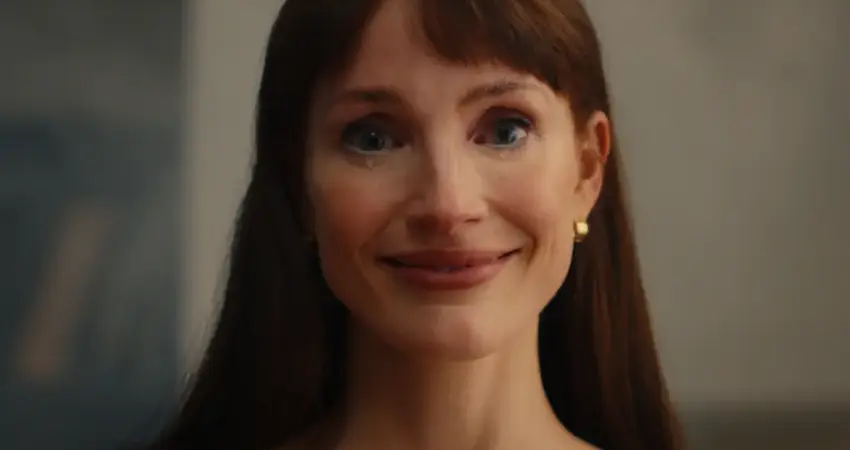
Decades later, the horror film Other Mommy, directed by Rob Savage and starring Academy Award-winner Jessica Chastain, enters a thematic dialogue with this historical television pivot. Based on the 2024 novel Incidents Around the House by Josh Malerman, the film explores the terrifying consequences of a supernatural entity invading a domestic space. However, unlike many horror films that rely on parental skepticism to drive the plot, Other Mommy distinguishes itself by having the parents acknowledge and react to the threat almost immediately. This narrative choice serves as both a modern evolution of the "Snuffy" lesson and a harrowing allegory for the complexities of modern parenting and child protection.
Narrative Overview and the Believability Factor
Other Mommy centers on seven-year-old Bela, portrayed by Arabella Olivia Clark, who begins reporting sightings of a malevolent entity she calls "Other Mommy." In a departure from the traditional "gaslighting" tropes of the genre—where parents spend two acts dismissing a child’s fears as overactive imagination—the film’s protagonists, Ursula (Jessica Chastain) and Russ (Jay Duplass), witness the entity’s presence early in the story.
The immediate acceptance of Bela’s reality by her parents shifts the film’s tension from "will they believe her?" to "how can they save her?" This dynamic mirrors contemporary shifts in "gentle parenting" and child advocacy, which emphasize the importance of believing children’s accounts of their own experiences. The horror is not derived from Bela’s isolation within her family, but from the family’s collective inability to stop an intruder that is already inside their emotional and physical perimeter.
From Page to Screen: The Literary Foundation
The source material for the film, Josh Malerman’s Incidents Around the House, is written from the first-person perspective of the child. This stylistic choice forces the reader to inhabit the limited, often confused, but deeply perceptive world of an elementary-aged girl. Malerman, who gained international fame for the novel Bird Box, specializes in high-concept dread that utilizes sensory deprivation or distortion.
In the adaptation, director Rob Savage—known for the pandemic-era hit Host and the found-footage thriller Dashcam—translates this internal dread into a visceral domestic haunting. The entity, "Other Mommy," is portrayed as a manifestation of the fractures within the household. Ursula is a mother struggling with the constraints of her role; she works late, harbors resentment about her lost independence, and is embroiled in an extramarital affair with her husband’s best friend, Frank (Adrian Moayed). The film suggests that children are hyper-aware of discord, even when parents believe they are successfully hiding it. Bela’s ability to "smell" another man on her mother is a literalization of a child’s intuitive "clocking" of parental deception.
Chronology of the Haunting: The "Carnation" Misunderstanding
The film’s plot progresses through a series of escalating requests from the entity. "Other Mommy" repeatedly asks Bela for something the child phonetically misinterprets as "carnations." This linguistic confusion serves as a central plot device, as Russ and Ursula attempt to appease the ghost by bringing home flowers, only to find the entity’s demands becoming more aggressive.

The eventual realization that the entity is asking for "incarnation"—specifically, the permission to possess Bela’s body—reframes the entire haunting. The request "Can I go inside your heart?" which initially sounds like a saccharine expression of love, is revealed to be a predatory plea for total violation. This linguistic shift highlights the way predators often use "coded" or seemingly innocent language to groom or manipulate children, a theme that resonates deeply with the film’s underlying subtext.
The Allegory of Abuse and the "Creepy Uncle" Trope
While Other Mommy is a supernatural horror film, its imagery and character beats frequently lean into the territory of child protection metaphors. The entity does not only appear as a twisted version of Ursula; it also takes the form of the men in Bela’s life. This includes her father, her babysitter Kelvin (Sean Kaufman), and Frank, the family friend.
One of the film’s most uncomfortable scenes involves Frank attempting to coax Bela into a hug. The sequence utilizes the familiar "gameplay" of the "creepy uncle," where a child’s boundaries are tested under the guise of familial affection. This scene is later mirrored in a supernatural context when "Other Mommy" makes a final plea to Bela, telling her, "All it takes is a hug."
The film portrays Bela’s refusal to hug the entity as a significant act of agency. In an era where child development experts advise against forcing children to show physical affection to relatives, Bela’s setting of boundaries becomes her primary defense. She routinely declines the entity’s requests for "carnation," asserting ownership over her body and soul in a way that reflects modern teachings on bodily autonomy.
Symbolic Imagery: Sparkles, Balloons, and Ball Pits
The visual language of Other Mommy uses the iconography of childhood to signify danger. The entity lures Bela with promises of "sparkles" and "balloons," and at one point, the ghost is seen bleeding glitter. In one of the film’s most harrowing set pieces, "Other Mommy" attempts to drown Bela in a ball pit.
These brightly colored, seemingly joyful objects act as lures. Critics and analysts have noted that these items evoke the stereotypical tools of predators—lollipops, toys, or "puppies in a van." By placing these lures within the home and within the visage of a parent, the film argues that the "big bad" is often someone the child knows and trusts. The ball pit, usually a place of safety and play, becomes a claustrophobic trap, suggesting that the corruption of innocence can happen in the very places designed for childhood joy.
The Corruption of Innocence as a Weapon
The climax of Other Mommy posits an unconventional solution to the haunting. It is not a religious exorcism or a ritual that weakens the entity, but the "corruption" of Bela’s innocence through the revelation of the truth.
In a pivotal scene, Ursula is forced to tell Bela the truth about her origins: that her conception was unplanned, that she was born out of a previous relationship, and that Russ is not her biological father. This revelation shatters Bela’s idealized view of her family. However, this loss of naivety is what ultimately protects her. The "Other Mommy" entity thrives on the "purity" and "heart" of the child; by introducing the messy, painful reality of adult life, the parents make Bela "undesirable" to the spirit.

As Bela’s grandmother (Ursula’s estranged mother) explains in the film, "getting hurt is part of being human." The entity, despite its desire to possess a human body, cannot comprehend the necessity of pain and emotional scarring. Bela’s acceptance of her family’s flaws allows her to move beyond the entity’s reach.
Historical Context and Broader Implications
The shift in Sesame Street’s handling of Mr. Snuffleupagus in 1985 was a response to a specific cultural moment: the "Satanic Panic" and the McMartin preschool trial, which brought child testimony to the forefront of national conversation. The CTW (Children’s Television Workshop) consulted with psychologists who argued that the "imaginary friend" trope could lead to a "chilling effect" on children who needed to report real-world harm.
Other Mommy functions as the cinematic heir to this psychological shift. In the 1970s and 80s, horror often focused on "The Bad Seed" or the "Creepy Child" whom the parents couldn’t control. In the 2020s, the genre has shifted toward "The Protective Parent" or "The Perceptive Child."
The film’s production also marks a significant moment for its lead actress. Jessica Chastain, who has frequently played characters defined by their resilience and protective instincts (as seen in The Zookeeper’s Wife and Mama), uses her performance to anchor the film in reality. Her portrayal of Ursula is not one of a "perfect" mother, but of a flawed woman whose primary saving grace is her refusal to lie to her daughter about the danger they face.
Conclusion: The Modern Mandate to Listen
Ultimately, Other Mommy serves as a grim reminder of the stakes involved in the adult-child relationship. While the film utilizes the trappings of the supernatural—possession, shapeshifting, and poltergeist activity—its core message is grounded in the reality of child advocacy.
The film suggests that the most terrifying thing a child can experience is not a ghost in the room, but the realization that the adults who are supposed to protect them are either oblivious, deceptive, or complicit. By choosing to believe Bela from the outset, Ursula and Russ break the cycle of silence that often allows trauma to fester. While the truth they tell her is painful, it is also liberating. The least parents can do in the face of a child’s fear—whether that fear is of a monster under the bed or a person in their life—is to take a page out of the Sesame Street evolution and believe them.

0 Comments