
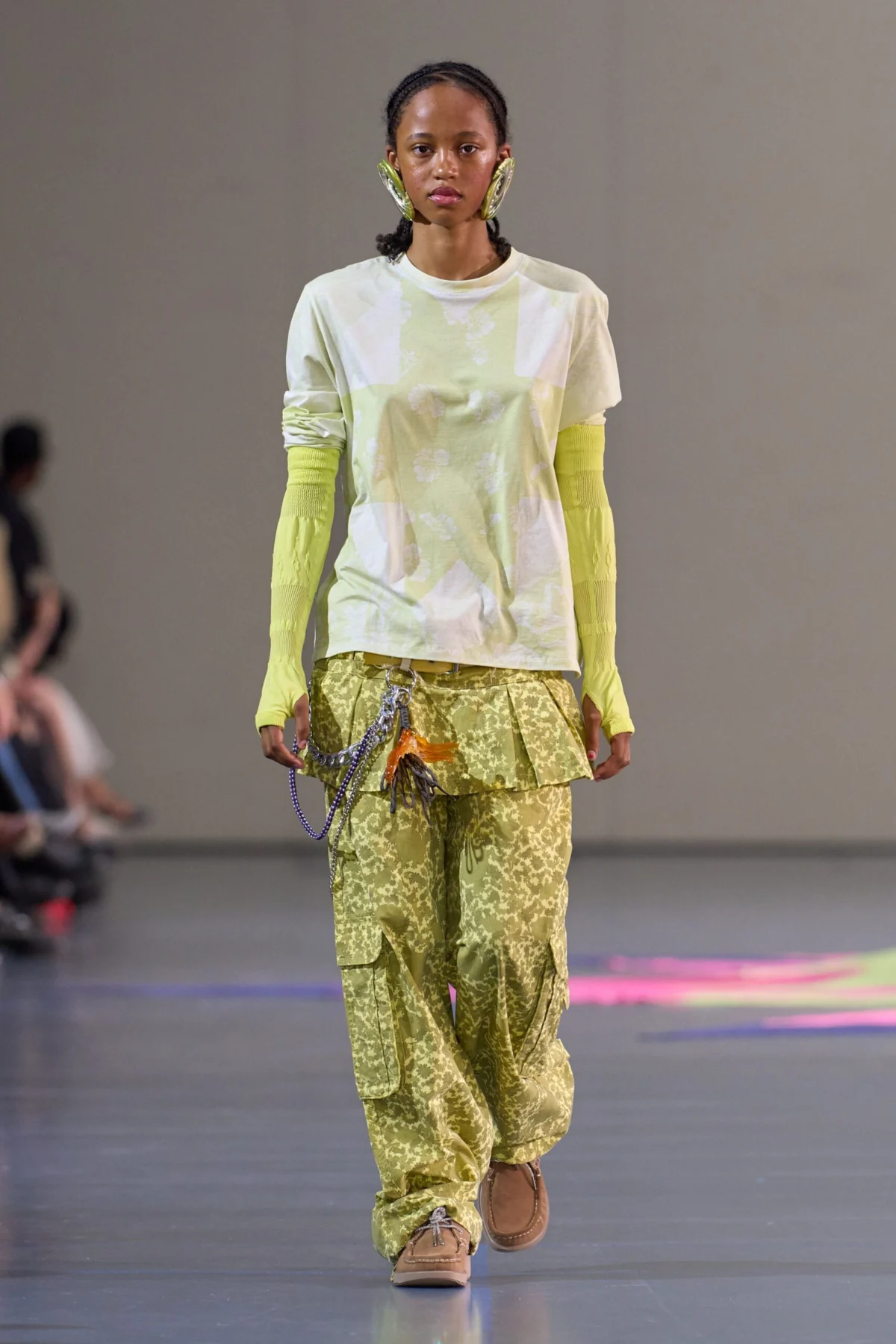
The London-based fashion house Paolina Russo has unveiled its Spring 2027 collection at Copenhagen Fashion Week, marking a significant evolution in the brand’s narrative arc and its commitment to ecological responsibility. Led by co-founders Paolina Russo and Lucile Guilmard, the presentation transitioned from the structured, institutional themes of previous seasons toward a more intimate, autobiographical exploration of youth in small-town environments. By blending the domestic aesthetics of traditional craftsmanship with the gritty subcultures of suburban athleticism, the collection proposes a new vocabulary for contemporary knitwear and denim. The show, characterized by a dual-presentation format and a live "battle of the bands," served as both a commercial showcase and a community-driven cultural event, reinforcing the brand’s position as a leader in the New Nordic fashion movement despite its British roots.
The Narrative Framework: Domesticity Versus Rebellion
The Spring 2027 collection is built upon a dualistic narrative that contrasts the safety of the domestic sphere with the rebellious energy of adolescent nightlife. This season, the "Paolina Russo heroine" is depicted as having left the formal environments of previous collections—such as the French Embassy in Copenhagen—to spend a summer in a rural or small-town setting, specifically a grandmother’s home. This setting provides the visual foundation for the collection, incorporating elements of "chintzy" floral patterns and traditional "Lone Star" patchwork quilts.
According to the designers, the collection explores the "secret life" of a protagonist who balances the role of a doting granddaughter by day with that of a skate-park regular by night. Paolina Russo noted that this character is driven by a profound desire for self-discovery, a sentiment echoed by Guilmard, who described the collection as a "fantasy" rooted in shared memories of growing up in isolated communities. This thematic tension is resolved through the garments themselves, which fuse "folksy" traditionalism with technical, street-oriented silhouettes.
Technical Execution and Aesthetic Innovation
The aesthetic synthesis of these two worlds is most evident in the collection’s treatment of textiles and hardware. A prominent feature of the runway was the reimagining of the brand’s signature laser-printed jeans. Traditionally associated with Y2K-era street style, the denim this season utilized geometric shapes borrowed from ancestral quilting patterns, effectively merging 21st-century technology with 19th-century folk art.
Key pieces included:
- Hybrid Outerwear: Prim pea coats were updated with clashing ditsy floral prints in a hazy cargo green palette, bridging the gap between military utility and domestic decor.
- Artisanal Detailing: Garments featured wooden buttons laced with psychedelic, multi-colored embroidery thread, a nod to the DIY culture of both quilting circles and skate communities.
- Lenticular Knitwear: A perennial bestseller for the brand, this season’s knitwear utilized optical illusion techniques to create depth in T-shirts, skirts, and capri leggings. For the first time, these pieces were produced using 100% Oekotex-certified cotton, marking a shift away from synthetic blends without sacrificing the "holographic" visual effect.
Collaborative Artistry and Accessory Design
The Spring 2027 presentation was bolstered by several high-profile collaborations that extended the theme of "souped-up" nostalgia into the realm of accessories. The brand engaged with contemporary artists and designers to repurpose childhood toys and industrial components into luxury items.
Yuma Burgess, a multidisciplinary artist, contributed earrings inspired by Beyblades—the Japanese spinning top toys popular in the early 2000s. These were rendered in melted plastic to resemble Neolithic medallions, colored in high-contrast bubblegum pink and acid green. Complementing this was the work of jewelry designer Florence Tétier, who transformed skateboard wheels into chunky necklaces. These pieces featured "trippy" neon flowers created from melted plastic cutlery, further emphasizing the collection’s focus on the transformation of the mundane into the ornamental.
In terms of footwear, the brand continued its partnership with the Danish footwear giant Ecco. The collaboration focused on the "Joke" shoe, a classic silhouette from the Ecco archives, which was modified for the runway with bedazzled rhinestone laces, aligning the functional heritage of the sponsor with the maximalist spirit of the Paolina Russo brand.
Sustainability Data and Environmental Milestones
Since winning the Zalando Visionary Award in 2023, Paolina Russo has utilized Copenhagen Fashion Week (CPHFW) as a platform to implement rigorous sustainability standards. The Spring 2027 show marked a record achievement for the brand in terms of material circularity.
Copenhagen Fashion Week requires all participating brands to meet 18 minimum sustainability standards, covering the entire value chain from fiber sourcing to show production. For the Spring 2027 season, Paolina Russo surpassed its internal target of 50% mono-material garments, reaching a total of approximately 77%.
| Sustainability Metric | Spring 2026 (Previous) | Spring 2027 (Current) | Target |
|---|---|---|---|
| Mono-material usage | 48% | 77% | >50% |
| Oekotex-certified Cotton | 40% | 100% (in knitwear) | 100% |
| Recycled Synthetic Content | 15% | 22% | 30% |
The shift toward mono-materials—garments made from a single type of fiber—is a critical step in fashion sustainability, as it significantly simplifies the textile recycling process. By working closely with manufacturers to develop 100% cotton lenticular knits, the designers have demonstrated that high-concept, "optical" fashion can coexist with circular economy principles.
Event Chronology and Community Engagement
The Spring 2027 show departed from traditional fashion week protocols by prioritizing public access. The event was structured as a two-tier experience designed to dismantle the exclusivity typically associated with runway presentations.
- The Industry Showing: The initial segment was attended by traditional press, buyers, and industry stakeholders.
- The Community Showing: Immediately following the departure of the first group, the doors were opened to hundreds of fans and local students, who were invited to view a second showing of the collection.
- The Battle of the Bands: Throughout the catwalk presentation, two musical acts performed in a "battle" format. On one side was Grace Ives, a pink-haired synth-pop artist and former schoolmate of Russo. On the other was Haloplus+, a Copenhagen-based band whose discography served as the soundtrack to the collection’s design process.
This democratic approach to the "catwalk" reflects a growing trend among independent labels to foster brand loyalty through direct engagement rather than traditional gatekeeping. Russo stated that the clothes are intended as a "uniform for belonging," suggesting that the brand’s value is derived as much from its community as its design.
Strategic Context: The Zalando Influence and CPHFW
The trajectory of Paolina Russo cannot be analyzed without considering the impact of the Zalando Visionary Award. This accolade provided the brand with the financial and structural support necessary to transition from a London-based boutique label to a significant player on the international circuit. By adopting Copenhagen as its "second home," the brand has benefited from the city’s reputation as a hub for sustainable innovation.
The decision to remain aligned with CPHFW’s sustainability framework provides the brand with a competitive advantage in the European market, where environmental regulations are becoming increasingly stringent. The Spring 2027 collection serves as a case study in how small, designer-led brands can navigate the transition to sustainable production without losing their unique aesthetic identity.
Analysis of Implications for the Fashion Industry
The Paolina Russo Spring 2027 show highlights several shifts in the broader fashion landscape. First, it underscores the continued relevance of "Kidcore" and nostalgic aesthetics, but suggests a pivot toward a more sophisticated, "neo-folk" interpretation. By grounding the collection in specific, shared memories of small-town life, the designers are tapping into a global sentiment of digital fatigue and a desire for tactile, artisanal connections.
Second, the technical achievement in mono-material knitwear addresses a major criticism of the knitwear industry: the difficulty of recycling blended yarns (such as cotton-polyester or wool-acrylic). If Russo and Guilmard can prove that complex, multi-dimensional visual effects are achievable with pure fibers, it may encourage larger retailers to invest in similar material developments.
Finally, the "open-door" policy of the show reflects a shift in the power dynamics of fashion marketing. As the influence of traditional editorial media fluctuates, the ability of a brand to mobilize a physical community of "fans" becomes a vital metric of success. Paolina Russo’s Spring 2027 presentation suggests that the future of the fashion show may lie in its transformation from a trade event into a multi-disciplinary cultural festival.
As the industry moves toward the 2030 climate goals, the integration of high-performance sustainability with high-concept design seen in this collection provides a viable roadmap for emerging labels. The success of the Spring 2027 show confirms that Paolina Russo is no longer just a "label to watch" but a primary architect of the contemporary sustainable aesthetic.

0 Comments