

Central to Duhigg’s research is the "Matching Principle," a psychological concept suggesting that for a connection to occur, participants must be engaged in the same type of conversation simultaneously. Through extensive interviews with FBI negotiators, NASA psychologists, and Harvard researchers, Duhigg identifies three primary "buckets" of communication: practical-analytical, emotional, and social. Misalignment—such as offering a practical solution to a person seeking emotional empathy—is cited as the primary cause of conversational breakdown and interpersonal conflict.
The Taxonomy of Conversation: Practical, Emotional, and Social
The foundational framework of Duhigg’s research divides all human interactions into three distinct categories. Understanding these categories is the first step toward achieving "neural coupling," a state where the brain activity of the speaker and the listener begins to mirror one another.
1. Practical-Analytical Conversations
These discussions are centered on problem-solving, logistics, and decision-making. In a professional setting, this might involve budgeting or project timelines. The goal is to reach a conclusion or establish a plan. When a participant is in this mindset, they value logic, efficiency, and clarity.

2. Emotional Conversations
Emotional interactions are focused on how a person feels rather than what they should do. In these instances, the speaker is often looking for validation, empathy, or a safe space to vent. Duhigg notes that a common failure in modern communication occurs when one person attempts to solve a problem (practical) while the other person is simply trying to share a feeling (emotional).
3. Social Conversations
These involve how individuals relate to one another within a broader social context or community. They often touch upon identity, shared values, and societal roles. These conversations are crucial for building long-term rapport and establishing a sense of belonging within a group.
The Matching Principle and the Science of Neural Alignment
The concept of the "Matching Principle" is supported by recent advances in neuro-imaging. Studies cited by Duhigg indicate that when two people are truly connecting, their brain waves, heart rates, and even respiratory patterns begin to synchronize. This phenomenon, known as "entrainment" or "neural coupling," is the biological byproduct of a successful communication match.
Data from psychological studies suggest that supercommunicators ask 10 to 20 times more questions than the average person. However, these are not interrogatory questions; they are often "deep questions" that invite the other person to share their values, beliefs, or experiences. By asking about a person’s motivations rather than just facts—for example, asking "What led you to that career?" instead of "What is your job?"—supercommunicators trigger a reciprocal authenticity that facilitates neural alignment.
Chronology of Communication Research and Development
The journey toward understanding supercommunication has evolved alongside technological and scientific breakthroughs over the last several decades.
- The 1970s-1980s (The NASA Era): During the early years of long-term space flight preparation, NASA psychiatrist Terrance McGuire began developing methods to identify astronauts who could maintain social cohesion in high-stress, isolated environments. This led to the discovery that emotional intelligence and the ability to "match" a peer’s energy were more predictive of mission success than technical proficiency alone.
- The 1990s-2000s (The Rise of Neural Imaging): The advent of fMRI technology allowed scientists to observe the "syncing" of brains in real-time. This period established the biological reality of connection, proving that communication is a physical as well as a psychological event.
- 2012-2016 (Duhigg’s Early Work): Charles Duhigg established himself as a leading voice in behavioral science with The Power of Habit (2012), which focused on the individual. This was followed by Smarter Faster Better (2016), which began to bridge the gap between individual performance and team dynamics.
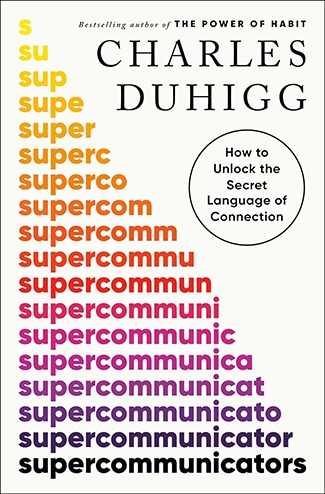
- 2024 (The Release of Supercommunicators): Following years of synthesis, Duhigg published his findings on the "secret language of connection," providing a toolkit for navigating the complexities of modern, often polarized, discourse.
Case Study: The Felix Sigala Model
To illustrate the practical application of these theories, Duhigg points to Felix Sigala, a veteran of the FBI’s Crisis Negotiation Unit. Sigala’s success in high-stakes hostage negotiations was not rooted in intimidation or traditional charisma, but in his ability to perform "quiet negotiations" regarding the nature of the conversation.
Researchers studying Sigala found that he would use the beginning of an interaction to conduct "micro-experiments." He might tell a joke to see if the other person was open to a social connection or share a minor vulnerability to see if they were ready for an emotional exchange. By paying close attention to the response—not just the words, but the tone and energy—Sigala would adjust his approach to match the other person’s state, thereby de-escalating conflict and building trust.
Supporting Data: The Impact of Preparedness and Politeness
Duhigg’s research is bolstered by quantitative data from various institutional studies:

- Conflict Reduction in Finance: A study conducted at a major investment bank required employees to write down one sentence describing their goal for a meeting before it began. This 10-second exercise resulted in an 80% reduction in workplace conflict, as it forced participants to clarify their own "conversational bucket" before engaging with others.
- The Harvard Business School Experiment: Professor Alison Wood Brooks found that students who wrote down three potential topics before a conversation with a stranger reported significantly lower anxiety levels and higher satisfaction with the interaction, even if they never actually discussed the topics on their list.
- The Wikipedia "Politeness" Study: Data from online interactions between Wikipedia editors showed that the simple inclusion of "please" and "thank you" had a cascading effect, causing other participants to mirror the polite behavior and reducing the frequency of "flame wars" or digital hostility.
Navigating Conflict through "Looping for Understanding"
For high-conflict scenarios, Duhigg advocates for a technique known as "Looping for Understanding." This method is designed to counteract the human tendency to stop listening while waiting for a turn to speak. The process involves three steps:
- Ask a Question: Preferably a deep question that explores the "why" behind a person’s stance.
- Paraphrase the Answer: Repeat what the person said in your own words to prove you have processed the information.
- Confirm Accuracy: Ask, "Did I get that right?"
This technique is particularly effective because it provides a "proof of listening." According to Duhigg, until a person feels heard, they are psychologically incapable of listening to a dissenting opinion. Looping for understanding satisfies the primal need for validation, which in turn lowers the listener’s defensive barriers.
Broader Impact and the Future of Digital Communication
The implications of supercommunication extend far beyond personal relationships into the realms of corporate leadership, international diplomacy, and digital architecture. Duhigg notes that the "dumpster fire" nature of social media often stems from the absence of non-verbal cues—tone, laughter, and body language—that naturally facilitate the Matching Principle.
To combat this, Duhigg suggests that digital communicators must "over-emphasize" their intent. Since the "secret language" of physical presence is stripped away in text-based formats, users must rely on explicit markers of emotion, such as emojis or clear statements of intent (e.g., "I’m saying this jokingly"), to prevent misinterpretation.

As society continues to grapple with the effects of AI and automated communication, the human-centric skills of supercommunication are expected to become increasingly valuable. Experts suggest that as technical tasks are outsourced to algorithms, the "soft skills" of emotional alignment and social negotiation will become the primary differentiators in professional and personal success. Duhigg’s work provides a timely roadmap for reclaiming these essential human connections in an increasingly complex world.

0 Comments